Table of Contents
Introduction to SD NAND Technology
SD NAND represents a significant advancement in flash storage technology, combining the SD card interface standard with raw NAND flash memory to create a robust, high-performance storage solution. Unlike traditional removable storage, SD NAND is typically surface-mounted directly onto PCBs, offering enhanced reliability, faster speeds, and greater durability for industrial and commercial applications. As devices become smaller and demand for reliable storage grows, SD NAND has emerged as a critical solution for everything from consumer electronics to industrial IoT systems.
This comprehensive guide explores SD NAND technology, its advantages over traditional storage options, key design considerations for PCB implementation, and emerging trends that will shape the future of embedded storage solutions.
What is SD NAND?
It is an embedded storage solution that packages raw NAND flash memory with an SD card interface controller in a single, compact package that can be directly soldered to a PCB. This architecture combines the best aspects of removable SD cards and embedded multimedia cards (eMMC), offering:
•Standard SD Interface: Maintains compatibility with the ubiquitous SD protocol, simplifying integration and software development
•NAND Flash Storage: Provides high-density storage capabilities in a small form factor
•Surface-Mount Design: Enables permanent mounting to PCBs for improved reliability and shock resistance
•Integrated Controller: Manages wear leveling, bad block management, error correction, and interface protocols
The technology has evolved significantly in recent years, with companies like Hanhai Micro leading innovation in both capacity and speed enhancements for SD NAND products.
Key Advantages of SD NAND Over Alternative Storage Solutions
1. Enhanced Reliability and Durability
Unlike removable SD cards that require physical slots and connectors—which can become points of failure—SD NAND is directly soldered to the PCB, eliminating connection issues and improving resistance to vibration, shock, and environmental factors. This makes it ideal for industrial applications and devices operating in harsh conditions.
2. Space Efficiency
SD NAND packages are extremely compact, with form factors significantly smaller than traditional SD cards with connectors. This saves valuable PCB real estate, crucial for increasingly miniaturized electronic devices.
3. Improved Performance
With direct connections to the PCB, SD NAND typically offers faster read/write speeds and more consistent performance compared to removable cards, which suffer from interface latency and connection inconsistencies.
4. Better Security
Since SD NAND is permanently attached to the device, it’s less vulnerable to theft, accidental removal, or unauthorized data extraction compared to removable storage options.
5. Cost Effectiveness
While the initial component cost might be similar, SD NAND eliminates the need for mechanical card slots and connectors, reducing overall system cost and assembly complexity.
Table: Comparison of Storage Technologies
| Feature | SD-NAND | Removable SD Card | eMMC | Raw NAND |
| Interface | SD | SD | eMMC | Parallel/SERIAL |
| Mounting | Surface-mount | Mechanical slot | Surface-mount | Surface-mount |
| Reliability | High | Moderate | High | Varies |
| Design Complexity | Low | Moderate | Low | High |
| Standardization | High | High | High | Low |
| Capacity Range | Moderate | Wide | Wide | Wide |
Technical Specifications and Capabilities
Modern SD NAND solutions offer impressive specifications that meet the demands of various applications:
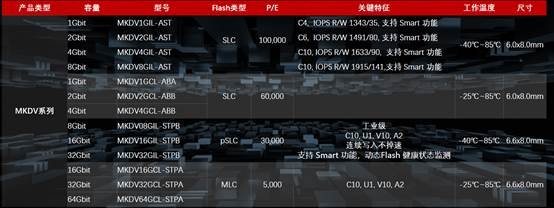
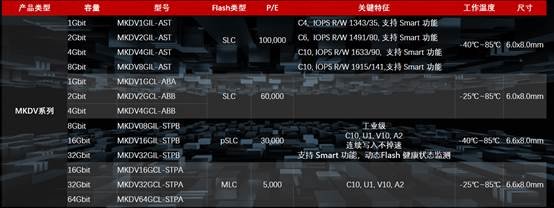
•Capacities: Ranging from 128MB to 64GB, with some solutions offering even higher densities
•Interface Speed: Support for high-speed SD protocols, including UHS-I in advanced implementations
•Operating Voltage: Typically 2.7V to 3.6V, with some low-voltage variants available
•Temperature Range: Commercial (0°C to 70°C) and industrial (-40°C to 85°C) options
•Data Retention: Typically 10+ years at recommended operating conditions
•Endurance: Varies by technology, with SLC NAND offering the highest write cycles
Advanced SD NAND solutions incorporate features like wear leveling, bad block management, error correction code (ECC), and power-loss protection mechanisms to enhance data integrity and device longevity.
PCB Design Considerations for SD NAND Implementation
Successful integration of SD NAND into PCB designs requires careful attention to several critical factors:
1. Interface Design and Signal Integrity
The SD interface operates at relatively high speeds, necessitating proper impedance matching and signal integrity practices:
– Trace Length Matching: Data lines (DAT0-DAT3) should be length-matched to minimize skew
– Impedance Control: Maintain consistent 50Ω impedance for single-ended signals
– Routing Priority: Route the SD interface signals away from noise sources and with adequate ground shielding
2. Power Delivery Requirements
SD NAND devices require stable power for proper operation:
– Decoupling Capacitors: Place 100nF and 1-10μF capacitors close to the power pins
– Power Sequencing: Follow proper power-up/down sequences as specified by the manufacturer
– Current Capacity: Ensure the power supply can deliver sufficient current during peak operations
3. Thermal Management
While SD NAND generates less heat than some components, proper thermal design is still essential:
– Thermal Relief: Use appropriate thermal relief patterns for ground connections
– Airflow: Consider airflow in the device enclosure if high continuous write operations are expected
– Thermal Vias: Implement thermal vias under the package to dissipate heat to inner layers
4. Manufacturing Considerations
•Soldering Requirements: Follow manufacturer recommendations for reflow profiles
•Inspection Access: Ensure the component is visible or accessible for automated optical inspection (AOI)
•Test Points: Include test points for critical signals to facilitate debugging and testing
5. PCB Stackup Implications
For high-speed SD interfaces, consider the impact of your PCB stackup:
– Layer Arrangement: Route high-speed signals on layers adjacent to solid reference planes
– Dielectric Materials: Select appropriate materials with consistent dielectric constants
– Via Design: Use appropriate via sizes and structures for high-frequency signals
Table: SD NAND Layout Guidelines
| Parameter | Recommendation | Notes |
| Trace Width | 4-6 mil | Based on impedance requirements |
| Trace Spacing | ≥2× trace width | Minimize crosstalk |
| Length Matching | ±50 mil tolerance | For data signals |
| Decoupling Caps | Within 100 mil of package | Multiple values recommended |
| Ground Connections | Solid ground plane underneath | Provide return path |
Applications and Use Cases
SD NAND technology finds applications across numerous industries and devices:
1. Internet of Things (IoT) Devices
•Smart Sensors: Store calibration data, event logs, and firmware updates
•Connected Home Devices: Enable local storage for smart home hubs and controllers
•Wearable Electronics: Provide reliable storage in compact form factors
2. Industrial Automation
•Programmable Logic Controllers (PLCs): Store program data and historical logs
•Human-Machine Interfaces (HMIs): Support for operational data and interface assets
•Industrial Control Systems: Reliable storage for critical parameters and configurations
3. Automotive Electronics
•Infotainment Systems: Store navigation data, media files, and system software
•Telematics Units: Record vehicle data and event information
•ADAS Systems: Support for calibration data and operational logs
4. Consumer Electronics
•Smart Appliances: Firmware storage and operational data
•Gaming Accessories: Save game data and configuration settings
•Digital Cameras: Buffer storage and firmware storage
5. Medical Devices
•Portable Medical Equipment: Store patient data and device firmware
•Diagnostic Equipment: Maintain calibration data and usage logs
•Wearable Health Monitors: Record health metrics and operational data
Emerging Trends and Future Developments
The SD NAND landscape continues to evolve with several notable trends:
1. Increasing Capacities
SD NAND solutions are following the trajectory of flash memory generally, with densities continuing to increase while physical dimensions shrink. This enables more data-intensive applications to benefit from the SD NAND form factor.
2. Performance Enhancements
Newer SD NAND implementations are supporting faster interface speeds, including support for UHS-I and beyond, making them suitable for applications requiring higher bandwidth.
3. Security Features
Enhanced security capabilities are being integrated, including hardware encryption, secure boot support, and tamper detection, addressing growing concerns about data protection.
4. Extended Temperature Operation
More SD NAND solutions are becoming available with extended temperature ratings for automotive and industrial applications where environmental conditions can be extreme.
5. Integration with Other Technologies
SD NAND is increasingly being combined with other technologies, such as 3D NAND for higher densities and QLC NAND for cost-effective high-capacity solutions.
Best Practices for Implementation
To ensure successful implementation of SD NAND in your designs:
- Early Supplier Engagement: Consult with SD NAND suppliers during the design phase to understand specific requirements and recommendations.
- Prototype Testing: Thoroughly test prototypes under all expected operating conditions, including temperature extremes and voltage variations.
- Firmware Considerations: Develop or implement appropriate firmware that properly handles wear leveling, bad block management, and error correction.
- Lifecycle Management: Consider the long-term availability of selected components and plan for potential future migrations or upgrades.
- Quality Assurance: Implement rigorous testing procedures to ensure data integrity and reliability throughout the product’s lifespan.
Conclusion
SD NAND technology offers an exceptional combination of reliability, performance, and convenience for modern electronic designs. By providing the familiar SD interface in a surface-mount package, it delivers the best of both worlds: the standardization and ease of use of removable storage with the robustness and reliability of embedded solutions.
For PCB designers, successful implementation requires careful attention to signal integrity, power delivery, and thermal management, but the benefits far outweigh the challenges. As capacities increase and prices continue to decline, SD NAND is poised to become the storage solution of choice for an ever-widening range of applications across consumer, industrial, automotive, and medical sectors.
At SysPCB, we have extensive experience implementing SD NAND solutions across diverse applications. Our expertise in PCB design, signal integrity optimization, and manufacturing processes ensures that your products will leverage the full potential of this innovative storage technology while maintaining the highest standards of quality and reliability.
Ready to integrate SD NAND into your next design?
→ [Contact our technical team for a design consultation]
→ [Download our PCB design guidelines for memory interfaces]
→ [Request samples of recommended SD NAND components]