

Rigid PCB Capability
In modern electronic devices, printed circuit boards (PCBs) act as a “skeleton” to carry the connection and operation of various electronic components. Among them, rigid PCB, as the most widely used type, has become an indispensable core component in the electronics industry due to its unique structure and performance.
What is a rigid PCB?
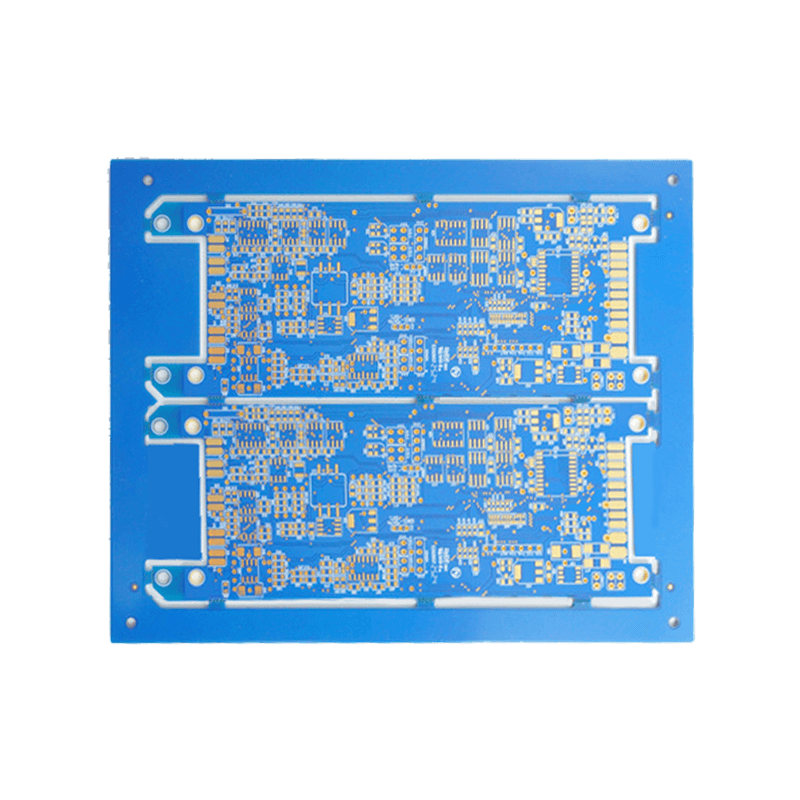
A rigid PCB is a circuit board made of a hard substrate, typically made of glass fiber reinforced epoxy resin (FR-4) as the core material, with a copper foil conductive layer covering the surface, and precision circuits formed through etching process. Unlike flexible PCBs, it cannot bend and has a stable physical form. Its structure usually includes single-layer, double-layer, or multi-layer conductive layers, which are isolated by insulating materials and vertically conductive through drilling and electroplating. From household appliances to industrial equipment, to computers and communication base stations, rigid PCBs cover almost all electronic fields that require high reliability.
The Four Core Advantages of Rigid PCB
1. Excellent mechanical stability
Rigid substrates endow PCBs with strong compressive and seismic resistance, ensuring that components are securely installed in vibration, impact, or high temperature environments, avoiding circuit breakage caused by deformation. This characteristic makes it the preferred choice for automotive electronics and industrial control equipment.
2. Efficient heat dissipation performance
FR-4 and other materials have good thermal conductivity, which can quickly dissipate the heat generated by electronic components during operation. Combined with specialized heat dissipation design (such as metal substrates), it can significantly improve equipment life, especially suitable for high-power LED lighting or power modules.
3. Mature scale production
After decades of development, the manufacturing process of rigid PCBs has been highly standardized, supporting automated mass production, and the cost of single boards has significantly decreased with increasing output. This economic viability has made it a key driver for the widespread adoption of consumer electronics products.
4. High density circuit integration capability
Through multi-layer stacking and micro hole technology, rigid PCBs can achieve complex wiring in limited space, meeting the high pin count of modern chips and the high-frequency signal transmission needs of 5G devices, and helping electronic products evolve towards miniaturization and high performance.
Rigid PCB Capability
| Serial | ltem | Technical Date |
| 1 | Types of Products | Rigid Multilayer PCB, Buried/Blind Via PCB,High Frequency PCB, Aluminum Base PCB,Flex-Rigid PCB, FPC,Special Material PCB |
| 2 | Layers | 1-32(layers) |
| 3 | Max Board Size | 450x660mm 18″x26″ |
| 4 | Max Board Thickness | 3.2mm |
| 5 | Min Board Thickness | 4(layers)0.40mm 16mil Min Board Thickness 6(layers)0.80mm 32mil 8(layers)1.00mm 40mil 10(layers)1.20mm 48mil |
| 6 | Copper Clad(Max.) | 6 oz(outer)/4 oz(inner) |
| 7 | Min line Width/space | 0.075mm/0 .075mm 3mil/3mil |
| 8 | Drill Size Mechanical(min) | 0.20mm 7.8mil |
| 9 | Drill Size Laser(min) | 0.10mm 4mil |
| 10 | PTH Wall Thickness | 0.025mm 1mil |
| 11 | PTH dia tolerance | +0.075mm +3mil |
| 12 | NPTH hole dia tolerance | +0.05mm +2mil |
| 13 | Hole Position Deviation | +0.05mm +2mil |
| 14 | Outline Tolerance | ±0.10mm ±4mil |
| 15 | S/M Pitch | 0.08mm 3mil |
| 16 | Insulation Resistance | 1E+12Q(Normal) |
| 17 | Test Voltage | 50-300V |
| 18 | Aspect ratio | 12:1 |
| 19 | Thermal Shock | 3x10Sec@288 ℃ |
| 20 | Warp and Twist | <0.7% |
| 21 | current breakdown | 10A |
| 22 | Electric Strength | 1.3KV/mm |
| 23 | Peel Strength | 1.4N/mm |
| 24 | Solder Mask Abrasion | 6H |
| 25 | Solder Mask Color | Green, Whit, Yellow, RedBlack, Blue, Purple. |
| 26 | Silkscreen Color | Whit, Yellow, Red, Black, Blue, Purple |
| 27 | Flammability | 94V-0 |
| 28 | Impedance Control | +/10%(>500hm)+/5%(<500hm) |
| 29 | Buried Via | Yes |
| 30 | HDI | 4+N+4 4mil Via hole |
| 31 | Surface Finished | ENlG,lmAg,ImSn,OSP,HASL-LF,Carbon inkENEPIG,Plating Gold |
| 32 | Materials | FR4, FR2, F4B ,CEM-1,CEM-3, Getek,RogersAluminum Board,High TG,Teflon,ceramic |