


Fast Turn-round Assembly
Fast turn-around assembly is a small batch PCBA trial production verification test performed by customers, due to the design requirements of new products to ensure that the design of the product meets the expected design requirements. Generally, the order number of fast turnaround assembly is less than 30 pieces.
In the electronic manufacturing industry, in addition to the regular R&D sample PCB assembly tasks, there will also be expedited fast turnaround PCBA assembly. When encountering expedited fast turnaround assembly work, not only must the task be completed within the specified time, but also quality should guaranteed.
What are the production processes for Fast turn-around assembly?
The process in SMT chip production is divided into four steps: PCB soldering, component placement, reflow soldering, and AOI testing.
Loading; Solder paste printing (front); Patch (reverse side); Visual inspection in front of the furnace; Reflux furnace; Solder paste printing (B-side); Surface mount (B-side); Pre furnace inspection; Reflux furnace; Post furnace inspection; Split board; Download; FQA inspection; Production inspection; FT testing; BT testing; CIT testing
1. Loading materials
In SMT factories, material loading is carried out after receiving a BOM order from a customer. The corresponding program needs to be written to input the part number and project name into the machine. At this time, the warehouse will prepare the materials to be produced according to the production plan. Then, the technical router will place the materials in the corresponding positions according to the part number set in the machine. After placing the materials, check whether there is any inconsistency between the part number and the machine. Pay attention to checking the part number and prohibit the use of handwritten labels to prevent errors and major defects.
2. Solder paste printing
Solder paste printing is a very important step, and it must be warmed up before use. After opening, the opening time should be recorded and stirred evenly before it can be used online. The control method of solder paste is an important parameter for recording the printing results, and cannot exceed the defined range, such as the pressure of the scraper, the printing speed, the cleaning frequency, etc. When printing, it is necessary to check whether the thickness of the solder paste is within the standard range. The cleaning requirement for OP is two hours, manually clean the steel mesh once, and record the cleaning time.

3. Surface mount
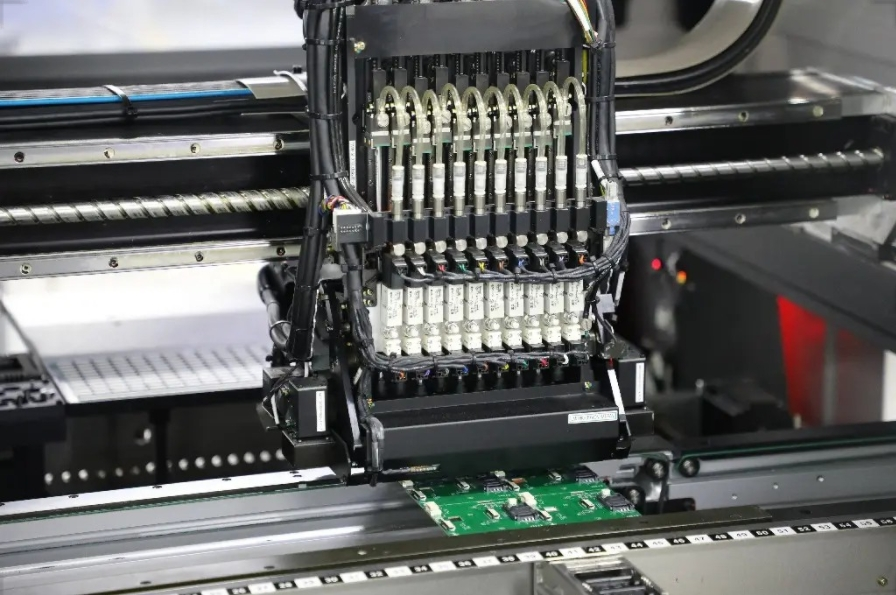
In SMT production, surface mount processing is a very important step. It involves fixing the component feeder and substrate (PCB circuit board), moving the head of the surface mount machine back and forth between the feeder and the PCB substrate, removing the components from the feeder, adjusting their position and orientation, and then attaching them to the PCB substrate.
When some holes in the suction nozzle of the surface mount machine are blocked and there are some differences in the appearance and color of the material, it can cause the machine to experience phenomena such as material throwing. When the material strip breaks, if the viscosity is too high, it belongs to the supplier’s situation. If there are any problems with the incoming materials, it will also greatly affect the quality of the surface mount. A full inspection of the materials is required before installation. For components above level 0603, a slight deviation will not affect product quality, but for components with a 0.5PIN rating, deviation is generally not allowed.
4. Reflow soldering
After the SMT placement is completed in the SMT factory, if there are components that need to be inserted on the PCB circuit board, they need to be manually inserted first. After the insertion is completed, they will flow into the reflow soldering process and go through a preheating zone to reach a balanced temperature between the PCB and the components. At the same time, water and solvents in the solder paste can be removed. The temperature is relatively mild and the thermal impact on the components is relatively small. If the temperature rises too quickly, it will cause damage to the components, resulting in device cracking and solder splashing. Then it will reach the insulation zone – reflow zone, where the solder in the solder paste will cause the gold powder to start melting and flow. The solder paste will solder the bottom, and after passing through the cooling zone, the solder will solidify as the temperature decreases, forming a good fusion between the component and the solder paste. The cooling speed should not differ too much from the preheating speed.

5. Board inspection
In SMT processing plants, the previous steps lead to the final board splitting. Currently, board splitting machines are used for board splitting, using rotary cutting, but factories sometimes use manual cutting. After the board splitting is completed, it is necessary to test and check whether the produced circuit boards are complete and whether there are any missing or omitted materials. The level of mastery of standards by factory personnel may vary. For inspection purposes, a 10x magnifying glass is sufficient. After the inspection is completed, the product can be packaged and shipped.

| Number of PADs | 258 |
| Number of Components | 115 |
| PCB size | 140*128mm |
| Process | 2 sides SMT assembly+ Through hole welding |
| Min. SMD chip package | 0402 |
| Min. Pitch | 0.5mm |
The advantages of Fast turn-around assembly:
1. Improved Production Efficiency
PCB rapid turnaround assembly equipment employs automation technology, significantly enhancing production efficiency. Automated equipment reduces manual operation time and error rates, shortens production cycles, and increases productivity.
2. High Precision and Quality
These systems utilize advanced electromechanical integration technology and control systems, enabling high-precision component assembly and soldering, ensuring product quality. Automated equipment can accommodate various electronic components and PCB boards, further improving production efficiency.
3. Strong Adaptability
PCB rapid turnaround assembly equipment can adapt to different electronic components and PCB boards, completing the assembly of multiple models within a short time and enhancing productivity.
4. Reliability and Stability
These systems are built with industrial-grade mechanical and control components, offering durable, stable, and reliable performance, reducing failure rates and maintenance costs.
5. Cost Savings
Automation allows companies to improve production efficiency and product quality in a short period, reducing production and labor costs and enhancing market competitiveness.
6. Enhanced Product Quality
Automated equipment ensures high-precision component assembly and soldering, minimizing soldering defects and ensuring consistency and precision in placements, thereby improving product quality.
7. Reduced Waste Rate
PCB panel design maximizes the utilization of PCB materials, minimizing waste and reducing production costs.
In conclusion, PCB rapid turnaround assembly provides significant advantages in improving production efficiency, ensuring product quality, and reducing costs, making it suitable for the manufacturing needs of various electronic products.
How to improve the speed of Fast turn-around assembly while ensuring quality?
First
in fact, whether it is an urgent task or not, it is beneficial to know how to improve the speed of SMT assembly, so that the work efficiency of SMT processing can also be improved at ordinary times. After encountering SMT tasks that require rapid processing, we should ensure that the files prepared in advance, such as the BOM, the position coordinates of components, and the assembly drawing and actual PCB sample/picture, so that the SMT assembly program can be prepared in advance.
Second
the SMD materials must be prepared in time. It is not acceptable that SMT process already started, there are still problems with SMD materials. Attention must be paid to the quantity of incoming materials and the specifications of the materials, so that process will not be hold during assembly because of the problem of SMD material.
Third
if the SMT workshop is a two-shift operation. The information that needed on the BOM must be marked. Otherwise, there is no way to ask if there is a problem in the night shift. The resistors should be marked with an accuracy of 1% or 5%; for incoming capacitors, it is necessary to indicate the voltage; and whether the diodes and transistors can be substituted. These information should be marked on the BOM. Otherwise verification of this information during SMT will affect the speed of processing, especially at night shift, these preparations before assembly processing cannot be ignored.
The improvement of the speed of fast turnaround assembly is not only reflected in the preparations mentioned above, as a SMT technician, we need keep the best state to reduce the error rate, so as to ensure the quality and SMT processing speed.
In addition to strictly checking and analyzing the customer’s BOM list and related technical documents, and strictly controlling the process flow, SysPCB also carry out strict testing for each set of products, and strive to 100% pass at the first testing of each PCBA shipment, so that customers can sit back and relax in the process of PCB manufacturing and assembly, focus on PCB design and layout. Fast turnaround assembly greatly shortens and reduces the risk and cycle of the supply chain, creating more powerful conditions, quickly meeting market demands and winning market development opportunities.