X-ray inspection in the PCBA process is a non-destructive testing method used to examine solder joints, packaging, wiring, and other aspects of PCBA (Printed Circuit Board Assembly).
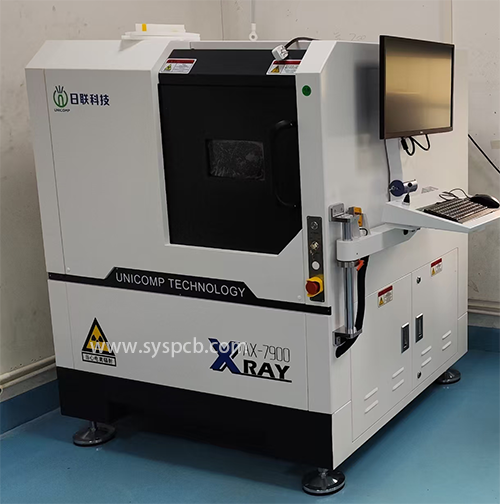
It offers the following advantages:
Table of Contents
1. Capable of Detecting Defects That Traditional Methods Cannot
PCBA X-ray inspection can identify defects that traditional methods cannot, including:
- Solder Defects: Common in PCBA, such as voids, cracks, solder bridging, short circuits, and open circuits.
- Package Defects: Flaws in packaged components, such as deformation, cracks, or open circuits.
- Wiring Defects: Issues in wiring, such as broken wires, short circuits, or open circuits.
- These defects may degrade PCBA performance or cause failures, and X-ray inspection can effectively detect them.
2. High Speed and Efficiency of X-ray Inspection
PCBA X-ray inspection is fast, typically taking only a few seconds per PCBA. This improves production efficiency and shortens time-to-market.
Key reasons for its speed include:
- High-Resolution Imaging: X-rays produce high-resolution images, clearly displaying details without physical contact or complex mechanical adjustments.
- Real-Time Imaging: X-ray systems generate images instantly, without waiting or additional processing steps.
- Automation: X-ray inspection can be integrated into production lines, automating image capture and analysis without manual intervention.
- Multi-Angle Inspection: The system can inspect PCBA from different angles without moving the board, ensuring thorough examination.
3. Non-Destructive Testing Without Damaging PCBA
As a non-destructive method, X-ray inspection allows for batch testing, significantly improving inspection efficiency. This is achieved through:
- Penetration Power of X-rays: As electromagnetic waves, X-rays penetrate copper layers, substrates, and solder, enabling internal inspection without damaging the PCBA surface.
- Adjustable X-ray Energy: X-ray energy can be adjusted as needed. Low-energy X-rays are typically used for PCBA inspection to minimize potential damage.
- Safety Measures: X-ray inspection equipment is equipped with protective devices to prevent harm to both operators and the PCBA.
4. Application Scenarios for PCBA X-ray Inspection
X-ray inspection can be applied at various stages of PCBA production:
- Pre-Reflow Inspection: Detects solder defects before reflow soldering to prevent their expansion during the process.
- Post-Reflow Final Inspection: Ensures soldering quality, performance, and reliability of the PCBA.
- In-Process Monitoring: Continuously monitors the PCBA production process to identify issues early and implement corrective measures, improving product quality.
5. Conclusion
X-ray inspection is a critical quality control method in the PCBA manufacturing process, leveraging its non-destructive advantages to ensure product quality and reliability. It helps manufacturers enhance product yield and market competitiveness.