In PCB design, the choice of copper thickness has a significant impact on circuit performance, cost, and manufacturing process. The following is a detailed summary of copper standard thickness and selection methods:
Table of Contents
1. Standard thickness of copper foil
The thickness of copper foil is usually expressed in ounces per square foot (oz), with 1 oz corresponding to a thickness of 35 microns (1.37 mil). The common standard thicknesses are as follows:
| Ounces (oz) | Thickness (microns) | Typical application scenarios |
| 0.25 oz | 8.9μm | Ultra thin flexible circuit, high-frequency signal (such as millimeter wave) |
| 0.5 oz | 17.5μm | High density wiring, consumer electronics (mobile phones, tablets) |
| 1 oz | 35μm | Universal design (for most consumer electronics and digital circuits) |
| 2 oz | 70μm | Power module, high current circuit, LED driver |
| 3 oz | 105μm | High power equipment (motor drive, power converter) |
| 4 oz+ | 140μm | Extreme current demand (industrial power supply, electric vehicle) |
2. How to choose the correct copper thickness in PCB design
The selection of copper thickness requires comprehensive consideration of the following factors:
1. Current carrying capacity
-Formula reference: According to the IPC-2221 standard, the relationship between current and copper thickness, line width, and temperature rise can be calculated using formulas or online tools.
For example, when the temperature rises by 10 ° C, 1 oz copper foil can carry a current of approximately 2 A with a line width of 1 mm, and 2 oz copper foil can increase it to 4 A.
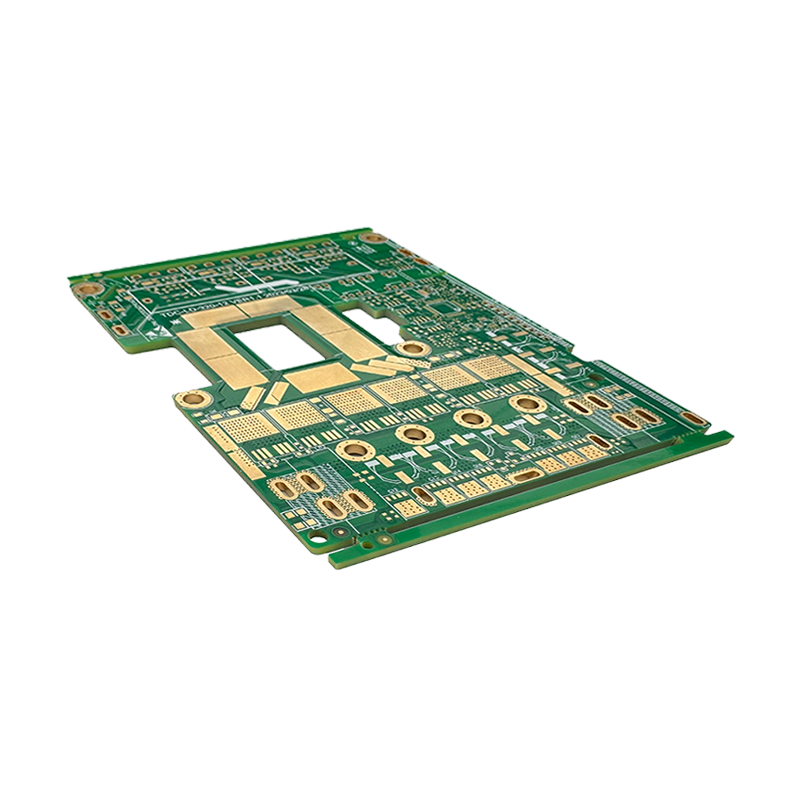
– High current scenario : Power paths and power devices (such as MOSFETs) require 2 oz or thicker copper foil to reduce resistance and heat generation.
2. Temperature rise limit
-The higher the temperature rise is allowed, the thicker the copper can be appropriately reduced, but the lifespan of the component needs to be considered (such as the sensitivity of electrolytic capacitors to temperature).
3. Wiring density
-High density design: 0.5 oz or 1 oz copper foil is easier to etch fine lines (such as 0.1 mm line width), suitable for BGA packaging or high-speed signals.
-Thick copper limitation: Copper foil above 3 oz may result in a minimum line width limitation (e.g. ≥ 0.3 mm).
4. High frequency signal influence
-Skin effect: High frequency signals (such as GHz level) concentrate current on the surface of a conductor, with a skin depth of δ=√ (ρ/(π f μ)), for example, copper’s δ ≈ 0.66 μ m at 10 GHz. At this point, surface roughness is more critical than copper thickness, but it is necessary to ensure that the copper thickness is at least several times greater than δ.
-High frequency applications: 0.5~1 oz copper foil is often selected, combined with low roughness (RTF/VLP copper foil) to reduce losses.
5. Mechanical strength and reliability
-Multi layer board: Thick copper (2-3 oz) can enhance mechanical stability and is suitable for vibration environments (automotive electronics).
– Heat dissipation requirement : Thick copper enhances heat conduction, suitable for high-power heat dissipation (such as power modules that require copper layers as heat dissipation paths).
6. Cost and Manufacturing Process
– Cost : Thick copper increases material cost and etching time (e.g. 4 oz costs 30%~50% more than 1 oz).
– Process limitations : The etching ability of thick copper needs to be confirmed with the manufacturer (e.g. 3 oz copper foil may require a minimum line width of ≥ 0.5 mm).
7. Application scenario examples
–Consumer Electronics: 1 oz (universal design, such as mobile phone motherboards).
– Power module : 2~3 oz (such as DC-DC converter, inverter).
–High frequency circuit: 0.5~1 oz (such as 5G RF front-end, radar).
–Industrial equipment : 2-4 oz (such as motor controllers, charging stations).
Summary of Selection Steps
1. Determine current demand
Estimate the current temperature rise relationship through calculations or tools.
2. Evaluate wiring density
Select the appropriate thickness based on component packaging and line width requirements.
3. High frequency analysis
Check for skin effect and surface roughness requirements.
4. Verify process feasibility
Confirm line width and spacing limitations with PCB manufacturers.
5. Cost trade-off
Choose the most economical copper thickness while meeting performance requirements.
By systematically analyzing electrical requirements, manufacturing constraints, and application scenarios, suitable copper foil thickness can be efficiently selected to balance performance and cost.