Carbon Ink PCB is a special circuit board that is coated with carbon based conductive ink on the surface of a PCB through screen printing technology. It is mainly used to replace metals (such as copper) as conductive contact layers. The following are the core differences and detailed explanations between it and ordinary PCBs:
Table of Contents
1、 Definition and Structure of carbon oil PCB
1. Core materials
-Conductive carbon ink: A conductive ink made by mixing carbon powder, resin, and additives, which forms a conductive layer through screen printing.
-Substrate: Ordinary FR-4 or other PCB substrates.
2. Key processes
-Screen printing: Printing carbon oil on specific areas of the PCB surface (such as key contacts), and forming a conductive layer after high-temperature curing.
-No need for electroplating: traditional PCB metallization steps such as copper plating and electroplating are eliminated, making the process simpler.
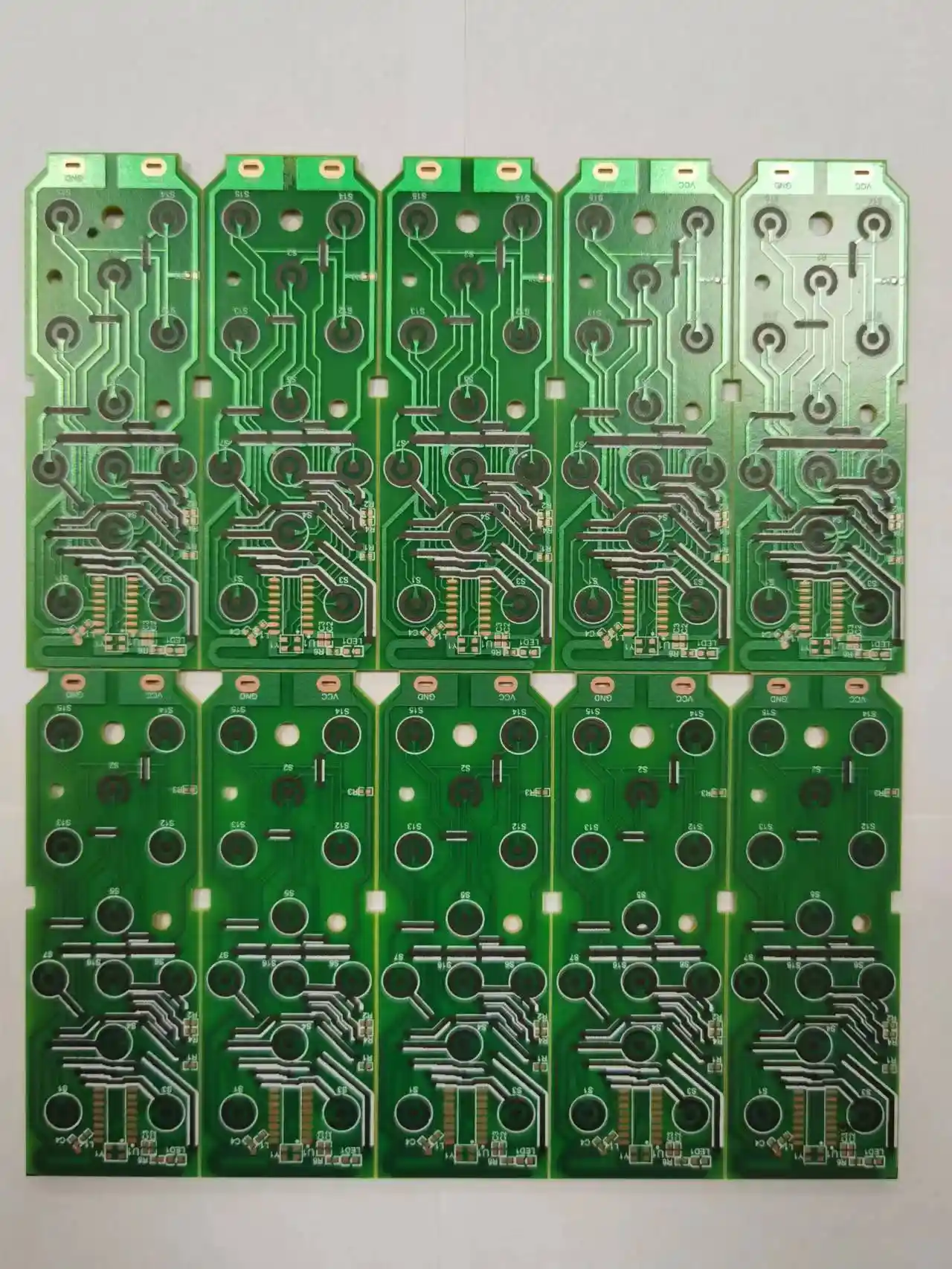
2、 The difference between carbon ink board and common PCB
| Comparing dimensions | carbon ink board | common PCB |
| Conductive layer material | Carbon based conductive ink (with high resistivity, about 10-100 Ω/□) | Copper foil (extremely low resistivity, about 0.05 Ω/□) |
| Surface Treatment | The carbon oil coverage area is the conductive layer, and the other areas are the solder mask green oil | Tin plated/gold-plated/OSP solder pads, solder mask layer only insulated and non-conductive |
| Application scenarios | Low cost keypad (remote control, calculator, home appliance panel, etc.) | Universal circuit board (computer motherboard, mobile phone motherboard, etc.) |
| Process complexity | Eliminating the metalization step, the process is simple and the cost is low | Complex processes such as drilling, copper deposition, and electroplating are required |
| durability | The carbon layer is prone to wear and tear (with a lifespan of approximately 100000 button presses) | Copper layer has high durability (longer lifespan) |
| cost | Low material cost, suitable for large quantities of simple circuits | High cost, suitable for complex circuits and high-performance requirements |
3、 Typical applications of carbon ink PCBs
1. Key contacts:
-The carbon ink layer directly serves as a conductive medium in the contact areas of remote controllers, calculators, elevator buttons, and other devices that require frequent pressing.
2. Low cost demand scenario:
-Toys, small appliances, and other scenarios that do not require high conductivity but require cost control.
3. Flexible circuit assistance:
-In flexible PCB (FPC), carbon oil can replace some copper lines and enhance the durability of the bending area.
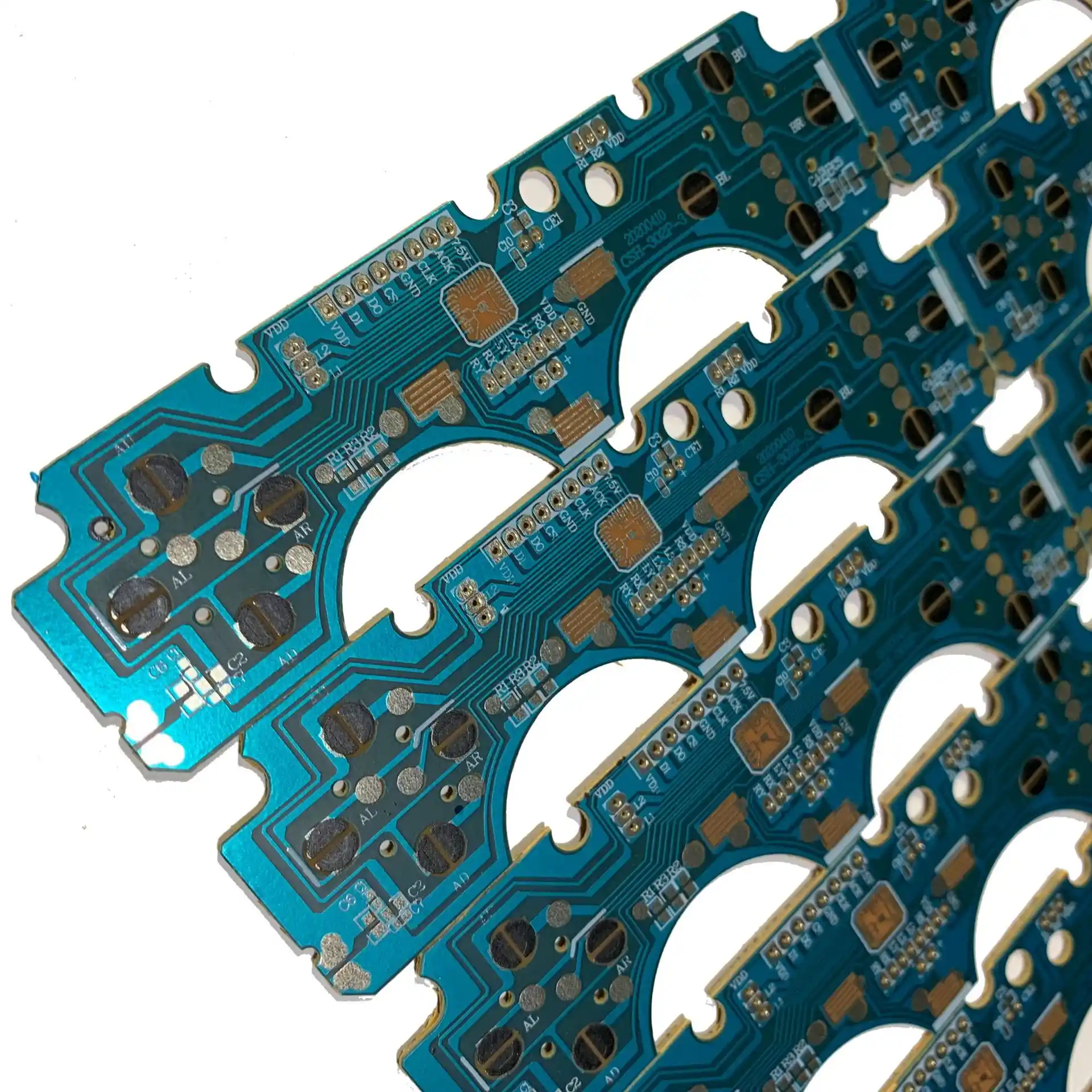
4、 Advantages and disadvantages of carbon ink PCB
advantage
-Low cost: eliminates the cost of copper plating and surface treatment.
-Simple process: No need for complex metallization process, short production cycle.
-Flexible design: The shape of the conductive area can be precisely controlled through screen printing.
disadvantage
-Poor conductivity: high resistance, not suitable for high current or high-frequency signal transmission.
-Low durability: The carbon layer is prone to wear and oxidation, and long-term use is prone to failure.
-Accuracy limitation: The screen printing accuracy is lower than that of etched copper lines, and the line width/spacing is generally ≥ 0.2mm.
5、 How to choose between carbon oil PCB and ordinary PCB?
-Choose carbon ink PCB:
Low cost, simple button circuits, and scenarios that do not require high precision/high frequency performance.
-Choose a regular PCB:
High frequency signals, high currents, and high reliability requirements (such as industrial equipment and communication equipment).
summarize
Carbon oil PCB is a simplified version of traditional PCB, which reduces costs through a carbon ink conductive layer, but sacrifices conductivity and durability. In design, it is necessary to weigh and choose based on specific requirements (cost, performance, lifespan). For scenarios that require high reliability, regular PCBs are still a better solution.