

Table of Contents
Introduction to RTC Technology
In the electronics industry, Real-Time Clock (RTC) technology serves as a critical component that enables devices to track precise time and date information even when primary power is disconnected. For PCB manufacturers and designers, understanding RTC implementation is essential across countless applications from consumer electronics to industrial systems. As an integral part of many electronic designs, RTC circuits present unique challenges in power management, signal integrity, and component integration that directly impact overall system reliability and performance.
This comprehensive guide explores RTC technology from a PCB perspective, providing valuable insights into operational principles, design considerations, and implementation strategies that ensure optimal performance in diverse applications. Whether designing for battery-powered IoT devices or sophisticated industrial equipment, mastering RTC implementation represents a crucial competency for modern electronics manufacturers.
1. Fundamental Principles of RTC Technology
1.1 Core Functionality and Timekeeping Mechanisms
At its essence, an RTC integrated circuit is a specialized chip that maintains accurate time and calendar functions, typically including counters for seconds, minutes, hours, day of the week, date, month, and year with automatic leap-year compensation . These components operate continuously using a backup power source, ensuring persistent timekeeping even when the main system power is unavailable.
The heart of any RTC circuit is a precision quartz crystal oscillator, typically operating at 32.768 kHz – a frequency chosen specifically for its binary divisibility properties that efficiently derives the standard 1Hz signal required for timekeeping . This stable frequency reference enables RTC circuits to maintain exceptional timing accuracy, with sophisticated variants incorporating compensation mechanisms for crystal frequency drift due to temperature variations.

1.2 Communication Interfaces and System Integration
RTC components typically interface with host processors through standardized serial communication protocols, with I²C (Inter-Integrated Circuit) and SPI (Serial Peripheral Interface) being the most prevalent implementations . Each interface offers distinct advantages for different application scenarios:
•I²C Interface: Employing a two-wire connection (serial data and serial clock), I²C provides efficient communication with minimal pin count, making it ideal for space-constrained designs where board real estate is premium .
•SPI Interface: Utilizing four wires (serial clock, master output/slave input, master input/slave output, and slave select), SPI generally offers higher data transfer speeds, benefiting applications requiring frequent time/date access or additional integrated functions .
The selection between these interface protocols involves careful consideration of factors including data rate requirements, power consumption constraints, PCB layout complexity, and microcontroller compatibility – all critical elements in optimized RTC circuit design.
2. RTC Market Landscape and Growth Trajectory
2.1 Global Market Analysis and Projections
The RTC IC market continues to demonstrate robust growth, driven by expanding integration across consumer electronics, industrial automation, automotive systems, and emerging IoT applications. Current market analyses project significant expansion in the coming years, with the global RTC market expected to maintain a steady growth trajectory through 2032 .
This sustained growth is fueled by several key factors, including the proliferation of smart connected devices, increasing automation in industrial settings, and the expanding capabilities of RTC components that now frequently integrate additional functions such as temperature compensation, non-volatile memory, and multiple alarm functions.
2.2 Key Industry Players and Competitive Landscape
The RTC component market features several established manufacturers with Renesas Electronics Corporation, ABLIC, and Theorycircuit representing significant participants in the competitive landscape . These companies continue to innovate in power efficiency, package miniaturization, and functional integration, driving advancements that PCB designers must accommodate in their layout strategies and component selection processes.
For PCB manufacturers, understanding the specific package requirements, decoupling needs, and layout recommendations for components from these major suppliers is essential for creating successful implementations, particularly as package sizes continue to shrink while functionality expands.
3. Critical PCB Design Considerations for RTC Circuits
3.1 Power Supply Architecture and Backup Power Implementation
Perhaps the most crucial aspect of RTC PCB design involves implementing a robust power management scheme that ensures continuous timekeeping operation during main power loss. This typically requires:
•Backup Battery Integration: Designing appropriate battery holder footprints or solder pads for backup batteries, typically coin cell configurations, with careful attention to polarity marking, mechanical stability, and accessibility for replacement .
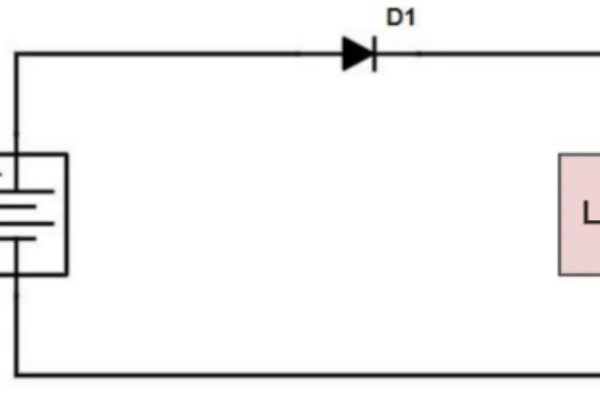
•Power Source Switching: Implementing circuitry that seamlessly transitions between primary and backup power sources, typically employing diodes or dedicated power management ICs to prevent reverse current leakage and ensure reliable operation .
•Decoupling and Filtering: Placing appropriate decoupling capacitors near RTC power pins, with values typically ranging from 100nF to 10μF depending on specific component requirements, to ensure stable operation and noise immunity .
3.2 Crystal Circuit Layout and Signal Integrity
The oscillator circuit represents the most sensitive portion of any RTC implementation, requiring meticulous PCB layout practices to ensure optimal performance:
•Proximity Placement: Positioning the crystal as close as possible to the RTC IC oscillator pins, typically within 5-10mm, to minimize trace length and associated parasitic capacitance and inductance .
•Ground Isolation: Implementing a dedicated ground area under the crystal circuit, isolated from digital ground noise while connected at a single point to the main system ground plane .
•Trace Symmetry: Routing the oscillator input and output traces with identical physical characteristics, maintaining consistent width and spacing while avoiding parallel routing with potential noise sources .
•Via Minimization: Avoiding vias in crystal traces whenever possible, as each via introduces additional parasitic capacitance and potential impedance discontinuities .
3.3 Signal Routing and Interface Implementation
Proper signal routing is essential for maintaining RTC communication integrity, particularly in noise-intensive environments:
•I²C Bus Layout: Implementing controlled impedance traces for SDA and SCL lines, with appropriate pull-up resistors located near the RTC device rather than at the host processor .
•Noise Isolation: Creating adequate separation between RTC signal traces and potential noise sources such as switching power supplies, clock lines, and digital buses .
•ESD Protection: Incorporating appropriate ESD protection devices on communication lines exposed to external connections, particularly in consumer-facing products .
4. Advanced RTC Implementation Strategies
4.1 Temperature Compensation Techniques
For applications requiring exceptional timekeeping accuracy across varying environmental conditions, implementing temperature compensation becomes essential:
•Integrated Compensation: Selecting RTC components with built-in temperature sensors and digital compensation algorithms that automatically adjust oscillator load capacitance to maintain frequency stability .
•External Thermal Monitoring: Implementing discrete temperature sensing with corresponding software compensation in applications using simpler RTC circuits without integrated temperature compensation .
•Layout Considerations: Ensuring temperature sensors are positioned to accurately reflect the crystal temperature rather than being influenced by nearby heat-generating components .
4.2 Low-Power Design Methodologies
Many RTC applications operate in power-constrained environments, necessitating specialized design approaches:
•Leakage Current Management: Selecting components with minimal standby current consumption, with modern RTC ICs typically drawing 100-500nA in battery backup mode .
•Power Domain Segmentation: Implementing appropriate power switching to completely isolate unused circuit sections during battery operation, preventing unnecessary power drainage .
•Component Selection: Choosing passive components specifically rated for low-leakage operation, particularly in critical timing and decoupling circuits .
5. Application-Specific Implementation Guidelines
5.1 Consumer Electronics Implementation
Consumer applications including smartphones, wearables, and smart home devices present unique challenges for RTC implementation:
•Space-Constrained Layout: Utilizing ultra-compact component packages and implementing high-density interconnect techniques to minimize RTC circuit footprint .
•Cost-Effective Manufacturing: Balancing performance requirements with manufacturing economics through careful component selection and design optimization .
•Automated Production Compatibility: Ensuring RTC circuit designs accommodate pick-and-place assembly, reflow soldering processes, and automated optical inspection .
5.2 Industrial and Automotive Applications
Industrial and automotive environments introduce additional considerations for RTC implementations:
•Extended Temperature Operation: Selecting components rated for appropriate temperature ranges, with industrial-grade typically spanning -40°C to +85°C and automotive-grade spanning -40°C to +105°C or higher .
•Enhanced Reliability Requirements: Implementing redundant circuitry, additional protection components, and more conservative design margins to ensure operation in critical applications .
•Regulatory Compliance: Addressing industry-specific standards including automotive EMC requirements, industrial safety certifications, and functional safety mandates .
6. Testing, Validation, and Troubleshooting
6.1 Performance Verification Methodologies
Comprehensive testing protocols are essential for validating RTC circuit performance:
•Timekeeping Accuracy Measurement: Implementing procedures to measure and calibrate RTC accuracy against reference standards, typically targeting ±5ppm or approximately ±0.5 seconds per day .
•Backup Current Validation: Verifying battery backup current consumption under various operating conditions to ensure compliance with design specifications and battery life requirements .
•Oscillator Stability Assessment: Characterizing oscillator start-up characteristics and frequency stability across anticipated operating temperature ranges .
6.2 Common Implementation Challenges and Solutions
Even carefully designed RTC circuits can encounter specific issues requiring targeted troubleshooting:
•Excessive Power Consumption: Typically caused by incorrect crystal load capacitance, PCB leakage paths, or improper power management configuration .
•Timing Inaccuracy: Often resulting from incorrect crystal parameter matching, temperature-induced frequency drift, or noise contamination of the oscillator circuit .
•Communication Failures: Frequently traced to incorrect pull-up resistor values, signal integrity issues, or protocol timing violations .
7. Future Trends in RTC Technology and Implementation
7.1 Emerging Technological Developments
The RTC landscape continues to evolve, with several significant trends shaping future implementations:
•Enhanced Integration: Increasing incorporation of additional functions within RTC packages including non-volatile memory, temperature sensors, and multiple alarm outputs .
•Improved Power Efficiency: Ongoing reduction in backup current requirements, with leading-edge components now achieving sub-100nA operation in backup mode .
•Advanced Compensation Algorithms: Implementation of sophisticated digital compensation techniques that automatically adjust for crystal frequency variations due to aging and temperature effects .
7.2 Implications for PCB Design Practices
These technological advancements necessitate corresponding evolution in PCB design methodologies:
•High-Density Integration: Accommodating increasingly fine-pitched component packages while maintaining manufacturability and testability .
•Mixed-Signal Expertise: Developing more sophisticated analog design capabilities to support precision oscillator circuits in increasingly noisy digital environments .
•Thermal Management: Implementing more advanced thermal design practices to mitigate temperature gradients that impact timing accuracy in precision applications .
Conclusion: Mastering RTC Implementation in PCB Design
Successfully implementing RTC circuits requires meticulous attention to numerous technical considerations spanning power architecture, signal integrity, component selection, and manufacturing compatibility. By understanding the fundamental principles, carefully addressing layout requirements, and anticipating application-specific challenges, PCB designers can create robust implementations that deliver reliable timekeeping performance across diverse operating conditions.
The continuing evolution of RTC technology presents both challenges and opportunities for PCB manufacturers. As components become more integrated and power-efficient while offering enhanced functionality, designers must correspondingly advance their implementation strategies to fully leverage these capabilities. Through thoughtful design practices and thorough validation methodologies, PCB professionals can successfully navigate these complexities, delivering RTC implementations that meet the stringent requirements of modern electronic products.
For PCB companies, developing specialized expertise in RTC implementation represents a valuable competitive advantage, particularly as timekeeping functionality becomes increasingly ubiquitous across the electronics landscape. By mastering the nuances of RTC technology, manufacturers can position themselves as preferred partners for clients requiring reliable, accurate, and power-efficient timekeeping solutions in their products.

-600x400-c.png)