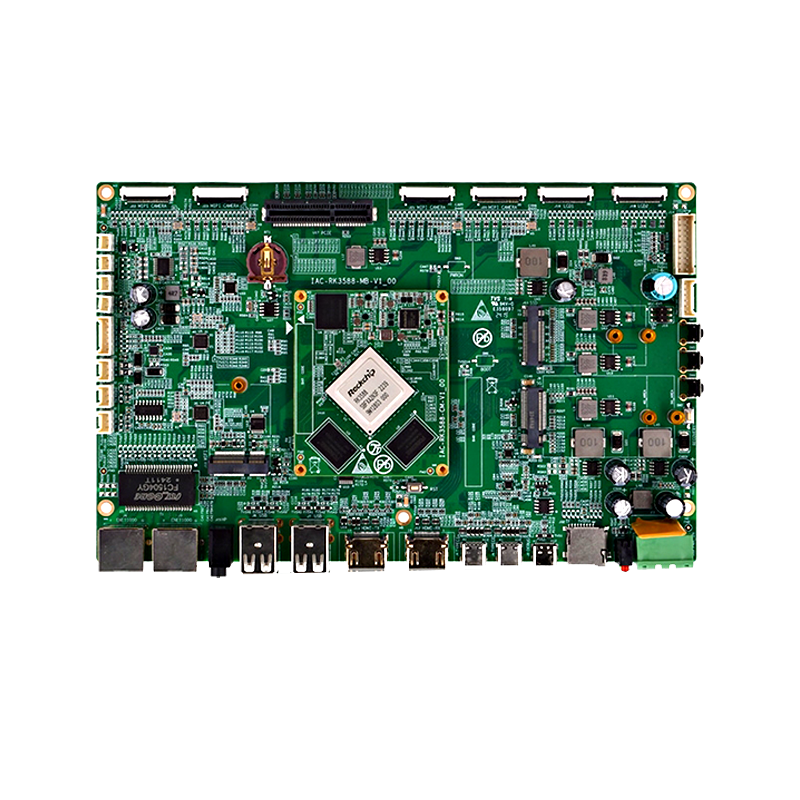
In the internal world of modern electronic devices, the controller circuit board is like a precision operating command center. When sensors capture temperature changes, when users touch switches, when machines need to make autonomous decisions – all of these actions originate from a PCB controller carrying complex circuits. As an indispensable “smart brain” for electronic products, it is reshaping the underlying logic of industrial automation, intelligent vehicles, and AI infrastructure.
Table of Contents
1、 The Wide Application Layout of Controllers
Industrial Automation: Precise Commander of Production Lines
In the core control cabinet of the welding robot in automobile manufacturing, a six layer HDI PCB controller coordinates the motion trajectory of the robotic arm with microsecond level accuracy. By processing multiple sensor data in real-time, it can synchronously control servo motors, welding currents, and conveyor belt speeds, keeping the welding error of the entire vehicle within 0.1mm. More importantly, the CAN bus controller it is equipped with strictly controls the routing within 50 Ω± 5% through differential impedance, ensuring a 10 ⁻⁹ error rate is maintained even under strong electromagnetic interference during motor start stop.

Intelligent Cars: The Evolutionary Engine of Body Control
The modern body control module (BCM) has evolved from a simple relay array to a highly integrated intelligent control hub. A 6-layer PCB with dimensions of 52mm × 45mm integrates SBC power management chip, Arm Cortex-M0+MCU, and intelligent high edge driver chip, achieving a leap from traditional fuse control to digital diagnosis
-Real time monitoring of lamp current fluctuations and prediction of faults through MultiSense technology of VND7020AJTR chip
-The domain control architecture reduces the number of controllers by 40% and reduces the weight of the wiring harness by 12kg
Medical Electronics: Guardians of Life Signals
The core controller PCB of implantable defibrillators faces strict challenges: integrating bioelectric signal acquisition, lithium battery management, and wireless communication modules in a space only the size of a coin. It adopts rigid flex bonding plate technology and achieves dynamic bending radius<2mm through polyimide substrate, while maintaining the timing accuracy of nerve stimulation pulses up to ± 0.1 μ s.
2、 The Triple Core Mission of PCB in Controllers
The physical carrier of electrical connections
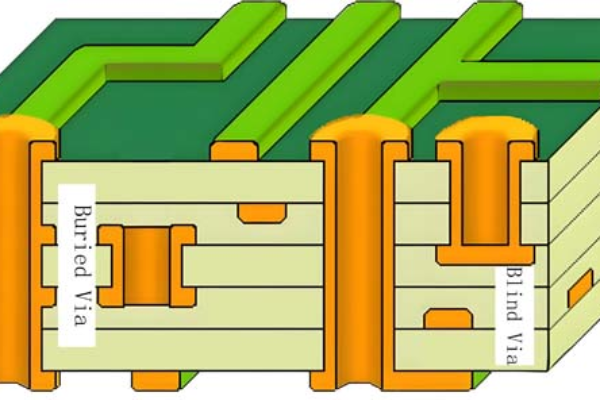
-High density interconnection: On the 5G base station control board, 0.1mm laser blind holes and 3 μ m line width technology increase the wiring density per unit area by 70%, supporting 128 channel Massive MIMO real-time beamforming
-Power integrity guarantee: The electric vehicle controller adopts 2oz thick copper foil combined with a three-dimensional heat dissipation architecture, which reduces the voltage drop of the main circuit of 120A to less than 30mV
Guardian of Signal Integrity
High frequency signal transmission imposes extreme requirements on PCB design:
Example of Key Design Parameters
| Signal type | Impedance requirement | Equal length tolerance | Ground wrapping strategy |
| DDR4 clock | 40 Ω± 5% | <5ml | Fully enclosed ground+shielded via |
| 77GHz radar | 50 Ω± 2% | <0.1mm | Rogers 5880 substrate |
| CAN differential line | 120 Ω± 10% | <100mil | 3W spacing isolation |
Data sourced from industrial controller design specifications
The cornerstone of system reliability
In the photovoltaic inverter controller, the PCB ensures a 25 year service life through triple protection:
-Copper surface segmentation technology: The power layer adopts a “Japanese” layout to block di/dt noise coupling
-Thermal management design: 3mm aluminum substrate embedded in PCB, reducing IGBT junction temperature by 15 ℃
-Three proof coating: Polyurethane coating makes the insulation impedance>10 ¹² Ω and resistant to salt spray corrosion
3、 Life and death design details
1. Hard isolation art of high and low voltage signals on controller PCB
On the servo drive control board, a clearance distance of at least 8mm is required between the high-voltage IGBT module (600V) and the STM32 control chip, and a grounded copper shielding tape is set in the middle. Any signal that crosses the partition area must be isolated through an isolation transformer or optocoupler to prevent switch noise from causing MCU crashes.
2. Macro game of clock signals
For every 1mm increase in the distance between the 72MHz main crystal oscillator and MCU, the clock jitter increases by 0.3ps. Best practice requirements:
-Crystal oscillator shell directly grounded
-The length of the wiring is ≤ 10mm and strictly equal in length
-No other signals are allowed to pass through below
3. Multidimensional defense of electromagnetic compatibility
A certain industrial PLC failed EMC testing and traced back to find that the relay drive line was parallel to the ADC sampling line. Optimization plan:
[Relay Drive] – [Spacing 3 times Line Width] – [Grounding Shielding Tape] – [Magnetic Bead Filter] – [ADC Input]
After rectification, the radiation emission decreased by 18dB and passed the IEC 61000-4-6 standard.
4、 Future Battlefield: Four Major Technological Revolutions
1. Wide bandgap semiconductor integration revolution
The popularization of silicon carbide MOSFET driver chips promotes the upgrading of PCB substrates:
-The thermal conductivity of the aluminum nitride ceramic substrate reaches 270W/mK, which increases the power density of the 800V platform inverter by three times
-Silver sintering process results in a chip mounting void rate of<1%
2. Breakthrough in 3D Stacking Architecture
Vertical stacking of storage computing RF through silicon via (TSV) technology:
-90% reduction in signal transmission distance
-Delay reduced to PS level
-The Apple M4 Ultra processor has adopted this architecture
3. Self diagnostic intelligent PCB
Inside the high-end servo drive, the PCB is embedded with a distributed sensor network:
-Temperature sensors are installed every 10mm ²
-Strain gauges monitor solder joint fatigue
-Data driven predictive maintenance, fault warning accuracy>95%
4. Sustainable Manufacturing Technologies
The 2025 version of GB/T 39560 standard promotes the upgrading of environmental protection processes:
-Lead free soldering peak temperature control ± 2 ℃
-Laser induced metal deposition (LIFT) reduces copper consumption by 40%
-The recovery rate of heavy metals in wastewater reaches 99.97%
5、 Our technical barrier: Defining high-end controller PCB standards
Extreme process control capability
Comparison of Precision Manufacturing Parameters
| Parameters | Industry Standards | Our Company Standards | Improving Efficiency |
| Laser blind hole position accuracy | ± 15 μ m | ± 5 μ m | High frequency loss reduced by 18% |
| Impedance control deviation | ± 10% | ± 3% | signal reflection reduced by 60% |
| Copper thickness uniformity | ± 10% | ± 3% | Temperature rise decreases by 12 ℃ |
| High frequency insertion loss (@ 10GHz) | 0.8dB/cm | 0.35dB/cm | Transmission efficiency improved by 92% |
Full scenario reliability verification system
-3000 temperature cycles from -40 ℃ to 150 ℃ (IEC 60068-2-14)
-50g acceleration six way mechanical impact (MIL-STD-883)
-10kV/1kA composite surge test
When surgical robots achieve micrometer level motion control through flexible PCBs with a line width of 0.02mm, and when smart grid controllers accurately schedule power even under lightning strikes – behind these scenes is the breakthrough in the integration of controller PCBs in material science, circuit design, and precision manufacturing.