Table of Contents
Executive Summary
The evolution of Autonomous Driving (AD) hinges on the ability of vehicles to “see” and interpret their surroundings with superhuman accuracy. While algorithms and sensors capture the spotlight, the Printed Circuit Boards (PCBs) that form the foundation of these systems are the unsung heroes. This article explores the demanding landscape of AI vision for autonomous driving, from pure vision to sensor fusion approaches, and delves into the critical PCB design and manufacturing challenges—including signal integrity, thermal management, and automotive-grade reliability—that must be overcome to ensure safety and performance on the road.
1 The “Eyes” of the Autonomous Vehicle: Sensor Modalities
Autonomous driving systems rely on a suite of sensors to create a 360-degree perception of the environment. The choice of sensor combination is a fundamental architectural decision for OEMs.
•Cameras (Vision): Provide high-resolution 2D image data essential for object classification, traffic sign recognition, and lane detection. They are cost-effective but susceptible to variable lighting, weather conditions, and lack inherent depth perception.
•Radar (Radio Detection and Ranging): Excels at measuring distance and speed of objects in all weather conditions. It is robust against rain, fog, and dust but offers lower resolution compared to other sensors.
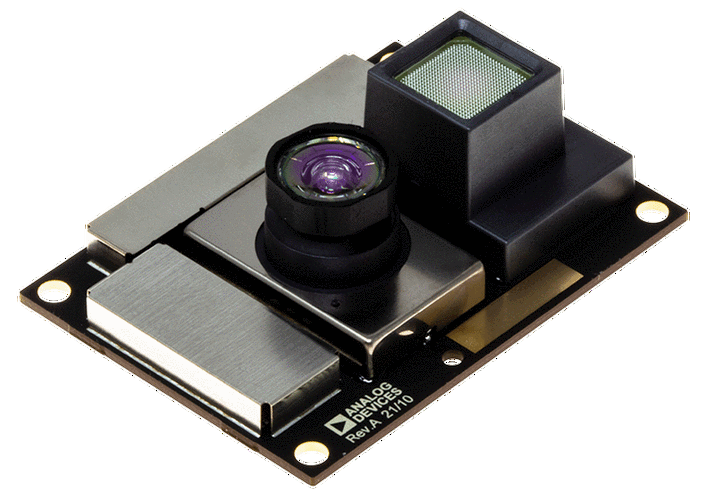
•LiDAR (Light Detection and Ranging): Generates precise high-resolution 3D point cloud maps of the environment by measuring laser light reflection. It provides excellent depth information but has historically been higher cost and can be affected by heavy rain or fog.
The industry debate often centers on “Pure Vision” vs. “Sensor Fusion.” Pure vision systems, championed by some, argue that with sufficiently advanced AI, cameras alone can achieve full autonomy. However, studies and industry trends show a strong shift towards sensor fusion. Integrating data from cameras, radar, and LiDAR provides redundant and complementary information, creating a more robust and safer system capable of handling the long tail of rare but critical driving scenarios (e.g., a child running onto the road in heavy fog).
2 From Data to Decision: The AI Processing Pipeline
The raw data from sensors is useless without immense computational power to interpret it. This happens in a continuous, real-time pipeline:
1.Data Acquisition: Sensors continuously capture analog environmental data.
2.Signal Conditioning & Conversion: The analog signals are conditioned and converted to digital data by interfaces on the sensor’s own PCB. This stage requires impeccable signal integrity to avoid introducing noise that would corrupt the AI’s perception.
3.Data Pre-processing: The digital data is filtered, synchronized, and prepared for fusion.
4.AI Inference: This is the core of the system. Neural Networks (NNs), often Convolutional Neural Networks (CNNs) for vision, process the fused sensor data to identify objects, predict trajectories, and make driving decisions. This happens on powerful GPUs or specialized AI Accelerators (SoCs).
5.Actuation: The AI’s decisions are sent to the vehicle’s control systems to manage steering, braking, and acceleration.
3 PCB Design Challenges: The Foundation of Reliability
The performance of this entire AI pipeline is dictated by the quality and sophistication of the underlying PCBs. As a PCB manufacturer, addressing these challenges is our core competency:
| Challenge Category | Key PCB Considerations & Solutions |
| High-Speed Data Integrity | AI systems process terabytes of data. PCBs must support multi-gigabit serial interfaces (e.g., MIPI CSI-2 for cameras, Ethernet for radar/LiDAR). This requires controlled impedance routing, minimized crosstalk, and strict adherence to length matching tolerances. |
| Thermal Management | AI processors (GPUs/SoCs) consume immense power, generating significant heat. We utilize thermal vias, thick copper weights, and design for integration with heatsinks and cold plates. Selecting substrates with high Thermal Conductivity is critical to prevent throttling and ensure reliability. |
| Power Delivery Network (PDN) | AI chips have demanding, noisy power requirements with fast transient responses. A robust PDN requires multiple power planes, strategic decoupling capacitor placement, and potentially buried capacitance materials to ensure clean, stable voltage. |
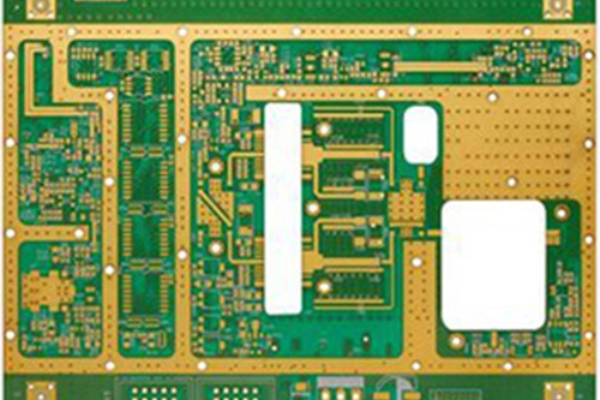
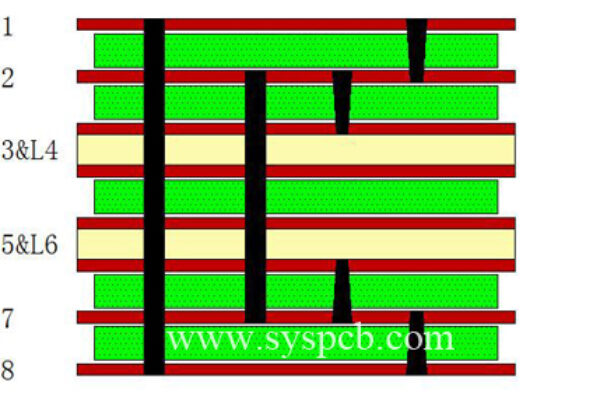
| High-Density Interconnect (HDI) | Modern ADAS domain controllers pack enormous functionality into small form factors. HDI technology with microvias, blind vias, and buried vias is essential for routing high-pin-count BGAs and components. |
| Automotive-Grade Reliability | Automotive electronics operate in harsh environments. PCBs must withstand extreme temperature cycles (-40°C to +125°C), vibration, and humidity. This demands the use of high-Tg materials, rigorous quality control, and compliance with standards like AEC-Q100 and IATF 16949. |
4 The Sensor Fusion Imperative and PCB Implications
Recent evaluations, including those by Pacific Auto and Bit Auto, have demonstrated that vehicles equipped with fused perception systems (combining cameras, radar, and LiDAR) exhibit significantly more robust performance in complex scenarios compared to those relying solely on pure vision systems.
This technological shift directly impacts PCB design. A fusion system is not simply multiple sensors on a network; it requires a centralized Domain Controller—a powerful computer that processes data from all sensors simultaneously. The PCB for this controller is among the most complex in the vehicle:
* Multiple High-Speed Interfaces: It must feature numerous high-speed channels for camera, radar, and LiDAR data, all while maintaining signal isolation.
* Extreme Layer Counts: It is common for these boards to have 20-30 layers or more to accommodate the dense routing and multiple power planes.
* Advanced Materials: To ensure signal integrity at high speeds, low-loss (Ultra Low Loss) laminates are often mandatory, moving beyond standard FR-4.
5 The PCB Manufacturer’s Role: Enabling Next-Generation AI Drive
For an AI vision system to be trusted, its physical hardware must be flawless. This is where our expertise becomes vital. We enable our clients’ innovation by providing:
•Expert Design for Manufacturing (DFM): We collaborate early in the design process to advise on layer stack-ups, material selection, and routing strategies to ensure designs are not only innovative but also manufacturable and reliable.
•Precision Manufacturing for Advanced Tech: We specialize in HDI, high-layer-count boards, and the use of specialized low-loss materials required for automotive radar and AI processors.
•Rigorous Testing and Quality Assurance: We implement a battery of tests, including Automated Optical Inspection (AOI), Electrical Testing, and Micro-sectioning Analysis, to guarantee that every board meets the “zero-defect” mindset required for automotive safety.

6 Conclusion: Building the Vision for a Safer Autonomous Future
The path to full autonomy is being paved with data, algorithms, and immense computational power. However, none of this is possible without the advanced printed circuit boards that serve as the nervous system of the autonomous vehicle—connecting the eyes (sensors) to the brain (AI computer).
The trend is clear: safer, more reliable autonomous driving will be built on sensor fusion, which in turn demands more sophisticated and reliable PCBs. The industry requires manufacturing partners who not only understand the complexities of high-speed digital design and thermal management but also possess the unwavering commitment to automotive-grade quality and reliability.
Partner with Us for Your Autonomous Driving Projects
Navigating the complexities of PCB design for AI-driven autonomous systems requires a manufacturing partner with proven expertise and cutting-edge capabilities. Our experience in producing high-density interconnect (HDI) PCBs, utilizing advanced materials, and adhering to strict automotive quality standards ensures that your innovative designs are translated into reliable, high-performance hardware.
Contact us today to discuss how we can support your next-generation autonomous driving projects and help you build the vehicles of the future.