Table of Contents
Executive Summary
Automotive-grade chips represent a specialized category of semiconductor components engineered to meet the stringent requirements of vehicle applications. Unlike commercial or industrial-grade chips, these components must withstand extreme temperatures (-40°C to 150°C), demonstrate exceptional reliability over 15-year lifespans, and comply with rigorous quality standards such as AEC-Q100 and ISO 26262 . For PCB manufacturers and designers, understanding the unique characteristics of automotive-grade chips is crucial for creating robust electronic systems that power modern vehicles—from advanced driver assistance systems (ADAS) to powertrain control and infotainment. This comprehensive guide explores the technical specifications, design considerations, and verification processes essential for successfully implementing automotive-grade chips in PCB designs, highlighting their critical role in the evolving automotive electronics landscape.
1.Understanding Automotive-Grade Chips: Beyond Commercial Components
1.1 Defining Automotive-Grade Chips
Automotive-grade chips are semiconductor components specifically qualified for vehicle use, meeting standards that far exceed those for commercial or industrial applications. The Automotive Electronics Council (AEC) has established qualification standards that serve as the foundation for automotive component verification, with AEC-Q100 for integrated circuits and AEC-Q101 for discrete semiconductors . These standards encompass extensive stress tests simulating years of vehicle operation under challenging conditions.
The stringent requirements for automotive-grade chips stem from the critical nature of automotive applications where component failure could impact vehicle safety, performance, or functionality. Unlike consumer electronics with typical lifespans of 2-3 years, automotive electronics must maintain reliability for 15 years or more under conditions that include extreme temperature cycling, humidity, vibration, and electrical noise . This extended operational lifetime necessitates more robust semiconductor designs, enhanced manufacturing processes, and comprehensive testing protocols throughout the supply chain.
1.2 Temperature Grades and Operating Ranges
Automotive-grade chips are classified into different temperature grades based on their operational capabilities:
Table: AEC-Q100 Temperature Grades for Automotive Integrated Circuits
| Grade | Ambient Temperature Range | Typical Applications |
| Grade 0 | -40°C to 150°C | Engine control units, transmission control |
| Grade 1 | -40°C to 125°C | Powertrain systems, advanced driver assistance |
| Grade 2 | -40°C to 105°C | Body electronics, climate control |
| Grade 3 | -40°C to 85°C | Infotainment systems, displays |
| Grade 4 | 0°C to 70°C | Non-critical comfort features |
These temperature classifications ensure components can withstand the harsh environments where they’re deployed—from under-hood locations with extreme heat to exterior applications facing winter cold . PCB designers must select components with appropriate temperature grades for each application and consider thermal management techniques to maintain chips within their specified operating ranges.
2.Key Automotive Standards and Certification Processes
2.1 AEC-Q Standards and Testing Requirements
The AEC-Q qualification standards represent the industry benchmark for automotive semiconductor reliability. These standards include comprehensive test methods that evaluate components under various stress conditions:
•Accelerated Environment Stress Tests: Evaluate component robustness under temperature extremes, humidity, and thermal cycling conditions .
•Accelerated Lifetime Simulation Tests: Simulate years of operation under elevated stress conditions to predict long-term reliability .
•Package Assembly Integrity Tests: Verify the physical robustness of semiconductor packages under mechanical stress .
•Die Fabrication Reliability Tests: Assess the reliability of the semiconductor die itself .
•Electrical Verification Tests: Confirm electrical performance under various conditions .
•Defect Screening Tests: Identify potential manufacturing defects .
For example, AEC-Q100 includes specific tests such as Temperature Cycling (2000 cycles for Grade 0), High Temperature Operating Life (1000 hours for Grade 0), and Electrostatic Discharge tests to ensure component durability . Similarly, AEC-Q101 for discrete semiconductors includes 18 different test criteria covering aspects such as high temperature reverse bias, temperature cycling, and autoclave testing .

2.2 ISO 26262 Functional Safety
ISO 26262 is a critical standard for functional safety in road vehicles, addressing potential hazards caused by malfunctioning electrical and electronic systems. This standard defines Automotive Safety Integrity Levels (ASIL) ranging from A (lowest) to D (highest), which determine the required safety measures for each system based on severity, exposure, and controllability factors .
Modern automotive chips like Texas Instruments’ TDA4VH-Q1 processor are designed with functional safety in mind, supporting ASIL-D requirements for the highest level of automotive safety integrity . These chips incorporate safety mechanisms such as error-correcting codes on memories, built-in self-test capabilities, and redundant processing elements to detect and respond to potential faults.
For PCB designers, implementing functionally safe systems requires careful consideration of power supply monitoring, clock monitoring, and communication interface safety mechanisms. The selection of components with appropriate ASIL ratings and the implementation of necessary safety mechanisms on the PCB are essential steps in creating compliant automotive electronic systems.
3.Major Categories of Automotive-Grade Chips
3.1 Control Chips (MCUs and AI Processors)
Microcontroller Units (MCUs) serve as the fundamental control elements in automotive electronics, performing processing and control functions across vehicle systems. Automotive MCUs are categorized by their data bus width, which significantly impacts their processing capabilities:
Table: Automotive MCU Categories and Applications
| MCU Type | Data Bus Width | Typical Applications |
| 8-bit | 8 bits | Basic functions (fans, wipers, window controls) |
| 16-bit | 16 bits | Moderate complexity systems |
| 32-bit | 32 bits | Advanced systems (engine management, ADAS, infotainment) |
The trend in automotive MCUs is shifting toward 32-bit architectures, which accounted for approximately 65.8% of the global MCU market in 2021, as vehicles require more processing power for advanced functionalities . Modern vehicles may incorporate dozens of MCUs distributed throughout various electronic systems.
With the advent of advanced driver assistance systems and autonomous driving features, AI processors have emerged as a critical category of automotive control chips. These processors, such as the TDA4VH-Q1 from Texas Instruments, integrate specialized accelerators for deep learning and computer vision tasks, delivering performance up to 32 TOPS while maintaining power efficiency and functional safety compliance . Similarly, chips like the Axon M57 series from Axera Technology offer 10 TOPS of computing power while consuming less than 3.5W, making them suitable for ADAS applications in both traditional and electric vehicles .
3.2 Power Semiconductors
Power semiconductors manage and distribute electrical energy throughout vehicle systems. Key components include:
•MOSFETs: Used for switching applications in power distribution, motor control, and lighting systems. Automotive-grade MOSFETs must meet AEC-Q101 standards and are increasingly based on advanced technologies such as super-junction structures to improve efficiency .
•IGBTs: Essential for high-power applications such as electric vehicle powertrains and advanced motor control systems.
•Power Management ICs: Regulate and distribute power to various electronic systems throughout the vehicle.
Companies like Infineon dominate the automotive power semiconductor market, holding approximately 28% of the MOSFET segment and 33% of the IGBT segment . However, Chinese manufacturers such as BYD, StarPower, and CRRC are making progress in domestic substitution, although they still lag behind international giants in manufacturing processes and other aspects .
3.3 Sensors and Communication Chips
Sensor chips translate physical phenomena into electrical signals for processing by automotive electronic systems. These include:
•Vehicle Perception Sensors: Monitor parameters such as pressure, temperature, and flow within powertrain, chassis, and body systems .
•Environmental Perception Sensors: Include components for cameras, ultrasonic radar, millimeter-wave radar, and lidar systems that enable ADAS functionalities .
Communication chips enable data exchange between electronic systems within vehicles. These include:
•CAN/LIN Transceivers: Facilitate communication over automotive bus networks.
•Ethernet PHYs: Support high-speed data transfer for advanced applications such as ADAS and infotainment.
•SBCs: As exemplified by ChipNext’s IM90xxC/L series, integrate multiple functions such as voltage regulators, communication interfaces, and microcontroller capabilities into single-chip solutions .
Advanced system basis chips like ChipNext’s IM90xxC/L series demonstrate the trend toward higher integration in automotive communications, combining 40V high-voltage linear regulators, CAN/LIN transceivers, and embedded MCUs in single packages that comply with ISO 26262 ASIL-B safety standards while reducing component counts by up to 57% and PCB areas by 45% .
4.PCB Design Considerations for Automotive-Grade Chips
4.1 Thermal Management
The extreme operating temperatures in automotive environments, particularly for under-hood applications reaching up to 150°C, necessitate careful thermal management in PCB design. Effective strategies include:
•Thermal Via Arrays: Implementing patterns of thermal vias under high-power components to transfer heat to inner ground planes or dedicated thermal layers.
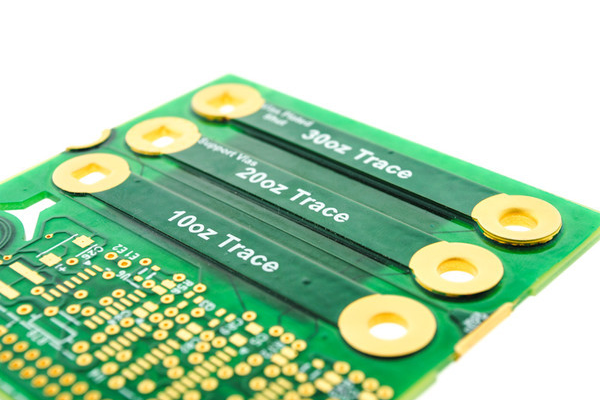
•Copper Thickness Optimization: Using appropriate copper weights (2-4 oz) for high-current paths to improve current handling and thermal dissipation.
•Component Spacing: Ensuring adequate spacing between heat-generating components to prevent thermal hotspots and ensure reliable operation across the temperature range.
PCB designers must also consider the thermal expansion coefficients of materials used in the board stackup to minimize stress on solder joints during temperature cycling, which can exceed 2000 cycles from -50°C to 150°C for Grade 0 components .
4.2 Signal and Power Integrity
Maintaining signal integrity and power integrity is crucial for reliable operation of automotive electronic systems, particularly as data rates continue to increase with ADAS and infotainment applications:
•Controlled Impedance: Critical for high-speed interfaces such as Ethernet, PCIe, and CSI-2, requiring precise stack-up design and material selection.
•Power Distribution Network: Designing a robust PDN with sufficient decoupling capacitance and proper power plane segmentation to ensure stable voltages under varying load conditions.
•Electromagnetic Compatibility: Implementing strategies to minimize EMI through careful layout, grounding schemes, and filtering techniques to meet automotive EMC requirements.
Reference designs such as TI’s TIDEP-01022 automotive gateway solution demonstrate proper implementation of high-speed interfaces including PCIe Gen3, 10Gb Ethernet, and LPDDR4 memory interfaces in automotive applications .
4.3 Reliability and Durability Enhancements
Automotive PCB designs must incorporate features to enhance long-term reliability under challenging operating conditions:
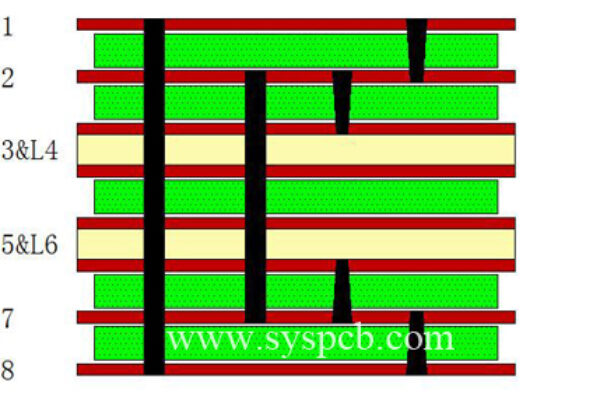
•Robust Interconnects: Using teardrop transitions between traces and pads to reduce stress concentrations.
•Conformal Coatings: Protecting PCBs from moisture, contaminants, and chemical exposure.
•Strain Relief: Securing connectors and components subject to vibration or mechanical stress.
•Test Points: Including adequate test access for manufacturing verification and field diagnostics.
Designs should follow IPC standards for automotive applications, which typically specify more stringent requirements than commercial equivalents, particularly for features such as plating thickness, solder mask registration, and copper coverage.
5.The Automotive Chip Supply Chain and Market Landscape
5.1 Current Market Dynamics
The global automotive chip market remains highly concentrated, with international manufacturers dominating key segments:
•MCU Market: Major players include Renesas Electronics, NXP, Infineon, Texas Instruments, and Microchip Technology, which collectively hold a significant portion of the market .
•Power Semiconductors: Companies such as Infineon lead in both MOSFET (28% market share) and IGBT (33% market share) segments .
Despite this concentration, the automotive chip shortage of 2020-2022 highlighted vulnerabilities in the global supply chain and accelerated efforts toward domestic substitution in markets such as China . This has created opportunities for local manufacturers to increase their presence in the automotive sector.
5.2 Growth Trajectories and Future Projections
Different categories of automotive chips exhibit varying growth trajectories:
•MCU Chips: The automotive MCU market was valued at approximately $65 billion in 2020 and is projected to grow to $88 billion by 2026 .
•AI Chips: The automotive AI chip market is experiencing rapid growth, expanding from approximately $10 billion in 2019 at a CAGR of 35% to a projected $120 billion by 2026 .
This growth is driven by increasing vehicle electrification, expanding ADAS capabilities, and the transition toward software-defined vehicles requiring more computing power.

6.Challenges and Future Trends in Automotive-Grade Chip Implementation
6.1 Technical and Supply Chain Challenges
The implementation of automotive-grade chips presents several significant challenges:
•Certification Complexity: The lengthy qualification process for automotive chips, which can take 12-18 months for AEC-Q qualification followed by an additional 2-3 years for vehicle manufacturer validation, creates substantial barriers to entry .
•Technical Requirements: Meeting the stringent quality requirements for automotive applications, with target defect rates measured in parts per million (PPM) compared to percentages for consumer electronics .
•Supply Chain Stability: Ensuring a stable supply of qualified components amid fluctuating demand and potential geopolitical disruptions.
6.2 Emerging Trends
Several key trends are shaping the future of automotive-grade chips and their implementation in PCB designs:
•Increased Integration: The movement toward System-on-Chip (SoC) and domain controller architectures consolidates functions that were previously distributed across multiple ECUs . chips such as Texas Instruments’ TDA4VH-Q1 exemplify this trend, integrating multiple processor cores, accelerators, and interfaces in single packages .
•Higher Computing Performance: The demand for greater computing power to support ADAS, autonomous driving, and enhanced user experiences is driving the adoption of more powerful processors manufactured in advanced process nodes (e.g., 7nm, 5nm) .
•Zone Architectures: The transition from domain-based to zone-based E/E architectures is changing how chips are deployed throughout vehicles, with implications for PCB designs and interconnection strategies.
For PCB manufacturers and designers, these trends necessitate capabilities in high-density interconnect technologies, advanced thermal management, and high-speed signal integrity optimization to successfully implement next-generation automotive electronic systems.
7.Conclusion
Automotive-grade chips represent a critical and rapidly evolving segment of the semiconductor industry, with unique requirements that differentiate them from commercial components. For PCB manufacturers and designers, success in automotive applications requires a comprehensive understanding of the stringent qualification standards, specialized design techniques, and robust validation processes necessary to meet the demanding performance, reliability, and safety requirements of vehicle electronics.
As vehicles continue their transformation into increasingly software-defined, electric, and connected platforms, the importance of automotive-grade chips will only grow. PCB professionals who master the implementation of these specialized components—from proper thermal management and signal integrity techniques to functional safety compliance—will be well-positioned to capitalize on the expanding opportunities in automotive electronics.
The ongoing evolution toward higher levels of integration, increased computing performance, and more sophisticated vehicle architectures ensures that automotive-grade chips will remain at the forefront of electronic innovation, demanding continuous advancement in both semiconductor technology and the PCB design capabilities that support their implementation.
Partner with Us for Your Automotive PCB Projects
Successfully implementing automotive-grade chips requires expertise in high-reliability PCB design and manufacturing. Our specialized capabilities in thermal management, signal integrity optimization, and automotive-grade materials ensure that your designs meet the stringent requirements of vehicle applications.
Contact us today to discuss how we can support your next automotive project with PCB solutions that deliver the performance, reliability, and longevity demanded by the automotive industry.