The impact of the Trump administration’s tariff policy on Chinese PCB factories is mainly reflected in the following aspects:
(The full text is 703 words, and the reading time is about 5 minutes)
Table of Contents
1. The export cost of Chinese PCB factories has risen, and their price competitiveness has decreased
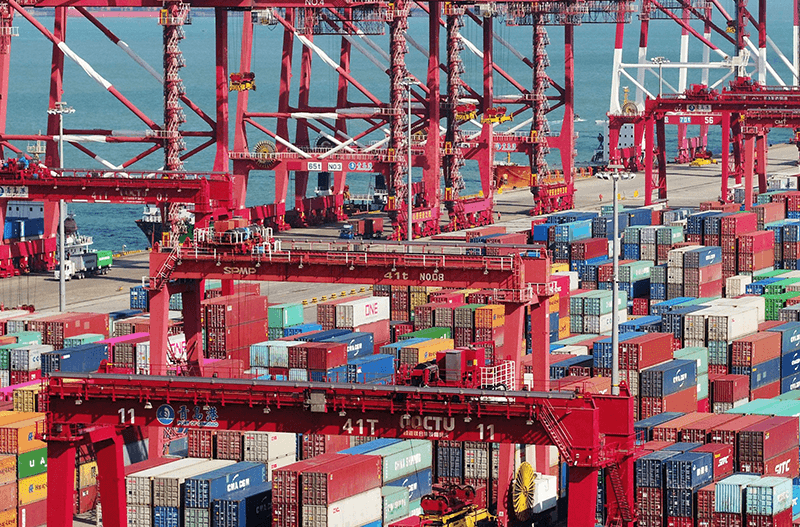
-The tariff rate imposed by Trump on China has accumulated to as high as 54% on some goods, and may even be further increased to 125%. As a key link in the electronic product supply chain, if PCB is included in the high tariff list, its export cost to the United States will significantly increase. For example, American companies such as Apple that rely on the Chinese supply chain may reduce orders or require suppliers to share tariff costs due to cost pressures.
-According to calculations, if companies completely pass on tariff costs, the prices of some electronic products (such as iPhones) may increase by more than 30%, which will indirectly compress the profit margins of Chinese PCB factories or force them to maintain orders through price reductions, resulting in a decrease in profit margins.
2. Accelerating supply chain transfer and the “China+1” strategy
-To avoid tariffs, Chinese PCB factories are accelerating their production capacity layout in Southeast Asia (such as Vietnam, Malaysia) and Mexico. Although this transfer can reduce the impact of tariffs, it also faces challenges such as high initial investment and insufficient supply chain support.
-American companies are also promoting supply chain diversification. Apple plans to transfer some production to India and Brazil, which may drive its PCB suppliers to follow suit and further weaken the demand for orders in China’s domestic production capacity.
3. Domestic substitution and technological innovation pressure in the domestic industrial chain

-The tariff policy is forcing Chinese PCB manufacturers to accelerate their localization process. For example, some companies have started using domestically produced equipment to replace imported equipment in order to reduce their dependence on the US supply chain. The recent adjustment of the “Certificate of Origin” rules by the China Semiconductor Industry Association also encourages companies to keep the wafer production process in China, which may indirectly promote the localization production of upstream PCB materials such as copper-clad laminates.
-In the long run, research and development investment in high value-added products such as HDI(high-density interconnect boards) may increase to enhance technological barriers and bargaining power, and avoid direct competition with Southeast Asian production capacity in the low-end market.
4. Short term order volatility and market uncertainty
–The repeated adjustments of tariff policies, such as the announcement of a 90 day suspension on April 9th and its subsequent resumption, have made it difficult for companies to develop long-term plans. For example, Apple once urgently chartered flights to transport inventory to avoid the effective period of tariffs, and such short-term actions may cause temporary surges or drops in PCB orders.
-Market panic also affects investor confidence. The sharp drop in stock prices of affiliated companies such as NVIDIA and TSMC may be transmitted to the PCB industry, increasing the difficulty of financing.
5. Rising equipment and raw material costs
-If the United States imposes tariffs on semiconductor manufacturing equipment, the cost of importing high-end equipment (such as laser drilling machines and testing equipment) for Chinese PCB factories will increase. For example, when TSMC built a factory in the United States, the cost surged due to equipment import tariffs, and similar issues may affect the technology upgrade plan of Chinese PCB factories.
-If some key raw materials (such as special resins and copper foils) rely on imports from the United States, they may also increase production costs due to tariffs.
Summary and Outlook
Chinese PCB factories need to find a balance between cost control (such as optimizing production processes and expanding overseas production capacity), technological upgrading (promoting high-end product research and development), and market diversification (expanding into non American markets such as Europe and the Middle East). Despite facing short-term pains, policy pressures may accelerate industry consolidation and drive companies with technological advantages to stand out. Meanwhile, the ongoing uncertainty in the trade game between China and the United States requires companies to maintain supply chain flexibility and policy sensitivity.