At the core of electronic systems, resistors, capacitors, and inductors form the fundamental physical logic of circuits. Though they generate no energy, these passive components govern signal integrity, power stability, and electromagnetic compatibility. With the explosive growth of 5G, AI computing, and automotive electronics, passives have evolved from supporting actors to decisive elements in high-performance PCB design. This article delves into their technical principles, innovations, and applications to empower your competitive edge.
Table of Contents
I. Technical Characteristics & Innovations: Reinventing Physical Logic
Resistors: Dual Evolution in Power Density & Eco-Compliance
– Power Density Leap: Modern metal film resistors operate stably at 275°C, handling 40% more power in identical sizes – critical for EV motor control systems.
– Environmental Revolution: RoHS compliance drives inorganic coatings to replace organic resins, eliminating toxic emissions at high temperatures. Eco-compliant wirewound resistors reduce toxic substances by 90% (ISO 14001 certified).
Capacitors: The Solid-State vs. Miniaturization Battle
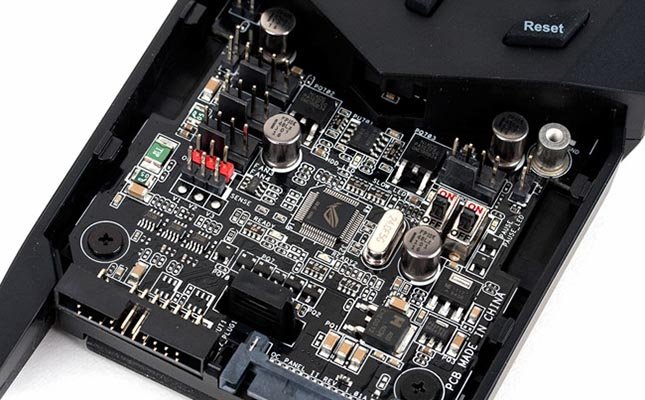
– Solid-State Takeover: Solid capacitors reduce impedance by 50% and extend lifespan 3-8x vs. liquid electrolytics, dominating server/GPU motherboards. Global market to hit $4.2B by 2025.
– MLCC Dominance: 01005-size capacitors (0.4×0.2mm) support 100GHz response. Automotive-grade MLCCs withstand 150°C engine heat with short-circuit protection, cutting failures by 60%.
Inductors: Breaking EMI & High-Frequency Barriers
– Chip Inductor Surge: Bluetooth 5.0/5G phones fuel 16% YoY growth. EMI-suppressing inductors achieve -30dB noise reduction via magnetic shielding.
– Ferrite Core Breakthroughs: KEMET TPI series reduces core losses by 45% through geometric optimization, enabling 100A output for DC-DC converters.
> Design Alert: 01005 capacitors require reflow peak temperature control within ±5°C to prevent 30% voiding increase.
II. Integration Technologies: From Discrete to System Solutions
1. Integrated Passive Devices (IPD)
– Embed resistor/capacitor/inductor networks on-die, shortening PCB traces by 40% and reducing delays to picoseconds. YAGEO’s X2Y® filter capacitors suppress EMI noise up to 10GHz.
2. Low-Temperature Co-fired Ceramic (LTCC)
– Multilayer passives embedded in ceramic substrates enable dielectric constant (Dk) gradient control for 77GHz automotive radar phase coherence. Loss tangent (Df) drops to 0.002 vs. traditional PCBs.
3. PCB-Embedded Components
– Bare dies recessed into FR-4 cavities with copper electrodes (e.g., Murata GRU capacitors) eliminate solder joint cracks. Altium Designer’s Cavity Definition enables 20μm precision embedding.
Table: Passive Integration Technologies Compared
| Technology | Key Advantage | Application | Cost Premium |
| IPD | >50% space saving, HF response | 5G RF front-ends | +30-40% |
| LTCC | High-temp tolerance, heterogeneous integration | Automotive/military radar | +50-60% |
| PCB-Embedded | Shorter signal paths, lower parasitics | Wearables/HDI smartphones | +15-25% |
III. Extreme-Environment Applications: Survival Rules

AI Servers: High-Frequency/Power Challenges
– GPU Power Nets: Tantalum capacitors require <5mΩ ESR + high-current inductors for 1000A/μs transient response. NVIDIA GB200 PCBs exceed $2K/board.
– 56Gbps PAM4: MLCCs placed <5mm from CPUs with ±3% impedance control.
Passive IoT (Ambient IoT) Energy Harvesting
– Dual-mode RF/solar-powered tags extend range to 100m for logistics tracking. 2023 UHF RFID shipments: 45B units (30% YoY growth).
IV. Future Trends: Material Revolution & AI-Driven Shifts
1. Nanomaterials:
Alumina-filled resins reduce capacitor Df by 40%; fluorinated graphene substrates achieve Df≤0.001.
2. AI-Optimized Design:
Generative AI (AIGS) minimizes parasitic inductance in HDI layouts, slashing design cycles by 70%.
3. Passive-Active Fusion:
SIP packages integrate GaN switches with thin-film resistors, enabling MHz switching frequencies in 80% smaller power modules.
Conclusion: Strategic Value Transformation
As AI servers hit 1000W+ and EVs adopt 800V platforms, passive components have become performance arbiters of electronic systems. PCB manufacturers must develop:
– Co-design capabilities: Partner with Murata/YAGEO for custom IPD modules
– Process mastery: ≤20μm laser drilling & ±3μm pulse plating
– Certification systems: AEC-Q200 & IPC-6012EA compliance
→ [Download High-Density PCB Passive Design Guide]
Includes LTCC integration parameters, automotive validation workflows & AI layout tools