In the precise architecture of electronic systems, thermistors are like sensitive “temperature nerves” that sense changes in heat in real time and convert them into electrical signals. As a key component of temperature management, its collaborative design with PCB directly determines the reliability, efficiency, and lifespan of electronic devices. From the battery management system(BMS) of new energy vehicles to high-precision temperature measurement of medical equipment, thermistors safeguard the thermal safety boundary of the electronic world through their unique temperature resistance characteristics.
Table of Contents
1、 Core Characteristics of Thermistors and PCB Application Scenarios
Thermistors are divided into two types: NTC (Negative Temperature Coefficient) and PTC (Positive Temperature Coefficient):
-NTC: The resistance value decreases with increasing temperature and is widely used for temperature detection and compensation. In PCB design, it is commonly used for temperature monitoring of power modules, with an accuracy of ± 0.1 ℃ (such as Honeywell 121-103FAD-S03 model).
-PTC: The resistance value increases sharply with temperature, mainly used for overcurrent protection and self recovery insurance. Its Curie temperature (switching point) can be adjusted by doping elements, such as setting the protection of lithium batteries to 90 ℃, which can prevent overheating and avoid false triggering.
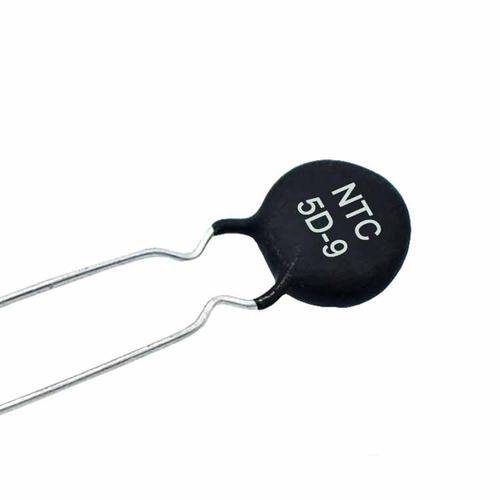
Typical application scenarios:
-Medical equipment: Temperature monitoring of ventilators requires an accuracy of ± 0.1 ℃, and NTC thermistors are packaged in miniature (diameter ≤ 1mm) and certified according to ISO 13485 to ensure life safety.
-Automotive Electronics: In the engine cooling system, NTC with high temperature resistance of 150 ℃ is embedded in the PCB and has passed AEC-Q200 anti vibration certification, with a lifespan of over 100000 hours.
-Industrial control: The multi-channel temperature monitoring module of semiconductor equipment integrates 16 NTCs and built-in signal conditioning circuits to simplify PCB layout.
2、 Key considerations for thermistor integration in PCB design
1. Layout optimization: Position determines accuracy
-Proximity of heat source: NTC should be located close to the heat source (such as CPU heat sink), but avoid placing it in a position where the high-temperature airflow directly impacts, otherwise it may cause response distortion.
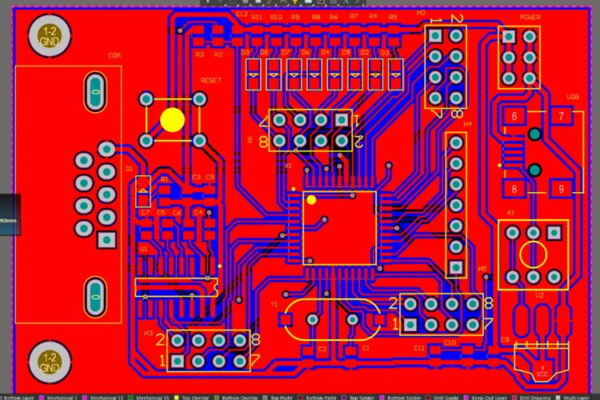
-Signal isolation: Analog signal wiring is layered with digital power supply wiring, with a spacing of>2mm, to prevent switch noise from interfering with weak temperature signals.
2. Electrical design: from impedance matching to power consumption control
-Constant current source drive: powered by a 1mA constant current source, converting NTC resistance changes into linear voltage output to improve ADC sampling accuracy.
-Low power design: In wearable devices, choose NTC with a working current of less than 1 μ A and pair it with a sleep mode circuit to extend battery life.
3. Material and packaging adaptation
Packaging technology directly affects thermal response speed and environmental tolerance:
| Packaging Type | Applicable Scenarios | Temperature Response Time | Protection Level | Cost |
| Glass packaging | Industrial corrosive environment, automotive electronics | 5ms | IP67 | High |
| Epoxy resin | Consumer electronics | 1-2s | IP40 | Low |
| Surface mount packaging | High density SMT mounting | 100ms | IP54 | Medium |
Data sourced from Honeywell and Isa technical manuals
>Failure case: A car mounted PCB did not use glass encapsulated NTC, and the silver layer was vulcanized into Ag ₂ S in a humid and hot environment, resulting in a resistance drift of over 20%.
3、 Cutting edge technology drives the transformation of PCB thermal management
-Nanomaterial Innovation: Silicon nanowire NTC has a diameter of only 10nm and a temperature resolution of 0.01 ℃, providing ultra-high sensitivity for precision instruments.

-Flexible integration technology: Polymer based PTC can adhere to irregular surfaces, achieving temperature monitoring of battery pack curved surfaces with a bending life of over 10000 times.
-Intelligent thermal sensing system: self diagnostic NTC integrated MCU and temperature sensor, real-time calibration of switch points and prediction of lifespan, outputting data through I ² C.
4、 Manufacturing Trend: Integration of Automation and High Reliability
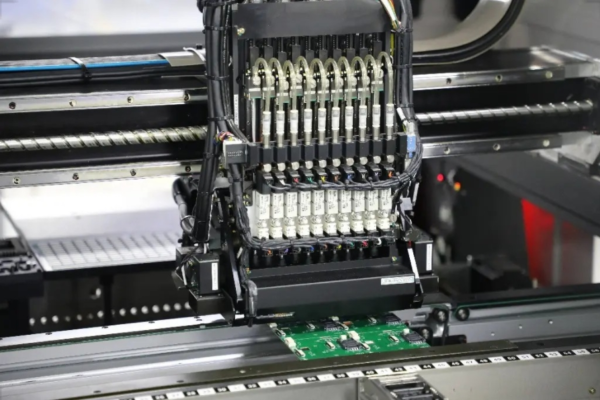
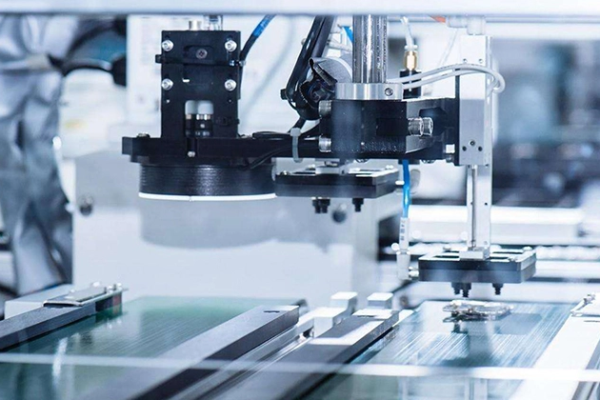
-Precise mounting: The collaborative robot achieves a repeatability accuracy of ± 0.02mm and completes the loading and unloading of the thermistor tray in 10 seconds, avoiding pin deformation caused by manual operation.
-Failure analysis: Aging screening at 85 ℃/85% RH to eliminate early failure products, ensuring a failure rate below 100ppm.
Conclusion: Engineering Philosophy of Thermal Control Art
The integration of thermistor and PCB is an interdisciplinary masterpiece in materials science, circuit design, and thermodynamics. When the glass encapsulated NTC is subjected to ten years of vibration in the engine compartment, and when the nanowire thermistor achieves a resolution of 0.01 ℃ in CT equipment – behind these “temperature guardians” is the precise cooperation of every solder joint, every inch of wiring, and every encapsulation.
>Carlos Bella, an expert in electronic thermal management, once asserted:
>The essence of thermal design is to establish a fortress of order in the flow of energy
As PCB manufacturers, we provide a full process solution from thermal element selection to high reliability layout, helping customers win the zero failure battle in the temperature battlefield of medical, automotive, and industrial fields – because more important than conducting current is to safeguard the safety boundary of every degree of temperature rise.