Introduction
Liquid cold plates (LCPs) have become indispensable components in thermal management systems for high-power electronics, including data center servers, electric vehicles, and AI infrastructure. As power densities continue to rise—driven by advancements in CPUs, GPUs, and power converters—traditional air cooling solutions are no longer sufficient. Liquid cooling, with its superior heat transfer efficiency, is now critical for maintaining performance, reliability, and longevity of electronic systems. For PCB enterprises, mastering the design, manufacturing, and testing of liquid cold plates opens new opportunities in emerging markets. This article provides a comprehensive overview of LCP technology, covering design principles, manufacturing processes, testing methodologies, and industry trends.
Table of Contents
1. Design Considerations for Liquid Cold Plates
The design of liquid cold plates directly impacts their thermal performance, mechanical integrity, and compatibility with electronic systems. Key factors include:
1.1 Thermal Performance
•Thermal Conductivity: Materials with high thermal conductivity (e.g., aluminum alloys: 150–250 W/m·K) are preferred to minimize thermal resistance and ensure efficient heat transfer from source to coolant.
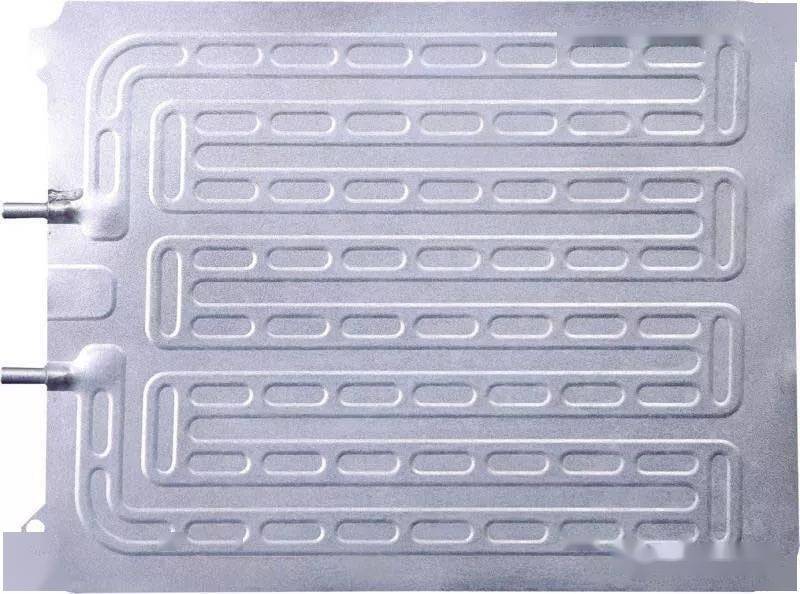
•Flow Channel Design: Complex channel geometries (e.g., microchannels, serpentine paths, or pin-fin arrays) maximize surface area for heat exchange. However, designs must balance thermal efficiency with pressure drop constraints to avoid excessive pump power requirements.
•Uniform Temperature Distribution: For battery thermal management in EVs, temperature differences across cells must be ≤3°C to prevent degradation. Multi-channel designs help achieve this uniformity.
1.2 Mechanical Robustness
•Structural Integrity: Cold plates must withstand mechanical pressures (e.g., from battery stacks in EVs) and internal fluid pressures (e.g., 0.3–0.6 MPa). Vibration and shock resistance are critical for automotive and industrial applications.
•Material Selection: Aluminum alloys are widely used due to their lightweight, cost-effectiveness, and machinability. Copper-aluminum hybrid structures (e.g., copper channels embedded in aluminum housings) combine copper’s superior conductivity with aluminum’s lightweight advantages.

1.3 Fluid Dynamics and Compatibility
•Flow Resistance: Optimized channel designs minimize pressure drops, reducing pump energy consumption. Computational fluid dynamics (CFD) simulations are essential for predicting flow behavior.
•Coolant Compatibility: Materials must resist corrosion and degradation from coolants (e.g., water-glycol mixtures or dielectric fluids). Anodized or coated surfaces enhance durability.
2. Manufacturing Processes for Liquid Cold Plates
Several manufacturing techniques are employed to produce cold plates, each with unique advantages and limitations:
2.1 Extrusion
•Process: Aluminum billets are heated and forced through dies to form continuous flow channels with rectangular or trapezoidal cross-sections.
•Applications: Suitable for straight-channel designs (e.g., for large-scale battery packs in energy storage systems).
•Limitations: Limited to linear channel geometries; complex designs require post-processing (e.g., milling).
2.2 Stamping and Welding
•Process: Channel patterns are stamped into metal plates, and a cover plate is welded (via brazing, friction stir welding, or diffusion bonding) to seal the structure.
•Advantages: Enables complex, customized channel layouts (e.g., serpentine paths) and high-pressure resistance.
•Challenges: High tooling costs for molds; requires precise welding to avoid leaks.
2.3 Additive Manufacturing (3D Printing)
•Process: Metal 3D printing (e.g., SLM or DED) builds complex internal channels layer by layer, allowing for optimized geometries (e.g., lattice structures) that traditional methods cannot achieve.
•Benefits: Design freedom, reduced weight, and integrated features (e.g., mounting points). Ideal for prototyping and low-volume production.
•Drawbacks: Higher cost and slower throughput for mass production.
2.4 Hybrid and Advanced Methods
•Copper-Aluminum Composite Structures: Patented methods (e.g., by Haoli Electromechanical) embed copper channels in aluminum housings to enhance thermal conductivity while reducing weight and cost.
•Phase-Change Cold Plates: Specialized designs incorporate sintered wicks or capillary structures to enable two-phase cooling (evaporation/condensation), significantly boosting heat transfer efficiency.
3. Critical Testing and Validation Methods
Rigorous testing ensures cold plates meet performance, reliability, and safety standards. Key tests include:
3.1 Leak Testing
•Pressure Decay Test: Cold plates are pressurized with air (e.g., 200–250 kPa), and pressure drop is monitored during a stabilization period (3–5 minutes). A drop exceeding 50 Pa indicates leakage.
•Helium Mass Spectrometry: Highly sensitive method using helium tracer gas. Leak rates exceeding 2×10⁻⁶ Pa·m³/s are deemed unacceptable for high-reliability applications.
•Immersion Testing: Submerging pressurized cold plates in water to detect bubbles—a simple but effective method for identifying leak locations.
3.2 Thermal Performance Testing
•Thermal Resistance Measurement: Measured using transient electrical tests (e.g., with T3Ster instruments). A semiconductor device generates heat, and its cooling curve is analyzed to derive thermal resistance values.
•Flow Resistance Testing: Pressure sensors measure differential pressure across inlet/outlet ports to calculate flow resistance, ensuring compatibility with system pumps.
•Temperature Uniformity: Infrared thermography or embedded sensors map surface temperatures to validate uniformity (e.g., ≤3°C variation for battery cooling).
3.3 Environmental and Durability Testing
•Thermal Cycling: Cold plates undergo cycles (e.g., -40°C to 85°C) to simulate aging and validate structural integrity under thermal stress.
•Vibration and Shock Testing: Critical for automotive and aerospace applications; cold plates must endure vibrations (5–2000 Hz) without degradation.
•Pressure Burst Testing: Pressurizing beyond operating limits (e.g., 1.5× maximum pressure) to validate safety margins.
3.4 Cleanliness and Contamination Control
•Internal Cleanliness: Residual metal shavings, oils, or welding slag can clog systems or promote corrosion. High-pressure flushing and ultrasonic cleaning are used post-manufacturing.
•Cleanroom Assembly: Sealing ports during storage and transport prevents particulate ingress.
4. Industry Applications and Market Trends
•Data Centers and AI: With AI workloads demanding unprecedented cooling, companies like Boyd have delivered over 5 million cold plates to hyperscale data centers. LCP cool GPUs/CPUs with minimal energy overhead.
•Electric Vehicles: Battery thermal management systems rely on LCP to maintain optimal temperatures, enhancing safety and lifespan.
•Energy Storage Systems: Large-scale battery packs use extruded or stamped cold plates for temperature uniformity.
•5G and Telecommunications: Base stations and servers employ LCP for compact, high-efficiency cooling.
Market Outlook: The LCP market is growing rapidly, driven by AI, EVs, and renewable energy. Innovations in materials (e.g., nanocomposites) and manufacturing (e.g., 3D printing) will further enhance performance and reduce costs.
5. How PCB Enterprises Can Leverage LCP Opportunities
•Develop Expertise in Thermal Design: Invest in CFD and thermal simulation tools to optimize channel layouts and material selection.
•Adopt Advanced Manufacturing Techniques: Explore hybrid machining (e.g., CNC + welding) and additive manufacturing for complex designs.
•Prioritize Quality Assurance: Implement automated leak and thermal testing systems to ensure reliability.
•Collaborate with Industry Leaders: Partner with material suppliers (e.g., aluminum/copper providers) and end-users (e.g., data center operators) to align with market needs.
Conclusion
Liquid cold plate technology is at the forefront of thermal management for next-generation electronics. By mastering design principles, manufacturing processes, and rigorous testing protocols, PCB enterprises can position themselves as key players in high-growth sectors like AI, EVs, and data centers. Embracing innovation—whether in materials, manufacturing, or testing—will be essential to capturing value in this dynamic market.
Get your exclusive quote immediately: fill out the form or send an email directly.As a professional PCB manufacturer for hobbyist , we will provide you with a quote service within 24 hours. Enjoy free DFM optimization and a 10% discount on SMT patches for your first order!