In electronic devices, a stable voltage supply is crucial for ensuring proper circuit operation. The LDO (Low Dropout Regulator), a widely used voltage regulation component, has gained extensive adoption across various electronic systems due to its simple structure, low noise, and cost-effectiveness. This article details the working principles, key parameters, and application areas of LDO regulators.
Table of Contents
1. Working Principles of LDO Regulators
The core function of an LDO regulator is to convert an unstable input voltage into a stable output voltage with a small voltage differential (i.e., input voltage minus output voltage). Its operation can be understood through a closed-loop feedback control system, consisting of four main components: a reference voltage source, error amplifier, pass element, and feedback network.
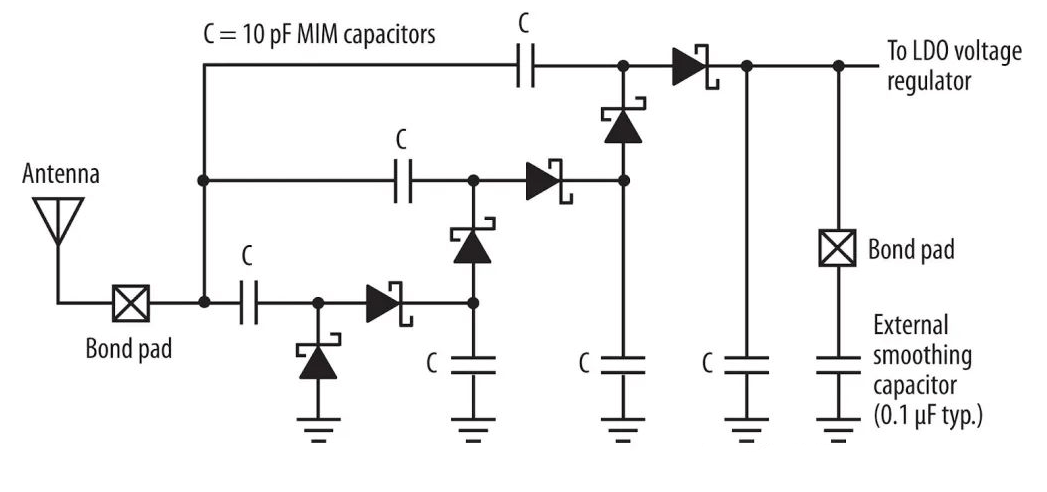
• Reference Voltage Source: Provides a highly accurate and stable reference voltage as the benchmark for the output. Common examples include bandgap references, which maintain stability across wide temperature ranges.
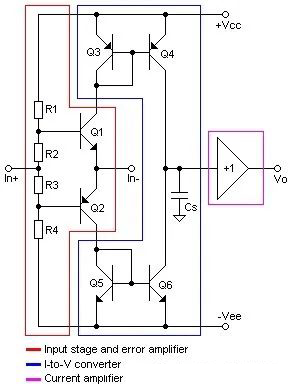
• Error Amplifier: Compares the output voltage (sampled by the feedback network) with the reference voltage and amplifies the error signal to control the pass element’s conduction level.
• Pass Element: Typically a transistor (BJT or MOSFET) whose conduction resistance is controlled by the error amplifier’s output. When input voltage or load changes cause output voltage deviation, the pass element adjusts conduction to stabilize the output.
• Feedback Network: A resistive voltage divider that samples a portion of the output voltage and feeds it back to the error amplifier, forming a closed-loop control system.
Analogy: An LDO works like a precision “water faucet.” Input voltage resembles water pressure in a pipe, while output voltage is the desired steady flow. If input pressure fluctuates (e.g., rising pressure) or output demand changes (e.g., opening more faucets), the “faucet” (pass element) automatically adjusts its opening to maintain stable output “pressure” (voltage).
2. Key Parameters of LDO Regulators
Understanding these parameters is essential for selection and design:
| Parameter | Description |
| Input Voltage Range (VIN) | Operating input voltage range. Must align with the LDO’s specifications. |
| Output Voltage (VOUT) | Fixed or adjustable stable output. Adjustable types offer flexibility via external resistors. |
| Dropout Voltage (VDO) | Minimum input-output differential for stable operation. Lower VDO extends battery life (e.g., 0.2V dropout allows 3.3V output with ≥3.5V input). |
| Load Regulation | Output variation (%) under changing load current (fixed input). Formula: ΔVOUT / VOUT(nom) × 100%. Lower values indicate better performance. |
| Line Regulation | Output variation (%) under changing input voltage (fixed load). Formula: ΔVOUT / VOUT(nom) × 100%. Lower values imply superior input noise rejection. |
| Max. Output Current (IOUT(max)) | Maximum sustainable current. Exceeding this risks overheating or instability. |
| Quiescent Current (IQ) | Current consumed by the LDO itself under no/light load. Critical for battery life; lower is better. |
| Noise | Unwanted AC components in output (μV). Vital for noise-sensitive circuits (e.g., audio, sensors). |
| PSRR (Ripple Rejection) | Input ripple suppression capability (dB). Higher values deliver cleaner output. |
3. Application Areas
LDOs are widely used for their low dropout, low noise, and simplicity:
| Field | Applications |
| Consumer Electronics | • Smartphones/Tablets: Power processors, memory, cameras. Low VDO extends battery life; low noise ensures RF/audio integrity.• Portable players/TWS earbuds: Compact, low-IQ LDOs for miniaturization and longevity. |
| Automotive | • Infotainment systems: Stable voltage for displays/audio, immune to power fluctuations.• Sensors (temp/pressure): High-precision supply for measurement accuracy.• Body control modules (windows/locks): Reliability and wide temp. range (-40°C to +125°C). |
| Industrial | • PLCs/sensor nodes: High PSRR counters power noise in harsh environments.• Test equipment: Ultra-low noise for measurement precision. |
| Medical | • Monitors (ECG/BP): Low-noise, high-reliability power for accuracy.• Portable devices (insulin pumps/pulse oximeters): Miniature, low-power LDOs for portability. |
| Communications | • Routers/switches: Multi-voltage supply for chips/modules.• Base stations: Clean power for RF/signal processing, minimizing interference. |
4. Conclusion
LDO regulators deliver stable low-voltage output through closed-loop feedback control, driven by synergistic interaction among the reference source, error amplifier, pass element, and feedback network. Key parameters—dropout voltage, load/line regulation, and quiescent current—guide optimal selection across applications. From consumer gadgets to automotive systems, industrial controls to medical devices, LDOs play an indispensable role in ensuring stable power delivery. As technology evolves, LDOs will advance toward lower dropout, reduced noise, smaller packages, and higher integration, further expanding their utility.
Get your exclusive quote immediately: fill out the form or send an email directly.As a professional PCB manufacturer for hobbyist , we will provide you with a quote service within 24 hours. Enjoy free DFM optimization and a 10% discount on SMT patches for your first order!