With the accelerated penetration of artificial intelligence technology into various industries, China’s independent innovation in the field of AI chips is ushering in a historic breakthrough. Local GPU companies have formed a complete ecosystem from chip design, computing infrastructure to industry applications through technological breakthroughs, policy support, and industry collaboration, gradually breaking the monopoly pattern of international giants. The following are the core industry trends:
Table of Contents
1、 Breakthrough in Domestic GPU Technology: Performance on par with International Giants
Top domestic enterprises continue to make efforts in the field of high-performance GPUs, with multiple products achieving international leading performance levels
-The KUAE Wanka Intelligent Computing Cluster launched by Moore Threads is based on a fully functional GPU, achieving a floating point computing capability of up to 10000 P, and is designed specifically for training trillion parameter large models. Its new generation GPU chip “Quyuan” supports zero cost migration of CUDA code, is compatible with existing software ecosystems, and has successfully adapted to mainstream large models such as DeepSeek.
-Muxi Integrated Circuit’s Xiyun C500 chip FP32 has a computing power of 15TFLOPS (75% of Nvidia A100), and won a large order of 1.488 billion yuan for training and promotion integrated servers with high cost-effectiveness, achieving large-scale applications in finance, healthcare and other fields.
-Cambrian’s stock price has recently surpassed 645 yuan, with a market value of nearly 270 billion yuan. Its Siyuan series AI chips have performed excellently in scenarios such as intelligent driving and smart cities.
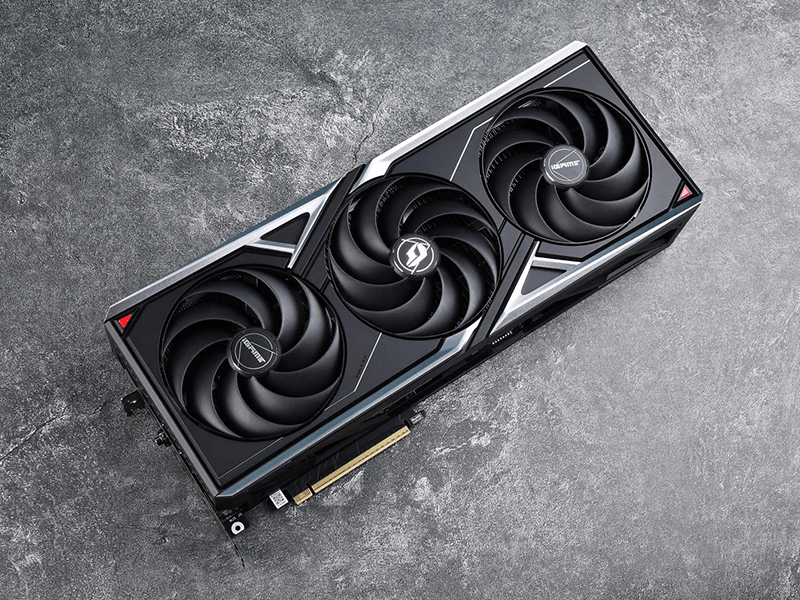
It is worth noting that the Lisu An 7G100 graphics card has passed OpenCL testing and its performance is close to that of the Nvidia RTX 3060 Ti, becoming a milestone breakthrough for domestic consumer grade GPUs.
2、 Policy driven: National strategy strengthens the foundation of computing power
China promotes the upgrading of computing infrastructure through top-level design:
-Deepening of the East West Computing Project: By 2025, the newly added computing power of national hub nodes will account for more than 60% of the country’s total, and the proportion of green power in newly built data centers will exceed 80%. Western hub nodes will undertake AI training, rendering and other businesses in the east, forming a new pattern of “computing power moving westward and data flowing eastward”.
-The 14th Five Year Plan will continue to empower: focus on cutting-edge fields such as integrated circuits and artificial intelligence, accelerate the landing of national laboratories and large scientific facilities, and provide strategic support for core technology research and development.
3、 Industry university research collaboration: dual wheel drive of talent and technology
School enterprise cooperation has become the core engine of technological innovation:
-The University of Electronic Science and Technology of China and Huawei jointly build the Ascend AI Laboratory to develop the “Atlas 200DK Remote Reasoning Cluster”, promoting seamless integration between AI teaching and industry demand.
-Anhui Normal University, iFlytek, and Anhui University of Information Engineering jointly established the “AI+Higher Education Research Institute” to explore AI curriculum development, interdisciplinary model training, and smart campus construction.
-Mole Thread, Mu Xi and other enterprises have collaborated with universities to establish joint laboratories, reducing developer migration costs and accelerating the construction of domestic ecosystems through MUSA architecture and open-source toolchains.
4、 Application landing: AI reshapes industry paradigm
Domestic computing power solutions have been commercialized on a large scale in multiple fields:
-Intelligent healthcare: Huawei Ascend DeepSeek all-in-one machine supports medical image analysis and auxiliary diagnosis, reducing the threshold for AI deployment in primary hospitals.
-Autonomous driving: Imagination’s E-series GPU IP, with its “AI+graphics” fusion architecture, meets the real-time inference and rendering needs of vehicles and has received orders from domestic car manufacturers.
-Government and Education: Tuowei Information’s Zhaohan AI server is based on Ascend chips and provides high concurrency support for government cloud; China Mobile’s “intelligent computing all-in-one machine” has been privatized and deployed to assist universities in scientific research.
5、 International Competition and Ecological Construction
Faced with technology blockades from international manufacturers such as Nvidia, China has broken through the situation through differentiation strategies:
-Cost effectiveness advantage: GPU solutions from companies such as Muxi and Moore Thread cost only 50% -70% of similar products from Nvidia, and are compatible with domestic large-scale open source frameworks to avoid CUDA ecological dependence.
-International market expansion: Domestic AI all-in-one machines have entered markets such as Southeast Asia and the Middle East with an integrated solution of “computing power+model”, forming a differentiated competition with international manufacturers.
Industry outlook
IDC predicts that the size of China’s AI computing power market will exceed 150 billion yuan by 2025, and the share of domestic GPUs is expected to increase from 12% in 2023 to 35%. With the advancement of the “Computing Power Network” construction and the acceleration of large-scale model iteration, China is expected to establish an independent and controllable AI industry ecosystem by 2030, becoming a core driving force for global computing power transformation.
Get your exclusive quote immediately: fill out the form or send an email directly.As a professional PCB manufacturer for hobbyist , we will provide you with a quote service within 24 hours. Enjoy free DFM optimization and a 10% discount on SMT patches for your first order!