Table of Contents
How Is Small-Batch SMT Assembly Quoted? First, Distinguish These Costs
The cost of small-batch PCBA is often not just the placement machine’s running time. In addition to placement and reflow soldering, costs may also include stencil fabrication, equipment changeover, first article confirmation, component sourcing, special package inspection, through-hole soldering, cleaning, rework, and testing. For BGA and QFN devices, solder joints cannot be fully inspected visually, so it is necessary to clarify whether X-ray inspection is sampling inspection, inspection at specified positions, or otherwise agreed.
For the same 100 boards, if the BOM version is different, materials are missing, or component packaging forms differ greatly, the actual processing difficulty and quotation will change. It is recommended to provide the coordinate file, BOM, Gerber, assembly drawing, and target quantity, and require the supplier to reply by category of “process/material/testing.”
SMT Assembly Factories Quote Very Differently—How Do You Judge What Is Cost-Effective?
A low quotation does not necessarily mean a lower overall cost. Buyers need to check whether first article confirmation is documented, who defines process parameters, which areas AOI and X-ray specifically cover, whether substitute materials sourced by the supplier are approved in advance, how yield loss caused by rework is handled, and whether batch traceability can be provided.
A more appropriate comparison method is to give several candidate manufacturers the same version of the BOM and production files, align inspection, rework, delivery, and quality requirements, and then compare total price and risk rather than ranking price of quotations.
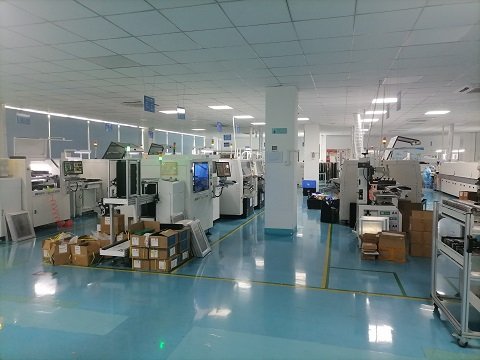
Why Can’t BGA and QFN Rely Only on Visual Inspection?
BGA solder joints are located under the device, and some QFN solder joints are also difficult to fully inspect visually. Even if the placement position looks correct, risks such as open circuits, voids, bridging, or inconsistent solder paste volume may still exist. Different defects should be addressed with different inspection methods; AOI and X-ray are not tools that can completely replace each other.
Enterprises should explain at the quotation stage the BGA model, QFN pad structure, whether X-ray inspection is required, whether functional testing is required, and whether defect re-judgment and rework are included in the quotation scope.
What Are the Key Steps Determining Small-Batch Yield?
First is PCB and stencil design: pads, solder mask openings, via treatment, and stencil apertures affect solder paste deposition. Second are materials and programs: placement machine coordinates, component orientation, polarity markings, and packaging status must be consistent. Third is the reflow soldering process: the temperature profile needs to be confirmed in combination with the board’s thermal capacity and solder requirements.
Small-batch trial production should retain the first article verification process, especially when the design has just been revised, the BOM contains substitute materials, or the board simultaneously contains large thermal-capacity devices and fine-pitch devices.
How Should We Understand the Differences Among AOI, X-ray, and Functional Testing?
AOI is mainly used to inspect component position, polarity, and solder joint appearance in visible areas; X-ray helps observe hidden solder joint structures such as BGA; functional testing verifies whether the circuit works under agreed conditions. The three have different focuses, and the final quality plan should match failure risks and costs.
If an SMT manufacturer advertises that it has X-ray equipment, it is still necessary to ask clearly whether inspection is full inspection or sampling, which devices are inspected, how problems are judged and recorded, and how defects are handled after discovery.
What Should Be Prepared When Consulting About SMT Assembly Services?
It is recommended to submit Gerber, BOM, coordinate file, assembly drawing, component specifications, and estimated quantity, with special notes on BGA/QFN devices, special soldering processes, whether material sourcing is required, and testing requirements.
Through first article confirmation, batch records, abnormal rework, and retesting, clients can more clearly control the risks of small-batch trial production. Delivery time and inspection items need to be confirmed by the business manager based on the specific list.
How to Request a Quote for SMT Business—Can You Handle BGA and QFN?
SysPCB provide SMT assembly and PCBA-related services. Clients can first submit the BOM, Gerber, coordinates, assembly requirements, target quantity, and special package information, and then confirm process feasibility, required inspection, and production plan item by item.
The inspection ratio for BGA and QFN, sourcing scope, functional testing, and delivery time are subject to the actual order and engineering confirmation information.
Conclusion
The price of small-batch SMT assembly needs to be judged based on the number of PCBAs, BOM completeness, component packages, stencils, placement programs, BGA/QFN solder joint inspection, functional testing, and rework scope. If clients only compare by total prices, they may overlook the costs of first article confirmation, materials, X-ray sampling inspection, and defect handling.