Thermal management has become a critical challenge in modern electronics, where PCB metal substrates provide an indispensable solution. As devices shrink while power increases, traditional FR-4 boards often fail to dissipate heat effectively—leading to premature failure. This comprehensive guide examines the three primary metal substrate types—aluminum, copper, and iron-based PCBs—detailing their technical properties, cost-performance tradeoffs, and ideal use cases across industries.
Table of Contents
1、Aluminum PCB metal substrates: The Cost-Effective Thermal Solution
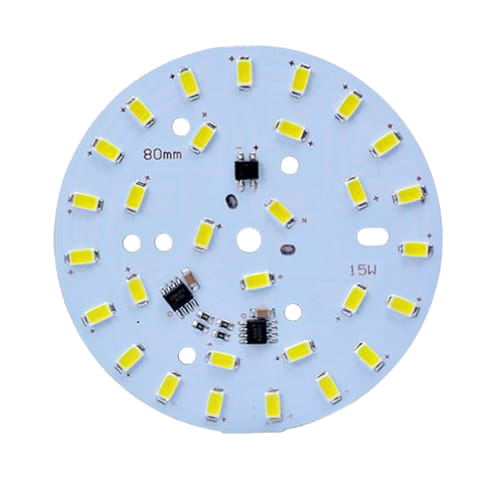
Aluminum substrates dominate the metal PCB market, accounting for over 70% of global demand due to their balanced thermal performance and affordability. These boards feature a three-layer structure: a copper circuit layer, a thermally conductive dielectric (typically 80–100μm epoxy resin), and an aluminum base (0.5–3.0mm thick).
Key Advantages:
1. Superior Thermal Management: With thermal conductivity of 0.7–3.0 W/m·K, aluminum effectively draws heat away from components like LEDs and power converters, reducing operating temperatures by 30–50% versus FR-4.
2. Lightweight & Cost-Efficient: Aluminum weighs 60% less than copper, lowering shipping costs while costing 40–50% less than copper substrates.
3. Enhanced Durability: The metal core provides exceptional mechanical strength (200–300 MPa), resisting warping during thermal cycling.
Limitations:
– Lower thermal conductivity than copper, limiting use in >500W power modules
– Not ideal for high-frequency RF designs due to moderate dielectric properties
Primary Applications:
– LED Lighting: 95% of high-power LED arrays rely on aluminum PCBs for heat dissipation
– Automotive Electronics: EV battery controllers, headlight drivers, and DC/DC converters
– Consumer Electronics: Power supplies for TVs, audio amplifiers, and gaming consoles
2、Copper-Based PCBs: High-Performance Thermal Conduction
Copper substrates offer the pinnacle of thermal management, leveraging copper’s unmatched conductivity (300–400 W/m·K)—over 100× higher than FR-4. These substrates are constructed similarly to aluminum boards but use copper as the base layer.
Key Advantages:
1. Extreme Heat Dissipation: Copper’s thermal conductivity prevents hot spots in high-current designs (>10A/mm²), such as motor drives and server PSUs.
2. Superior High-Frequency Performance: Low dielectric loss (0.01–0.03) enables stable signal integrity up to 40GHz for 5G mmWave and radar PCBs.
3. CTE Matching: Copper’s thermal expansion coefficient closely matches semiconductor materials, reducing solder joint stress.
Limitations:
– Cost: Copper substrates cost 2–3× more than aluminum due to raw material prices
– Weight: Copper adds significant mass (density: 8.96 g/cm³), unsuitable for portable devices
– Oxidation Risk: Exposed copper requires surface treatments like ENIG or immersion silver
Primary Applications:
– 5G Infrastructure: Massive MIMO antenna boards and millimeter-wave RF front-ends
– Industrial Power Systems: IGBT drivers, wind turbine converters, and welding equipment
– Aerospace: Avionics power distribution units requiring extreme reliability
3、Iron/Silicon Steel-Based PCBs: Specialized Magnetic Solutions
Iron and silicon steel substrates serve niche applications requiring magnetic properties. These feature specialized steel alloys as the base layer, often with nickel-plated surfaces.
Key Advantages:
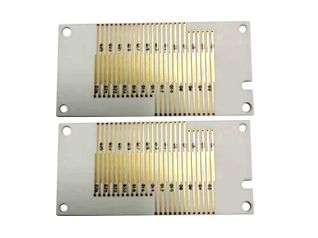
1. Magnetic Performance: Silicon steel exhibits excellent permeability for motor control and inductive sensors.
2. High Mechanical Strength: With 300–800 MPa tensile strength, these boards withstand intense vibration.
3. Cost-Effectiveness: Cheaper than copper while offering better thermal performance than FR-4.
Limitations:
– Weight: Heavier than aluminum, limiting use in weight-sensitive applications
– Corrosion Risk: Requires protective coatings in humid environments
Primary Applications:
– Motor Systems: Brushless DC motor controllers in automotive and industrial systems
– Power Transformers: Compact inductor cores for switch-mode power supplies
– Recording Equipment: Tape drive motors and precision spindle controllers
4、Choosing the Right Metal Substrate: A Comparative Analysis
| Parameter | Aluminum PCB | Copper PCB | Iron/Silicon Steel PCB |
| Thermal Conductivity | 0.7–3.0 W/m·K | 300–400 W/m·K | 20–50 W/m·K |
| Cost Index | $ | $$$$ | $$ |
| Weight | Low | High | Medium |
| Key Strength | Cost-performance balance | Extreme heat dissipation | Magnetic properties |
| Typical Applications | LED lighting, consumer PSUs | 5G RF, server PSUs | Motors, transformers |
5、Future Trends in Metal Substrate Technology
The metal PCB market is projected to grow at 8% CAGR through 2027, driven by electric vehicles and 5G infrastructure. Emerging innovations include:
– Hybrid Materials: Aluminum-ceramic composites boosting thermal conductivity to 80 W/m·K while controlling costs
– Direct-Bonded Copper (DBC): Ceramic substrates (AlN, Si3N4) with oxygen-free copper for >500°C operation
– 3D-Printed Metal Cores: Additive manufacturing enabling optimized heatsink geometries for AI accelerators
6、Conclusion: Optimizing Designs with Metal Core PCBs
Selecting the appropriate metal substrate requires balancing thermal needs, frequency requirements, and budget constraints. Aluminum PCBs deliver the best value for most lighting and automotive applications, while copper substrates excel in extreme thermal/high-frequency scenarios like 5G infrastructure. Iron-based boards remain specialized solutions for magnetic components. As power densities continue rising in renewable energy systems and AI servers, advanced metal core PCBs will become increasingly critical for reliable thermal management.
Get your exclusive quote immediately: fill out the form or send an email directly, and we will provide you with a quote service within 24 hours. Enjoy free DFM optimization and a 10% discount on SMT patches for your first order!