Table of Contents
1、 The strategic value of prototype PCB: why is it the starting point for product success?
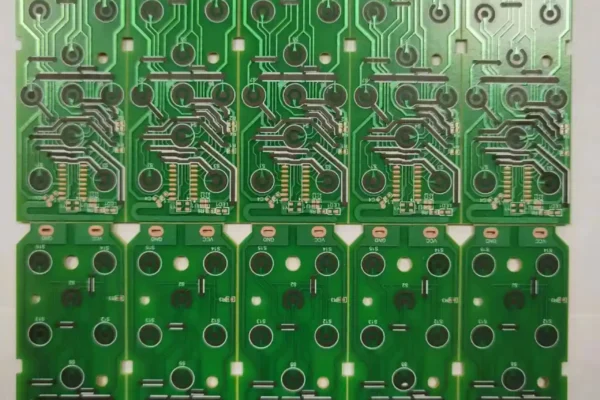
In the innovation chain of electronic products, Prototype PCB plays a dual role as both a “technical verifier” and a “risk controller”. Its core values are reflected in three dimensions:
1. Design an error correction engine
According to industry statistics, 80% of circuit design defects are discovered during the prototype stage. Through physical prototype testing, engineers can verify signal integrity, thermal management performance, and EMC compatibility, avoiding expensive rework after mass production. For example, impedance control prototype boards can expose high-speed signal attenuation issues in advance, reducing the risk of signal reflection in PCIe 5.0 device development.

2. Cost control leverage
The prototype production cost only accounts for 5-8% of the total project investment, but it can avoid potential production losses of up to 35%. Especially in the field of automotive electronics, verifying the high current carrying capacity through thick copper plate prototypes (copper thickness 2-20oz) can prevent the recall risk of BMS (battery management system) due to overheating failure.
3. Agile iteration carrier
Modern design software, such as Altium Designer, supports completing a “design prototype test” loop within 72 hours, which is three times faster than traditional processes. The maker community achieves creative implementation through rapid prototyping, such as verifying the bending life of wearable devices using flexible PCB prototypes.
>Image: Core Value Triangle of Prototype PCB
| >Design error correction → reduce technical risks >Cost control → avoid mass production losses >Agile iteration → Accelerating product launch |
2、 Technological Breakthrough: Four Innovations Driving the Evolution of Prototype Manufacturing
1. High density interconnect (HDI) technology
-Laser micro hole process: CO ₂/UV laser achieves 50-100 μ m aperture and supports 0.4mm pitch BGA escape routing.
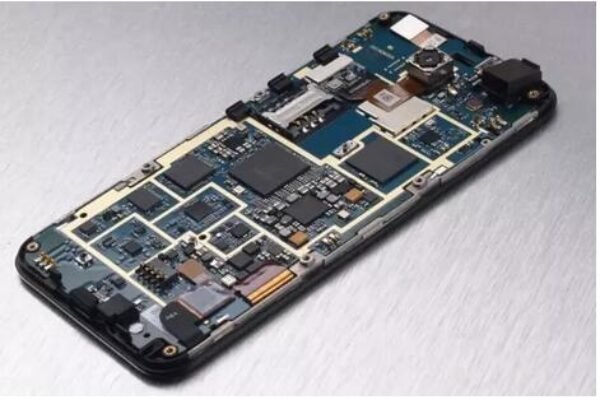
-Arbitrary layer interconnection: The 2+N+2 stacked structure reduces the size of the mobile phone motherboard by 40% and increases wiring density by 60%.
Case: A 5G RF module adopts an 8-layer HDI prototype, which shortens the signal path by 35% and reduces the bit error rate to 10 ⁻¹ ².
2. Virtual Prototype Design (VPD)
-Simulate signal integrity using tools such as HyperLynx to reduce the number of physical iterations.
-Support thermal stress analysis (ANSYS Mechanical) to predict the reliability of solder joints after 1000 temperature cycles.
3. Application of mixed materials
| Material type | Prototype application scenario | Performance advantages |
| High frequency PTFE | 5G millimeter wave antenna array | Dielectric constant stability (± 0.05) |
| Polyimide | Foldable device pivot area | Bending life>100000 times |
| Metal substrate | New energy vehicle motor controller | Thermal conductivity>2.0W/(m · K) |
4. Rapid prototyping process
-48 hour delivery chain: accelerates the entire process from Gerber file output to laser drilling and solder mask printing.
-Desktop prototype system: Maker Workshop achieves 24-hour self-made 6-layer boards through a small milling machine.
—
3、 Application scenario: From consumer electronics to the “innovation testing ground” of cutting-edge technology
1. Consumer electronics
-Mobile motherboard: Verify the stacked structure of the periscope camera through a 12 layer HDI prototype.
-TWS earphones: Prototype test of soft hard combination board for 30000 opening and closing durability of charging case.
2. Automotive Electronics
-Domain controller: 16 layer thick copper plate prototype carrying 100A current, meeting ISO 26262 functional safety certification.
-Lidar: High frequency PTFE substrate optimized for 77GHz millimeter wave signal transmission.
3. Medical and Aerospace
-Implanted device: ENEPIG surface treatment ensures reliable gold wire bonding (palladium layer prevents nickel migration).
-Satellite payload: X-ray full inspection prototype board achieves zero defect space applications.
—
4、 Future Trends: Intelligent and Sustainable Refactoring Prototype Manufacturing
1. AI driven design automation
-Machine learning algorithms automatically optimize routing rules, compressing the prototype iteration cycle to 24 hours.
2. Green Manufacturing Revolution
-Cyanide free gold plating process reduces wastewater toxicity, and biodegradable solder mask reduces carbon footprint.
3. Digital twin integration
-Real time interaction between physical prototypes and digital models enables “predictive maintenance” and “remote diagnosis”.
—
Conclusion: Embracing prototype innovation, winning at the starting line of mass production
Prototype PCB has evolved from a simple “circuit verification board” to a strategic asset for electronic innovation. Enterprises need to build three levels of capabilities:
1. Technical layer: Master core processes such as HDI/hybrid materials and establish a rapid response system;
2. Ecological layer: Jointly design software vendors and material suppliers to form a collaborative network;
3. Service layer: Provide a one-stop solution that seamlessly connects “prototype small batch mass production”.