Table of Contents
Ⅰ. PCB wiring foundation guide
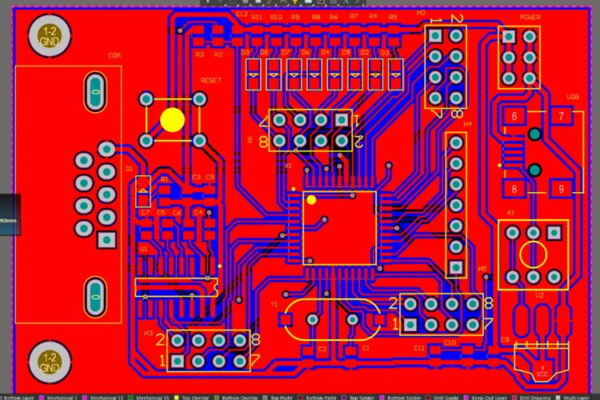
PCB (printed circuit board) wiring is the key step to convert the circuit schematic into physical connection, which directly affects the circuit performance, reliability and production feasibility. The following are the core cabling principles:
1. signal integrity priority
-For high-speed signals (such as clock signals and high-frequency RF signals), the wiring length should be shortened to avoid right angle turning (right angle will lead to impedance mutation and signal reflection). 45 ° angle or arc transition is recommended.
-Differential signals (such as USB and HDMI) shall be of equal length and parallel wiring to reduce external interference and signal delay difference.
2. power supply and grounding design
-The power line and ground wire shall be thicker than the signal line (reduce the impedance), and the high current circuit shall be wired separately to avoid sharing the path with the small signal circuit.
-Analog ground and digital ground shall be isolated (such as connected by 0 ohm resistor or magnetic bead) to prevent digital circuit noise from interfering with analog circuit.
3. anti interference Design
-Sensitive signals (such as sensor output) shall be far away from noise sources (such as switching power supply and motor drive), and a shielding layer shall be added if necessary.
-The wiring shall avoid forming a closed loop (to prevent eddy current generated by electromagnetic induction), and the key areas can be paved with copper for grounding (to enhance shielding and heat dissipation).
4. process feasibility
-The wiring width and spacing shall meet the minimum process capability of the PCB manufacturer (such as conventional FR-4 plate, line width ≥ 6mil, spacing ≥ 6mil).
-The number of vias should not be too large (increasing impedance and cost), and the aperture should match the pins of components.
Ⅱ. Reasons for using copper wire in PCB wiring
In PCB wiring, copper wire is almost the only choice. The core reasons are as follows:

1. excellent conductivity
The conductivity of copper (about 5.96 × 10 μ s/M) is second only to that of silver (6.30 × 10 μ s/M), but the cost is much lower than that of silver (the price of silver is about 50-100 times that of copper). High conductivity can reduce the loss in current transmission (Joule heat), especially suitable for high current circuits (such as power modules).
2. good processability
Copper ground is soft, easy to etch, electroplate and press:
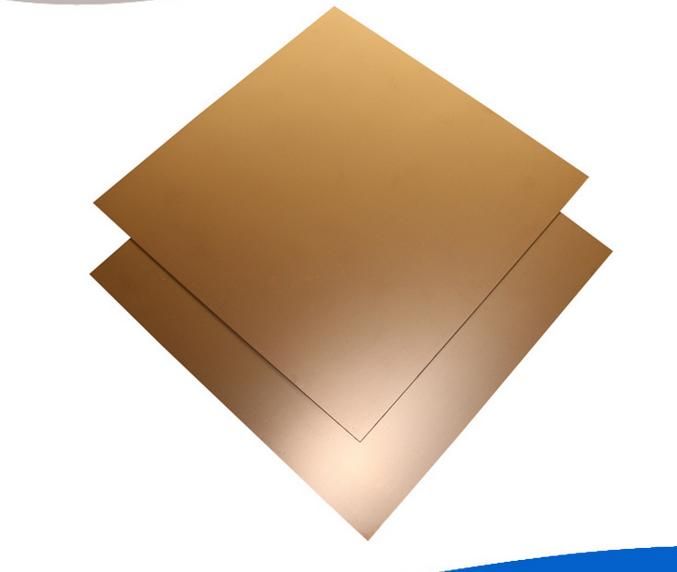
-Etching: accurately etch the copper foil on the copper clad laminate into the required circuit pattern by chemical method.
-Electroplating: tin plating (to prevent oxidation) and gold plating (to enhance conductivity and wear resistance, for high frequency or high reliability scenarios) can be applied on copper wires.
-Pressing: copper foil can be tightly combined with PCB substrate (such as FR-4 resin) and is not easy to fall off.
3. balance between cost and cost performance
Compared with other metals (such as aluminum, gold and silver), copper is abundant in reserves (the content of copper in the earth’s crust is about 0.0068%, much higher than 0.0000001% of silver). The price is moderate, and the performance meets the needs of most electronic equipment (from consumer electronics to industrial control).
4. protection of oxide layer
A layer of cuprous oxide (Cu ɑ o) film will naturally form on the surface of copper, which will slightly increase the resistance, but this oxide layer can prevent the further oxidation of internal copper and play a certain anti-corrosion role (if long-term oxidation resistance is required, it can be achieved by tin plating and solder resist coating).
5. compatibility and industry maturity
The global PCB industry chain has formed a mature process system with copper as the core (from copper clad laminate production to wiring design software). Replacing other metals (such as aluminum) requires reconstruction of equipment and technology, which is extremely expensive.
Ⅲ.Supplementary description of special scenarios
-High frequency or extreme environment: some high frequency circuits may use gold-plated copper wire (to enhance surface conductivity and reduce skin effect loss); Nickel plated copper wire may be used in the aerospace field (to improve the high temperature resistance and corrosion resistance), but the core conductor is still copper.
-Limitations of alternative materials: the conductivity of aluminum is only 60% of that of copper, and the oxide layer (al ɑ o ₃) is insulated, which cannot be welded directly; Although silver has better conductivity, it is easy to migrate (silver ions migrate in a humid environment, resulting in a short circuit). It is only used in special scenes (such as local coating of RF antenna).
To sum up, copper wire has become the optimal solution for PCB wiring with the comprehensive advantages of conductivity, processability and cost, while the wiring guide is a practical specification based on the characteristics of copper wire and circuit requirements.
Get your exclusive quote immediately: fill out the form or send an email directly.As a professional PCB manufacturer for hobbyist , we will provide you with a quote service within 24 hours. Enjoy free DFM optimization and a 10% discount on SMT patches for your first order!