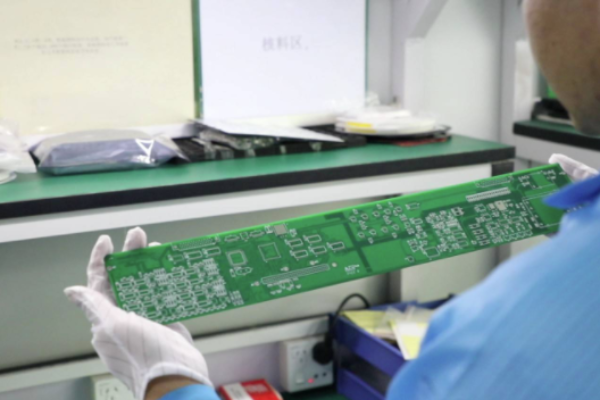
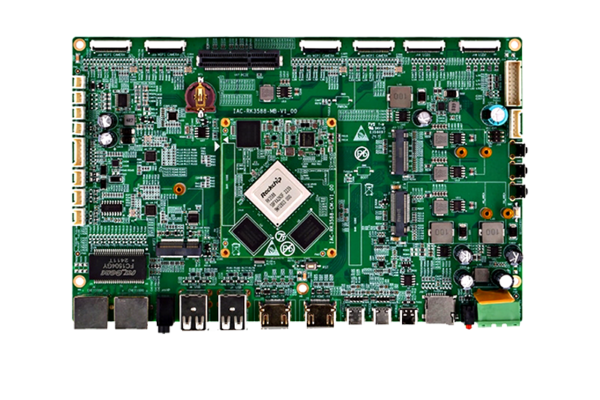
In the manufacturing of Printed Circuit Boards (PCBs), meeting quality and reliability standards is paramount, especially for products used in critical applications. The IPC-A-600G standard, titled “Acceptability of Printed Boards,” establishes the visual quality benchmarks for PCBs. Within this framework, products are classified into three performance classes. This article delves into the specifics of IPC Class 3, the most stringent level intended for high-reliability electronics.
Table of Contents
1. What are IPC Performance Classes?
The IPC-A-600G standard categorizes PCBs into three classes based on their functional performance requirements, reliability, and intended operational lifetime.
•Class 1: General Electronics: This class includes consumer electronics and some computer peripherals where the primary requirement is the board’s function, and cosmetic defects are not a critical concern.
•Class 2: Dedicated Service Electronics: Products in this category, such as communication equipment and advanced commercial instruments, require high performance and extended life. Some cosmetic imperfections are allowed.
•Class 3: High-Reliability Electronics: This class is reserved for products and equipment for which continuous performance or performance-on-demand is critical, and downtime is unacceptable. Examples include life support systems, flight control systems, and military equipment.

2. The Critical Role of IPC Class 3
IPC Class 3 represents the highest level of quality assurance for PCBs. It is designed for products that must operate flawlessly in harsh environments and where failure could have severe consequences.
Choosing IPC Class 3 means your products are built to the most rigorous inspection criteria, ensuring exceptional durability, reliability, and longevity. For PCB manufacturers, the ability to produce Class 3 boards demonstrates a command of advanced processes and a commitment to superior quality.
3. Key Differences Between IPC Class 2 and Class 3
The transition from Class 2 to Class 3 involves significantly tighter tolerances and stricter criteria for both external and internal observable characteristics. The table below summarizes some key technical differences, which are crucial for quality control in high-reliability PCB manufacturing.
Table: Key Technical Comparisons Between IPC Class 2 and Class 3
| Characteristic | IPC Class 2 Requirements | IPC Class 3 Requirements |
| Plated Through-Hole (PTH) Copper Voids | • One void per hole allowed.• Max 5% of holes with voids.• Void length ≤ 5% of hole length. | No voids permitted in the hole. |
| Average Copper Thickness in PTH | 20 µm | 25 µm |
| Minimum Copper Thickness in PTH | 18 µm | 20 µm |
| Annullus (Outer & Inner Layers) | Ring width reduction up to 20% may be acceptable. Breakout up to 90 degrees is allowed under specific conditions. | Ring width must meet minimum requirements with stricter limits on reduction (e.g., breakout is more restrictive). |
| Negative Etchback | Less than 0.025mm | Less than 0.013mm |
| Measling/White Spot | Acceptable unless specified for high-voltage applications. | Acceptable unless specified for high-voltage applications. |
| Delamination/Blistering | Affected area ≤ 1% per side; does not reduce conductor spacing below minimum; does not cross more than 25% of adjacent conductor spacing. | Same criteria as Class 2, but with stricter interpretation and zero tolerance for expansion after thermal stress testing. |
4. Industries That Rely on IPC Class 3 PCBs
The uncompromising quality of IPC Class 3 PCBs makes them essential in several critical industries:
•Aerospace and Defense: Avionics, flight control systems, and military hardware require absolute reliability in extreme conditions. Standards like IPC-6012DS often apply here, which is an enhanced version of Type 3 for space and military applications.
•Medical Electronics: Life-support systems, diagnostic equipment, and surgical devices where patient safety depends on continuous, fault-free operation.
•Automotive (especially Electric and Autonomous Vehicles): The automotive industry, driven by advancements in EVs and self-driving cars, demands PCBs that offer exceptional heat resistance and long-term reliability under harsh conditions. The IPC-6012DA standard, in conjunction with IATF 16949, governs automotive PCB requirements.
•Industrial Applications: Equipment embedded in large-scale industrial production systems, where failure can lead to significant downtime and financial loss.
5. Why Partner with an IPC Class 3 Certified Manufacturer?
Producing PCBs that consistently meet IPC Class 3 standards is not a trivial task. It requires:
•Advanced Manufacturing Expertise: Deep process control for drilling, plating, etching, and lamination.
•Rigorous Quality Control: Implementation of Automated Optical Inspection (AOI) and meticulous testing throughout the production process.
•Superior Materials: Use of high-performance substrates like polyimide for thermal stability and durability.
•Comprehensive Testing: Adherence to strict testing protocols, including solderability, electrical integrity, and cleanliness tests.
Conclusion
For electronics where failure is not an option, IPC Class 3 is not just a standard—it’s a necessity. It provides the foundational assurance of quality, reliability, and performance that critical applications demand. As a PCB enterprise committed to excellence, understanding and implementing these stringent requirements allows us to deliver products that our partners in high-reliability industries can trust implicitly.
When your products demand the highest level of quality, always specify IPC Class 3.