Table of Contents
Executive Summary
Flash memory has transcended its role as a simple storage medium to become a critical performance enabler in modern electronics, especially within AI-driven systems. For PCB designers and manufacturers, understanding Flash technology—from its basic NAND architecture to advanced 3D stacking and emerging enterprise SSD applications—is no longer optional but essential. This comprehensive guide explores Flash memory’s operational principles, the impact of AI on storage requirements, current market dynamics affecting supply chains, and the practical PCB design challenges that ensure optimal performance and reliability in next-generation devices.
1.Flash Memory Core Technology: Beyond Basic Storage
1.1 Fundamental Working Principles
Flash memory is a non-volatile storage medium that retains data without power. It stores information in memory cells made from floating-gate transistors . Data is written ( “programmed”) by injecting electrical charge into the floating gate, altering the transistor’s threshold voltage. This charge is removed during the erase operation. Unlike traditional volatile memory, this charge remains trapped, enabling data persistence .
The “Flash” name originates from the bulk erase capability, where a large block of memory is erased in a single, swift operation. This fundamental mechanism underpins all Flash-based devices, from USB drives to complex Solid State Drives (SSDs).
1.2 NAND vs. NOR: A Architectural Divide
Two primary Flash architectures exist, each tailored for different applications:
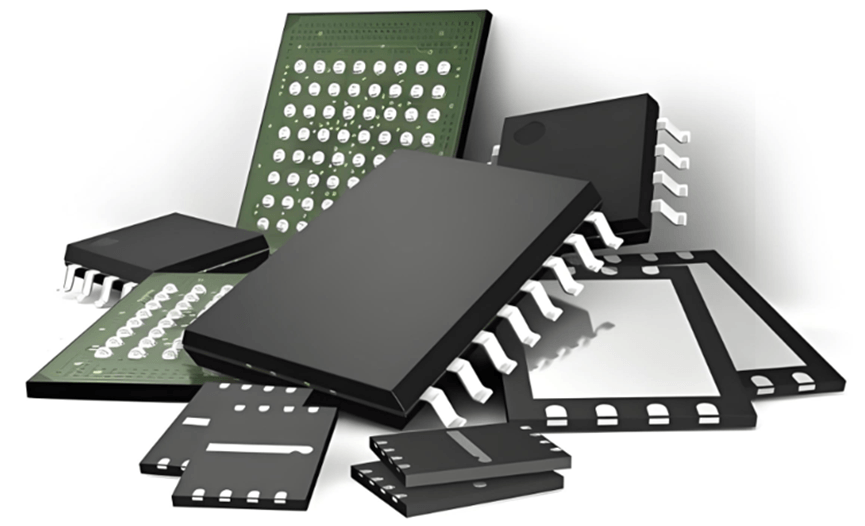
•NAND Flash: Dominates the market for high-density, sequential data storage. Its cells are connected in a series (similar to a NAND logic gate), creating a compact structure ideal for mass storage in devices like SSDs, USB drives, and memory cards . Its high speed in sequential read/write operations makes it the workhorse of modern data-centric applications.
•NOR Flash: Features a parallel architecture (like a NOR logic gate) that allows for random access and execute-in-place (XIP) capabilities, where code can run directly from the storage medium . This makes it suitable for storing firmware and boot code in embedded systems. However, it is typically slower for write operations and offers lower density compared to NAND, making it more expensive per gigabyte .
2.Technological Evolution: Pushing the Limits of Density and Performance
The relentless demand for more storage in smaller devices has driven several key innovations in Flash memory.
2.1 The 3D NAND Revolution
As traditional 2D planar NAND scaling approached its physical limits, the industry shifted to 3D NAND technology . Instead of shrinking cells further, this approach stacks memory cells vertically in multiple layers, dramatically increasing storage density without requiring more advanced lithography.
•Increased Density and Lower Cost: 3D NAND significantly boosts bit density per square millimeter of silicon, which has helped lower the cost per gigabyte .
•Enhanced Reliability and Endurance: Vertical stacks often use a different cell structure that is more robust, improving data retention and the number of program/erase cycles the memory can endure.
2.2 Cell Level Evolution: SLC, MLC, TLC, QLC, and PLC
The number of bits stored per memory cell is a primary factor in the trade-off between cost, capacity, performance, and endurance.
Table: Flash Memory Cell Type Comparison
| Cell Type | Bits per Cell | Relative Capacity | Relative Endurance | Primary Use Cases |
| SLC (Single-Level Cell) | 1 | Low | Very High | Industrial, automotive, mission-critical servers |
| MLC (Multi-Level Cell) | 2 | Medium | High | Enterprise applications, high-end clients |
| TLC (Triple-Level Cell) | 3 | High | Medium | Consumer SSDs, smartphones, mainstream computing |
| QLC (Quad-Level Cell) | 4 | Very High | Lower | Mass storage, read-intensive AI inference |
| PLC (Penta-Level Cell) | 5 | Highest | Lowest | Emerging for archival storage |
The industry’s move towards QLC and the development of PLC is primarily driven by the need for high-capacity, low-cost storage for AI and data center applications . For instance, Nearline SSDs using QLC NAND are filling the supply gap left by traditional Hard Disk Drives (HDDs), offering a compelling blend of capacity, performance, and power efficiency for AI inference workloads .
2.3 High-Speed Interface Protocols
To leverage the full speed of NAND Flash, modern interfaces have evolved beyond legacy SATA. The NVMe (Non-Volatile Memory Express) protocol, designed specifically for high-speed flash and operating over the PCIe (Peripheral Component Interconnect Express) bus, has become the standard for performance . NVMe reduces latency and unlocks massive parallel data transfer capabilities, which is crucial for data-intensive AI training and high-performance computing.
3.Flash in the AI Era: A Strategic Shift from Storage to Active Participant
Artificial Intelligence is fundamentally reshaping the value proposition and architecture of Flash memory in data systems.
3.1 AI-Driven Demand and the Nearline SSD Shift
The explosion of AI inference services has created an insatiable demand for high-capacity, readily accessible data storage . This, coupled with supply chain challenges in the traditional Hard Disk Drive (HDD) sector, has prompted major Cloud Service Providers (CSPs) to pivot towards Nearline SSDs . These QLC-based SSDs provide a superior balance of capacity, speed, and latency for accessing the “warm data” essential for AI inference, effectively reshaping data center storage hierarchies .
3.2 Advanced Architectures: HBF and AI SSD
To overcome the memory bottlenecks in AI computation, Flash is being integrated into system architectures in novel ways:
•Host Flash Buffer (HBF): This technology positions NAND Flash as a high-bandwidth, near-memory extension to the CPU . It acts as a large-capacity buffer for “warm data,” effectively complementing the limited capacity of high-cost High Bandwidth Memory (HBM) used in GPUs. This allows AI systems to manage larger datasets efficiently without constant, slower access to main storage .
•AI SSD (Computational Storage): This represents a more radical evolution. AI SSDs integrate specialized processing units (like ASICs or FPGAs) directly within the SSD itself . This enables “near-data processing” or “in-storage computation,” allowing the drive to perform data pre-processing, filtering, and even model inference. By offloading these tasks from the CPU and GPU, AI SSDs reduce data movement across the system, lowering latency and freeing up critical compute resources for more complex tasks .
4.Market Dynamics and Supply Chain Considerations
Understanding the current Flash market is vital for PCB companies managing product lifecycles and component sourcing.
•Price Volatility and Demand Drivers: The NAND Flash market is experiencing a recovery, with projections of 5-10% price increases in Q4 2025, driven by strong AI server demand and the HDD-to-SSD transition . Enterprise SSD demand is a key pillar of this strength . Factors such as CSP procurement strategies, controller chip shortages, and suppliers prioritizing high-margin products like enterprise SSDs over client SSDs can create supply tightness and affect lead times .
•The Emerging Alternative: ReRAM: While NAND Flash dominates, next-generation non-volatile memories like Resistive RAM (ReRAM) are progressing towards commercialization. ReRAM promises faster write speeds, lower power consumption, and higher endurance . Partnerships, like that between Weebit Nano and onsemi, aim to embed ReRAM in products for AI and automotive markets, positioning it as a potential future competitor for certain Flash applications .
5.PCB Design Implications for Flash-Based Systems
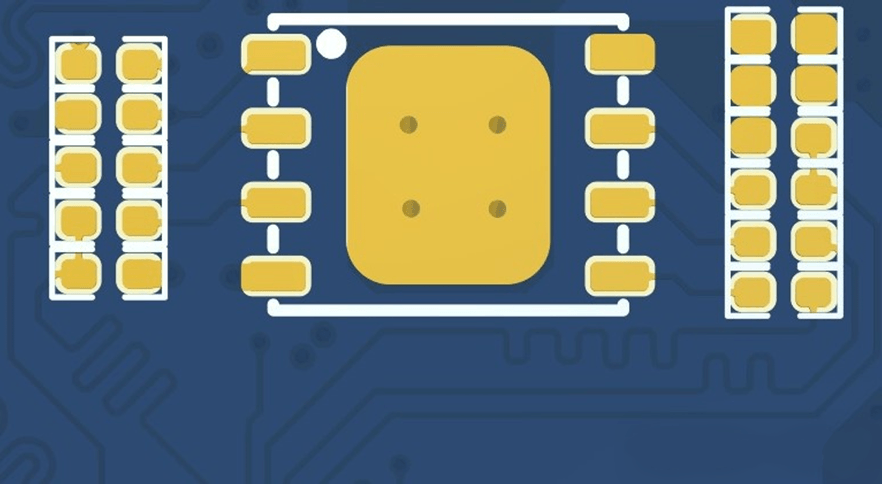
Integrating high-speed, high-capacity Flash memory presents specific challenges that PCB designers must address to ensure signal integrity, power stability, and thermal performance.
5.1 Signal Integrity and Routing
•Controlled Impedance and Length Matching: High-speed interfaces like PCIe and the differential pairs connecting memory chips require strict impedance control (typically 85Ω or 100Ω) and length matching to prevent signal reflections and timing errors.
•Minimizing Crosstalk and Parasitics: Dense routing on complex PCBs can lead to crosstalk. Careful spacing, grounding, and the use of low-loss dielectric materials are essential to maintain signal quality at multi-gigabit rates.
5.2 Power Integrity Management (PDN)
•Stable and Clean Power Delivery: Flash memory, especially during active write cycles, can draw sudden bursts of current. A robust Power Delivery Network (PDN) with sufficient power plane layers and strategically placed decoupling capacitors is critical to suppress power supply noise and prevent voltage droops that can cause data corruption.
•Multi-Voltage Requirements: Flash-based systems often require multiple voltage rails. Designers must ensure that each rail is properly regulated and isolated to avoid noise coupling.
5.3 Thermal Management Strategies
•Heat Dissipation for Performance: Active NAND packages and SSDs can generate significant heat, especially in write-intensive AI applications. Sustained high temperatures degrade performance and shorten the lifespan of Flash memory.
•Design Techniques: Effective thermal management involves using thermal vias under packages to conduct heat to inner ground planes, ensuring adequate copper weight for power traces, and considering the overall PCB layout to facilitate airflow or integration with external heatsinks.
5.4 External Flash and Architecture
For systems using MCUs with external Flash for code storage, technologies like Texas Instruments’ OptiFlash are relevant . This highlights the importance of a high-bandwidth SPI interface and techniques like caching to mitigate the performance penalty of executing code directly (XIP) from external Flash, which is a common design consideration in embedded systems .
6.Conclusion: Strategic Partnerships in a Flash-Driven World
Flash memory technology continues to be the cornerstone of digital storage, and its evolution is now inextricably linked with the progress of Artificial Intelligence. The transition from a passive storage device to an active computational element in AI SSDs and HBF architectures marks a significant inflection point .
For PCB companies, success in this landscape hinges on deep technical collaboration. Mastering the intricacies of high-speed PCB design, advanced thermal management, and robust power integrity is paramount to supporting the next generation of Flash-based systems. By partnering with a PCB manufacturer that possesses expertise in these critical areas, you can ensure that your innovative storage and computing products achieve the performance, reliability, and time-to-market required to compete and lead.
Partner with Us for Your Advanced Flash Memory Projects
Navigating the complexities of PCB design for high-speed Flash memory and AI storage solutions requires a manufacturing partner with proven expertise. Our experience in advanced PCB fabrication, signal integrity optimization, and thermal management solutions ensures that your designs leveraging technologies like NVMe SSDs, HBF, and AI Computational Storage are built for maximum performance and reliability.
Contact us today to discuss how we can support your next-generation storage and computing projects with cutting-edge PCB technology.