Table of Contents
Introduction
As the core component of electronic devices, the stability of circuit boards directly affects device performance. This article will systematically analyze 7 common types of PCB fault phenomena, diagnostic methods, and repair techniques to help customers quickly locate problems, reduce downtime losses, and improve equipment reliability.
1、 Common fault types and cause analysis
1. Short circuit fault
-Phenomenon: Abnormal increase in current, heating or burning of components.
-Reason: Soldering bridging, circuit corrosion, metal dust pollution.
-Solution:
-Use a multimeter to measure the resistance value segment by segment and locate the low resistance area.
-Remove excess solder or apply insulating paint to isolate short-circuit points.
2. Open circuit fault
-Phenomenon: Circuit malfunction, signal interruption.
-Reason: virtual soldering of solder joints, circuit breakage, and internal disconnection of components.
-Solution:
-Re weld the detached solder joints and repair the broken circuit with conductive adhesive.
-Temporarily connect critical signal paths using overhead wires.
3. Component aging and failure
-Phenomenon: Performance drift, abnormal temperature rise.
-Reason: Long term overvoltage/overcurrent, high temperature environment, material degradation (such as electrolytic capacitor drying up).
-Solution:
-Regularly replace high failure rate components such as capacitors and power transistors.
-Use a thermal imaging device to locate overheated components and optimize heat dissipation design.
4. Poor welding
-Phenomenon: Signal intermittent and intermittent, equipment intermittent malfunction.
-Reason: Cold soldering, virtual soldering, and residual flux.
-Solution:
-Use a constant temperature soldering iron (300-350 ℃) for soldering to avoid damaging the solder pads due to prolonged heating.
-Isopropanol is used to clean residual soldering flux and prevent dendrite short circuits.
2、 Professional fault diagnosis technology
1. Visual inspection
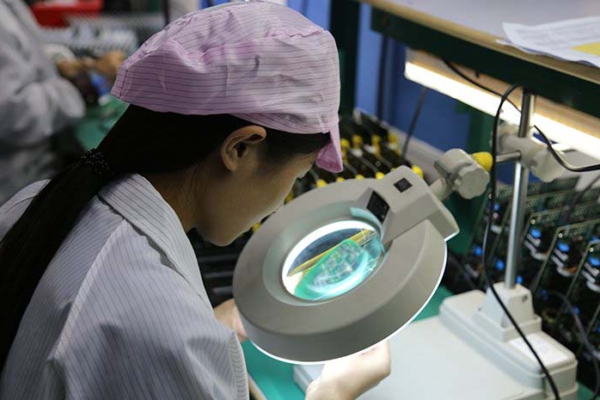
-Use a magnifying glass to observe solder joint cracks, burn marks, and abnormal appearance of components.
2. Electrical testing
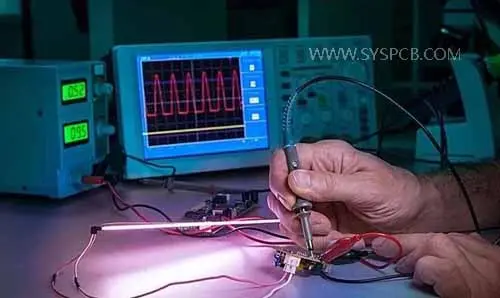
-Use a multimeter to check for continuity and an oscilloscope to analyze the signal waveform.
3. Advanced detection
-X-ray: Perspective of internal short circuits/open circuits in multi-layer boards.
-Thermal imaging: Quickly locate overheating components and design defects in heat dissipation.
3、 Preventive maintenance strategy
1. Design optimization
-Avoid high-density wiring and increase the integrity of heat dissipation holes and ground planes.
2. Production process
-Using IPC-A-610 standard welding process, control the porosity of solder joints to be less than 15%.
3. Environmental management
-Constant temperature and humidity storage (recommended humidity<60%), regularly clean circuit board dust.
4、 Three major criteria for choosing professional maintenance services
1. Qualification certification: Priority should be given to IPC-A-610 certification service providers to ensure process compliance.
2. Equipment capability: X-ray inspection, AOI optical scanning, and BGA repair table are required.
3. Service guarantee: Provide repair reports and at least 1 year warranty, support emergency response.
Conclusion
SysPCB has been deeply involved in the PCB field for 15 years, providing full process services of “inspection maintenance quality assurance”, equipped with military grade testing equipment and customized maintenance solutions, with a repair rate of up to 98%! [Get repair quote now] ()