Rigid Flex PCB: the way to balance rigidity and flexibility in modern electronic devices
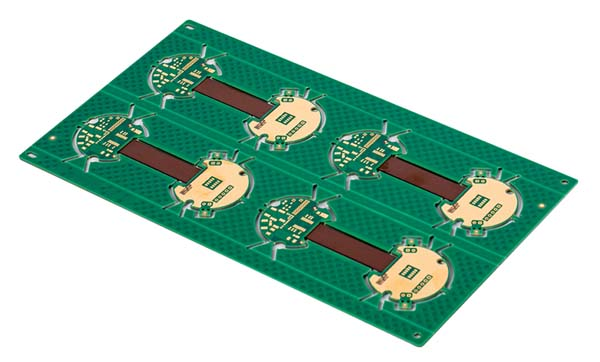
Rigid Flex PCB is a hybrid circuit board that combines a rigid circuit board (PCB) with a flexible circuit board (FPC) through a special process. It inherits the mechanical stability of rigid plates and integrates the bendable characteristics of flexible plates, becoming a key technological component in fields such as 5G communication, smart wearables, and automotive electronics.
Table of Contents
1、 Core characteristics of Rigid Flex PCB
1. Structural design
Rigid Flex PCB are typically composed of rigid regions (FR4 substrate) and flexible regions (polyimide substrate), which are seamlessly connected through a compression process. The rigid part is used to install large volume components such as chips and connectors, while the flexible part can bend wiring in three-dimensional space to adapt to the complex internal structure of equipment.
2. Manufacturing process
The production process includes cutting, drilling, graphic etching, pressing, surface treatment and other steps, which need to be compatible with the process requirements of both FPC and PCB. The core difficulty lies in the matching of material thermal expansion coefficient, control of compression parameters, and high-precision alignment, resulting in a low yield rate and high cost.
2、 Application areas: From consumer electronics to aerospace
1. Consumer electronics

-Smartphones: In scenes such as foldable screen hinges, camera modules, and RF antennas, space optimization is achieved through flexible areas to support device thinning.
-Wearable devices, such as smart watch strap circuits, have bending resistance to extend their lifespan.
2. Automotive Electronics
-In car system: connection between steering wheel buttons and motherboard, wiring of reverse radar sensor, resistant to harsh environments such as high temperature and vibration.
-New energy vehicles: In the Battery Management System (BMS), thick copper Rigid Flex PCB improve current carrying and heat dissipation efficiency.
3. Medical and industrial equipment
-Medical equipment: portable monitors, endoscopes, etc., reduce equipment volume through flexible wiring while meeting medical grade reliability requirements.
-Industrial control: The signal transmission at the joints of the robot ensures stable operation due to its impact resistance and chemical corrosion resistance.
4. Aerospace
In satellite communication systems and unmanned aerial vehicle flight control modules, the combination of Rigid Flex PCB can withstand extreme temperatures and radiation, ensuring signal integrity.
3、 Analysis of the Six Core Advantages
1. Maximizing space utilization
By using three-dimensional wiring, the use of traditional cables and connectors is reduced, saving 30% -50% of internal space and assisting in the miniaturization of electronic products.
2. Significant improvement in reliability
-Reduce solder joints: Compared to traditional PCBs, the number of solder joints is reduced by more than 40%, reducing the risk of poor contact.
-Anti mechanical stress: The flexible part can absorb vibration and impact, extending the service life of the equipment in vehicle and industrial scenarios.
3. More stable signal transmission
The rigid zone provides a low loss transmission environment for high-speed signals, while the flexible zone reduces crosstalk by optimizing wiring, resulting in a 20% improvement in overall signal integrity.
4. Excellent environmental resistance performance
Using polyimide material, the working temperature range is -55 ℃~260 ℃, and it has characteristics such as radiation resistance and oil resistance, suitable for outdoor equipment and aerospace fields.

5. Optimization of assembly and maintenance costs
Integrated design reduces the number of components and increases assembly efficiency by 25%; The modular structure facilitates fault location and reduces maintenance costs by 30%.
6. Lightweight and Environmental Protection
The weight is reduced by 50% compared to traditional PCBs, and the halogen-free material complies with RoHS standards, meeting the requirements of green manufacturing.
4、 Future Trends and Challenges
With the popularization of 5G communication and IoT devices, the demand for software and hardware integrated boards in the market is expected to grow by 12% annually. The direction of technological iteration includes:
-High density interconnect (HDI): Line width/spacing breakthrough to 30 μ m, supporting 10 or more layer stack designs.
-Material Innovation: Developing low dielectric loss flexible substrates suitable for millimeter wave frequency applications.
However, high production process complexity and large equipment investment are still pain points in the industry, and it is necessary to improve yield through automated testing (such as AOI) and AI process optimization.
Conclusion
The combination of Rigid Flex PCB, with the characteristic of “combining rigidity and flexibility”, has become the core driving force for the high-performance and miniaturization of electronic devices. From foldable phones to Mars rovers, their application boundaries are constantly expanding. With the advancement of materials science and manufacturing processes, this technology will continue to lead the innovation of the electronics industry.