Table of Contents
Executive Summary
The USB Type-C® interface has evolved far beyond a simple physical connector, representing a complex ecosystem of hardware protocols and power delivery standards that present both challenges and opportunities for PCB designers. With global regulatory shifts mandating its adoption and technological advancements pushing its capabilities to 240W and 80Gbps, understanding Type-C implementation has become essential for electronics manufacturers. This comprehensive guide explores the critical hardware protocols, PCB design considerations, and global compliance requirements that design engineers must master to create robust, compliant Type-C implementations across consumer electronics, automotive systems, and industrial applications.
1. Introduction: The Type-C Revolution in Electronic Design
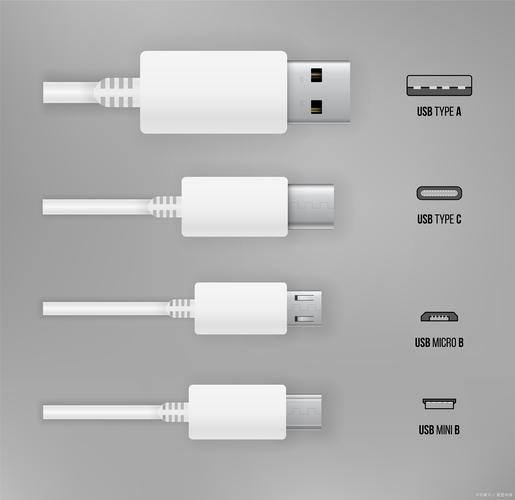
The USB Type-C connector has fundamentally transformed device connectivity, replacing multiple proprietary ports with a single, reversible interface capable of supporting power delivery, high-speed data transfer, and video output through a single cable. For PCB designers, this convergence represents a significant engineering challenge that requires careful consideration of signal integrity, power management, and thermal performance.
Unlike its predecessors, Type-C is more than just a physical connector specification—it’s a comprehensive system where the connector serves as a gateway to multiple protocols and power standards. The interface’s growing adoption is further accelerated by mandatory regulations across multiple regions including the European Union, South Korea, and Saudi Arabia, making Type-C compliance a global requirement rather than an optional feature .
2. Core Type-C Hardware Protocols and Specifications
2.1 USB Power Delivery (PD) Protocol
The USB Power Delivery (PD) protocol represents the most significant advancement in Type-C capabilities, transforming it from a simple data port into a sophisticated power negotiation system.
•Dynamic Power Negotiation: USB PD enables devices to negotiate power contracts dynamically, supporting power levels from 7.5W (5V/1.5A) to 240W (48V/5A) with the latest USB PD 3.1 standard . This flexibility allows a single USB-C port to charge everything from earphones to high-performance laptops.
•Extended Power Range (EPR): The USB PD 3.1 specification introduced EPR mode, which extends voltage to 48V while maintaining 5A current, enabling the 240W power delivery that can replace traditional barrel connectors for gaming laptops and professional equipment .
•Protocol Safeguard Mechanism: The emerging IEC 63315 ED1 standard (scheduled for publication in 2026) introduces a protocol safeguard requirement for devices supporting over 100W, replacing static power limits with dynamic protocol-based safety mechanisms .
2.2 USB4 and High-Speed Data Protocols
USB4 represents the pinnacle of Type-C data transfer capabilities, building upon Thunderbolt 3 technology to deliver unprecedented speeds.
•USB4 Version 2 (USB4 V2): The latest iteration supports 80Gbps bidirectional data transfer and an asymmetric mode of 120Gbps for display-specific applications, making it suitable for high-resolution displays and external graphics solutions .
•Backward Compatibility: USB4 maintains compatibility with previous USB generations (USB 3.2, USB 2.0) and Thunderbolt 3, though implementation varies by manufacturer without proper certification .
•Protocol Multiplexing: USB4 architecture allows simultaneous operation of multiple protocols through tunneled architecture, supporting PCI Express (PCIe) and DisplayPort traffic alongside USB data transfer .
2.3 Alternate Modes for Specialized Functions
Type-C’s Alternate Modes enable functionality beyond traditional USB capabilities by allowing other protocols to use the Type-C interface.
•DisplayPort Alternate Mode: This mode enables native DisplayPort video output supporting up to 8K resolution at 60Hz with HDR, making it suitable for docking stations and external displays.
•Other Implementations: Various manufacturers have developed proprietary Alternate Modes, though these often face compatibility challenges without proper certification.
3. Critical PCB Design Considerations for Type-C Implementation
3.1 Power Integrity and Management
Implementing robust power delivery systems requires careful PCB design to handle higher currents and dynamic power negotiation.
•High-Current Power Paths: For implementations supporting 100W+ delivery, PCB traces must be sized appropriately with considerations for 2oz+ copper weights and adequate thermal relief to handle 5A continuous current .
•Multi-Port Power Sharing: In systems with multiple Type-C ports, intelligent power sharing controllers like Texas Instruments’ TPS25740A enable dynamic power allocation based on connected devices and available power budget .
•Transient Protection: Given the higher voltages (up to 48V with EPR), robust protection circuits including TVS diodes and overvoltage protection are essential to prevent damage during negotiation events or fault conditions.
3.2 Signal Integrity for High-Speed Interfaces
Maintaining signal integrity at USB4’s 80Gbps rates demands meticulous PCB layout practices.
•Impedance Control: Strict differential impedance control (typically 85Ω for USB-C differential pairs) with minimal tolerance (±10%) is critical for high-speed signal integrity.
•Reference Planes: Continuous reference planes without splits beneath high-speed routing areas help minimize impedance discontinuities and electromagnetic interference.
•Length Matching: For USB4 implementations, differential pair length matching becomes increasingly critical, with tolerances shrinking to <0.15mm for some implementations.
3.3 Thermal Management Considerations
The compact nature of Type-C connectors combined with potentially high power delivery creates significant thermal challenges.
•Thermal Via Arrays: Implementing thermal via patterns beneath power management ICs and connector power pins helps dissipate heat to internal ground planes or dedicated thermal layers.
•Copper Thickness: For high-power applications (≥100W), increasing copper thickness to 2-4oz improves current handling and thermal dissipation .
•Component Spacing: Adequate spacing between heat-generating components prevents thermal hotspots and ensures reliable operation across the specified temperature range.
4. The Evolving Regulatory Landscape
4.1 Global Type-C Mandates
The regulatory environment for Type-C interfaces is rapidly evolving, with multiple regions implementing mandatory requirements.
Table: Global Type-C Implementation Timelines
| Region | Implementation Timeline | Covered Products | Governing Body |
| European Union | Portable devices: 2025-01-01Laptops: 2026-04-01 | Phones, tablets, headphones, cameras | European Commission |
| Saudi Arabia | Phase 1: 2025-01-01Phase 2 (laptops): 2026-04-01 | 7 product categories including phones, cameras, routers | SASO (Saudi Standards, Metrology and Quality Organization) |
| South Korea | Postponed (was 2025-02-14)Laptops: 2026-04-01 | 13 device types including phones, tablets, gaming devices | MSIT (Ministry of Science and ICT) |
| India | Under legislation(Expected 2025) | Mobile phones, tablets(Likely following EU model) | To be announced |
| Brazil | Under legislation(Expected 2025) | Consumer electronics(Specifics undefined) | To be announced |
4.2 Certification and Compliance Requirements
Meeting global Type-C requirements involves navigating multiple certification processes.
•USB-IF Certification: The baseline requirement for all Type-C implementations, ensuring compatibility with the USB-IF specification and interoperability with other certified devices .
•Regional Compliance: Additional region-specific certifications are required, including:
–EU Compliance: Testing against EN IEC 62680-1-2 and EN IEC 62680-1-3 standards .
–Saudi SASO Compliance: Mandatory SABER COC certification with testing against SASO IEC 62680-1-2:2017 and SASO-IEC 62680-1-3:2017 .
–Korean RRA Certification: Required SDoC certification following local implementation of USB-IF standards .
•Microsoft WHCP Requirements: For Windows 11 devices, Microsoft’s Windows Hardware Compatibility Program now mandates that all Type-C ports simultaneously support power delivery, data transfer, and video output, effectively eliminating “limited functionality” ports on certified devices .
5. Implementation Challenges and Solutions
5.1 Navigating Interface Inconsistencies
Despite standardization efforts, implementation inconsistencies remain a significant challenge.
•Legacy Device Compatibility: Designing for backward compatibility with non-compliant Type-C devices requires careful implementation of fallback strategies and robust overcurrent protection.
•Cable Quality Variation: The market contains significant variation in Type-C cable capabilities, necessitating designs that can identify and adapt to cable limitations through sophisticated PD controllers.
5.2 Managing Increasing Complexity
As Type-C capabilities expand, implementation complexity grows accordingly.
•Component Selection: Choosing appropriate PD controllers, multiplexers, and protection circuits becomes increasingly critical, with factors like Bill of Materials (BOM) cost, board space, and power efficiency requiring careful balance.
•Firmware Requirements: Modern Type-C implementations require sophisticated firmware to manage power negotiation, Alternate Mode configuration, and error handling, creating software development overhead alongside hardware design.
6. Future Trends in Type-C Technology
6.1 Emerging Standards and Capabilities
The Type-C ecosystem continues to evolve with several emerging technologies.
•IEC 63315 ED1: This forthcoming standard (planned for 2026-07-31) will replace IEC 62368-3 specifically for USB, HDMI, and PoE technologies, introducing more rigorous protocol-based safety requirements for high-power applications .
•USB4 Version 2 Adoption: As ecosystem support grows, USB4 V2 with its 80-120Gbps capabilities will become increasingly accessible, requiring more sophisticated PCB materials and design techniques .
•Embedded Applications: Companies like STMicroelectronics are developing certified Type-C and USB PD solutions for embedded applications, expanding Type-C adoption beyond consumer devices into industrial, medical, and automotive sectors .
6.2 Market Expansion and Diversification
Type-C technology is expanding into new applications and power classes.
•Higher Power Applications: With 240W capability now standardized, Type-C is positioned to replace proprietary power connectors in additional device categories including desktop computers, professional audio equipment, and industrial tools.
•Automotive Integration: As vehicles become more connected, Type-C is increasingly specified for in-vehicle infotainment and charging systems, creating new design requirements for automotive-grade implementations.
7. Conclusion: Strategic Implementation for PCB Success
The USB Type-C interface has matured from a convenient consumer feature to a complex, regulated technology that demands sophisticated implementation approaches. For PCB companies, success in this landscape requires:
•Mastering Power Delivery: Developing expertise in high-wattage power delivery systems with robust protection mechanisms is essential as devices demand more power in smaller form factors.
•Embracing Certification: Proactively addressing global certification requirements rather than treating them as afterthoughts prevents market access issues and costly redesigns.
•Anticipating Evolution: Designing for future capabilities like USB4 V2 and higher power levels ensures product longevity despite the rapidly advancing standard.
The companies that develop deep expertise in Type-C implementation—mastering both the technical challenges and regulatory requirements—will be best positioned to capitalize on the continuing transition toward universal connectivity standards across consumer, industrial, and specialized electronic devices.
Partner with Us for Your Type-C PCB Projects
Successfully implementing Type-C technology requires a manufacturing partner with expertise in high-speed PCB design, power integrity optimization, and global compliance requirements. Our experience with Type-C implementations across consumer electronics, automotive systems, and industrial applications ensures your designs meet both performance expectations and regulatory mandates.
Contact us today to discuss how we can support your next Type-C project with cutting-edge PCB technology tailored for optimal performance and compliance.