Table of Contents
Introduction
Electro-Absorption Modulated Laser (EML) chips are critical components in modern optical communication systems, enabling high-speed data transmission with low power consumption and high reliability. As a PCB enterprise, understanding how EML chips function and their integration into printed circuit boards is essential for leveraging their potential in advanced applications like data centers, telecommunications, and AI computing. This article explores the fundamentals of EML chips, their applications, and key considerations for PCB design and integration.
1. What Are EML Chips?
EML chips integrate a laser diode and an electro-absorption modulator to convert electrical signals into optical signals with minimal chirp (frequency instability). This integration allows for:
– High-Speed Modulation: Supports data rates exceeding 50 Gbps, making them ideal for high-bandwidth applications.
– Low Power Consumption: Optimized for energy efficiency, reducing overall system heat dissipation.
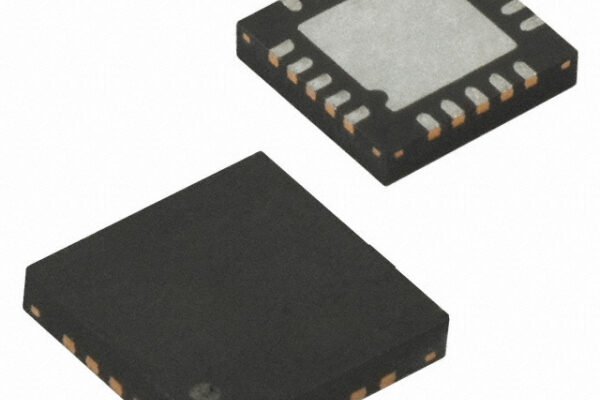
– Compact Design: Their small form factor (e.g., SOT-23-5 packaging) enables dense PCB layouts.
2. Applications of EML Chips
EML chips are widely used in:
– Data Centers: Facilitate high-speed interconnects for servers and storage systems.
– Telecommunication Networks: Enable long-distance fiber-optic communication with minimal signal loss.
– AI and Cloud Computing: Provide low-latency, high-bandwidth links for processing large datasets.
– Consumer Electronics: Used in devices like smartphones and Bluetooth modules for efficient signal transmission.

3. PCB Design Considerations for EML Chips
Integrating EML chips into PCBs requires attention to:
– Impedance Matching: Ensure precise impedance control to avoid signal reflection and loss. Techniques like using embedded metal vias in carriers (e.g., COC components) can improve impedance continuity.
– Thermal Management: EML chips generate heat during operation. Use thermal vias, heat sinks, and copper pours to dissipate heat efficiently.
– Signal Integrity: Minimize crosstalk by isolating high-speed signals and using ground planes. Keep signal paths short and direct.
– Power Supply Stability: Employ dedicated voltage regulators (e.g., EML bias ICs) to provide stable power and reduce noise.
4. Challenges and Solutions
– High-Frequency Noise: Use decoupling capacitors and shielded traces to suppress noise.
– Miniaturization: Leverage advanced packaging techniques like TDFN or WLCSP to save space.
– Interconnect Reliability: Optimize wire bonding (e.g., controlling wire length to 200–450 μm) to reduce impedance discontinuities.
5. Industry Trends and Future Outlook
– The global EML chip market is growing rapidly, driven by demand for faster data transmission.
– Innovations like 50G EML+SOA chips (integrating semiconductor optical amplifiers) are emerging for longer-range applications.
– Chinese manufacturers (e.g., Source Photonics, Cambridge Technology) are advancing high-performance EML production, reducing reliance on imports.
Conclusion
EML chips are pivotal to next-generation optical communication systems. For PCB enterprises, mastering their integration—through careful design for signal integrity, thermal management, and power stability—can unlock opportunities in high-growth sectors like data centers and AI. By aligning with industry trends and adopting best practices, your business can enhance product offerings and capture new markets.
Get your exclusive quote immediately: fill out the form or send an email directly.As a professional PCB manufacturer for hobbyist , we will provide you with a quote service within 24 hours. Enjoy free DFM optimization and a 10% discount on SMT patches for your first order!