Ceramic capacitors are fundamental components in modern electronics, playing a critical role in ensuring the stability, efficiency, and reliability of printed circuit boards (PCBs). As a PCB manufacturer, understanding their characteristics, applications, and best practices for integration is key to delivering high-quality products. This article provides a comprehensive overview of ceramic capacitors, their functionality, and their importance in PCB design.
Table of Contents
1. What Are Ceramic Capacitors?
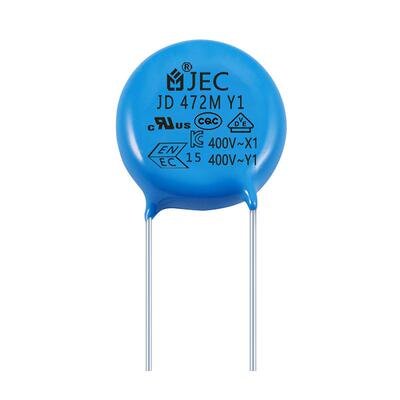
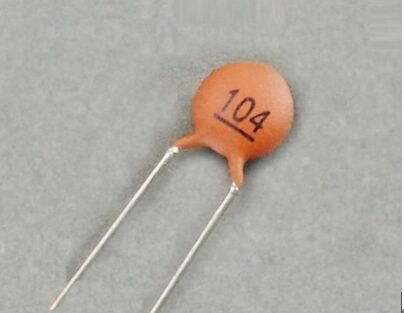
Ceramic capacitors (also known asceramic disc capacitorsormultilayer ceramic capacitors—MLCCs) are passive electronic components that store and release electrical energy. They consist of alternating layers of ceramic dielectric material and metal electrodes, sintered into a monolithic structure . These capacitors are widely used due to their:
•Compact size and high capacitance density.
•Excellent frequency response for high-frequency applications.
•Low equivalent series resistance (ESR) and low cost .
2. Key Roles in PCB Design
Ceramic capacitors serve two primary functions in PCBs:
•Decoupling/Bypassing: They stabilize voltage levels by suppressing noise and transient fluctuations in power supplies. Placed near integrated circuits (ICs), they provide a local charge reservoir, reducing EMI and improving signal integrity .
•Filtering: They block DC signals while allowing AC signals to pass, enabling noise reduction in analog and digital circuits .
3. Advantages of Ceramic Capacitors
•Miniaturization: Their small form factor (e.g., 0402, 0603, 0805 packages) supports high-density PCB layouts .
•Thermal Stability: Class 1 capacitors (e.g., C0G/NP0) offer minimal capacitance drift across temperature ranges, while Class 2 (e.g., X7R, X5R) provide higher capacitance with moderate stability .
•High-Frequency Performance: Low ESL and ESR make them ideal for RF and microwave applications .
•Reliability: Resistant to mechanical stress and humidity when properly installed .
4. Critical Considerations for PCB Layout
A. Placement
•Place decoupling capacitors as close as possible to IC power pins to minimize parasitic inductance and resistance .
•Use multiple capacitors in parallel to improve high-frequency impedance characteristics .
B. Grounding and Routing
•Avoid routing power or signal traces over ground planes to prevent disrupting high-frequency return paths .
•Separate analog and digital ground layers, connecting them at a single point to reduce noise coupling .
C. Voltage and Temperature Dependencies
•Capacitance can decrease with applied DC voltage (voltage dependency) and vary with temperature. Select dielectric types (e.g., X7R for general use, C0G for precision) based on operating conditions .
D. Manufacturing Constraints
•Ensure sufficient spacing between components to accommodate soldering processes and prevent short circuits .
•Use appropriate solder pad designs to minimize parasitic inductance .
5. Common Mistakes to Avoid
•Incorrect Capacitor Selection: Using capacitors with insufficient voltage ratings or inappropriate dielectric materials can lead to premature failure .
•Poor Placement: Placing capacitors too far from ICs reduces their decoupling effectiveness .
•Ignoring Parasitics: Long traces or vias increase ESL and ESR, degrading performance .
•Overlooking Thermal Stress: Sudden temperature changes during soldering can crack ceramic capacitors. Preheating and controlled soldering profiles are essential .
6. Future Trends and Applications
As electronics evolve toward higher frequencies and miniaturization, ceramic capacitors remain indispensable. Emerging applications include:
•5G and IoT devices requiring high-frequency decoupling.
•Automotive and aerospace systems demanding reliability under extreme temperatures.
•High-power density designs leveraging advanced MLCCs with higher capacitance volumes .
Conclusion
Ceramic capacitors are vital for optimizing PCB performance, reducing noise, and ensuring power integrity. By understanding their characteristics and adhering to best practices in placement, selection, and manufacturing, PCB designers and manufacturers can enhance product reliability and meet the demands of next-generation electronics.
At SysPCB, we leverage advanced materials and design techniques to integrate ceramic capacitors seamlessly into your PCBs, ensuring optimal performance and durability. Contact us to learn how our expertise can support your projects.