Printed Circuit Board (PCB) assembly primarily uses two techniques: Surface Mount Technology (SMT) and Through-Hole Technology (THT). Each method has distinct advantages and limitations, making them suitable for different applications. This article compares SMT and THT, highlighting their differences, benefits, and ideal use cases.
Table of Contents
1. Understanding Surface Mount Technology (SMT)
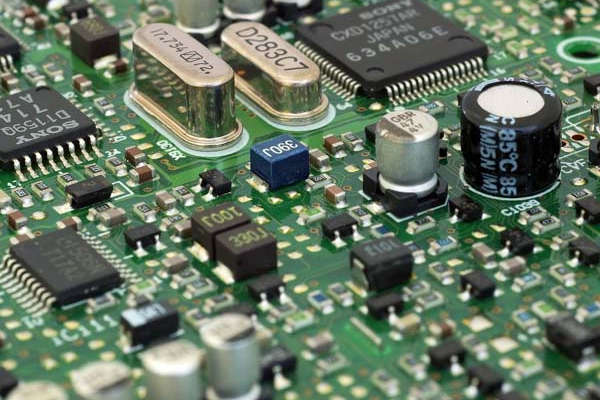
SMT involves directly mounting electronic components onto the PCB surface without drilling holes. Components used in SMT are called Surface Mount Devices (SMDs).
Advantages of SMT:
Compact and Lightweight: Smaller components allow for higher circuit density, making it ideal for modern miniaturized electronics.
Faster Production: Automated assembly and soldering processes increase manufacturing speed and efficiency.
Cost-Effective: Reduces material and labor costs due to automation and smaller board sizes.
Better Electrical Performance: Shorter lead connections improve signal integrity and reduce electromagnetic interference (EMI).
Limitations of SMT:
Difficult Manual Repair: The small size of components makes manual soldering and rework challenging.
Lower Mechanical Strength: SMDs are more susceptible to mechanical stress and vibrations compared to through-hole components.
Limited High-Power Handling: Not ideal for high-power applications due to weaker physical connections.
2. Understanding Through-Hole Technology (THT)
THT involves inserting component leads into drilled holes on a PCB and soldering them on the opposite side. It is commonly used for larger and more robust components.
Advantages of THT:
Strong Mechanical Bond: Provides high mechanical stability, making it ideal for high-stress environments.
Better for High-Power Applications: Through-hole components can handle higher currents and voltages.
Easier Prototyping and Repairs: Components are easier to solder, replace, and modify manually.
Limitations of THT:
Larger PCB Size Required: Drilled holes take up more space, limiting circuit density.
Slower Assembly Process: Requires manual or wave soldering, increasing production time and labor costs.
Higher Manufacturing Cost: Increased material usage and manual handling contribute to higher costs.
3. Key Differences Between SMT and THT
| Feature | Surface Mount Technology (SMT) | Through-Hole Technology (THT) |
| Component Size | Small, compact SMDs | Larger, bulkier components |
| PCB Space Efficiency | High-density, multilayer boards | Requires more space due to drilled holes |
| Assembly Speed | Fast, automated process | Slower, involves manual soldering |
| Mechanical Strength | Lower, susceptible to stress | High, better for rugged environments |
| Cost | Lower manufacturing costs | Higher due to material and labor costs |
| Repair & Prototyping | Difficult due to small size | Easier, better for modifications |
| Power Handling | Limited high-power capability | Suitable for high-current applications |
4. Choosing Between SMT and THT
The choice between SMT and THT depends on the specific application requirements:
SMT is ideal for: Consumer electronics, smartphones, computers, and high-speed digital circuits.
THT is best suited for: Aerospace, automotive, power electronics, and applications requiring high durability.
Conclusion
Both SMT and THT play crucial roles in PCB assembly. SMT offers compactness, speed, and cost efficiency, while THT provides durability and better high-power performance. Choosing the right technology depends on the design, application, and environmental requirements of the PCB. In many cases, a hybrid approach combining both techniques optimizes performance and reliability.
Get your exclusive quote immediately: fill out the form or send an email directly.As a professional PCB manufacturer for hobbyist , we will provide you with a quote service within 24 hours. Enjoy free DFM optimization and a 10% discount on SMT patches for your first order!