Solder paste, as an important soldering material in surface mount technology (SMT), directly affects the soldering quality and reliability of electronic products based on its performance. When selecting solder paste, it is necessary to comprehensively consider multiple factors such as alloy composition, flux characteristics, viscosity, particle size, etc., and combine them with specific application scenarios in order to select the most suitable solder paste.
Table of Contents
1、 Select based on alloy composition
1.1 Eutectic tin lead alloy (Sn63Pb37)
Eutectic tin lead alloy solder paste has a low melting point of 183 ℃, good wetting and soldering properties, and can form high-quality solder joints with relatively low cost. In some consumer electronics fields that have low environmental requirements and are cost sensitive, such as ordinary remote controls and low-end small home appliance PCB board soldering, it is widely used. However, due to lead being a toxic heavy metal, its use has gradually been restricted with the implementation of environmental regulations such as the RoHS directive.

1.2 Lead free alloy
SAC305 (Sn96.5Ag3.0Cu0.5): This is currently the most commonly used lead-free solder paste alloy, with a melting point of about 217 ℃, which is higher than that of eutectic tin lead alloys. It has good mechanical properties, fatigue resistance, and wettability, and is widely used in various electronic products, especially in fields that require high reliability, such as automotive electronics, communication equipment, etc. For example, in the PCB soldering of automotive engine control units (ECUs), SAC305 solder paste can meet the requirements of harsh environments such as high temperature and vibration.
SAC0307 (Sn99.3Ag0.3Cu0.7): The cost is lower than SAC305, but the wettability is relatively poor. It is suitable for products that are cost sensitive and do not require extremely high welding performance, such as some mid to low end consumer electronics products.
2、 Select based on the characteristics of the flux
2.1 Activity level
The activity of flux directly affects the welding effect and is usually divided into three levels: R (non active), RMA (medium active), and RA (active).
R-grade soldering flux: has the lowest activity, less residue, and low corrosiveness, but has weak soldering ability. It is suitable for soldering precision electronic components with very clean soldering surfaces and extremely high residue requirements, such as high reliability device soldering in aerospace and military fields.

RMA grade soldering flux: with moderate activity, it can effectively remove minor oxides. The residue has a certain degree of corrosiveness and needs to be cleaned. It is commonly used for soldering general consumer electronics and industrial control equipment.
RA grade soldering flux: The most active and has excellent soldering ability, but the residue is highly corrosive and requires strict cleaning. It is suitable for soldering components with severe surface oxidation or scenes with extremely high requirements for soldering quality.
2.2 Residual Characteristics
The properties of residues after soldering with different fluxes are different. The non cleaning soldering flux has less residue and no corrosiveness after welding, and does not require cleaning, which can reduce production costs and process flow. It is commonly used in consumer electronics products that do not require extremely high cleanliness; The residue of water washed soldering flux can be removed by water washing, which is suitable for products with high cleanliness requirements, but it increases the cleaning process and cost; Half water cleaning flux falls between the two.
3、 Consider viscosity and particle size
3.1 Viscosity
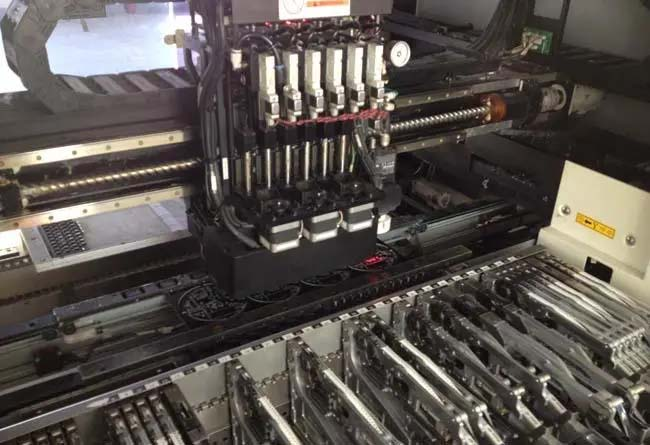
The viscosity of solder paste can affect the printing performance and component mounting effect. The viscosity is too high, making it difficult for the solder paste to pass through the openings of the steel mesh, and the printed graphics are incomplete; Low viscosity can easily lead to issues such as solder paste collapse and bridging. Generally speaking, the printing process requires a solder paste viscosity between 50-150Pa · s. For printing components with fine spacing (such as pin spacing below 0.3mm), lower viscosity solder paste should be selected; For larger size solder pads and spacing printing, higher viscosity solder paste can be used.
3.2 Particle size
The particle size of tin powder in solder paste has a significant impact on printing accuracy and welding quality. Common particle size specifications include Type3, Type4, Type5, Type6, etc. The larger the number, the finer the particles. Type3 particle size is suitable for soldering components with a pin spacing of 0.5mm or more; Type5 and Type6 particle sizes are more suitable for fine pitch components below 0.3mm, which can ensure the printing quality of fine graphics. However, the cost of fine particle solder paste is relatively high, and it is easy to oxidize, requiring stricter storage and usage conditions.
4、 Select based on application scenarios
4.1 Consumer Electronics Products
Consumer electronics products usually pursue cost-effectiveness and production efficiency, and can choose lead-free SAC305 or SAC0307 alloy solder paste, combined with RMA grade non cleaning flux, which can meet environmental requirements and reduce cleaning processes. For fine pitch components, it is important to choose solder paste with appropriate viscosity and particle size to ensure printing and soldering quality.
4.2 Automotive Electronics and Industrial Control
This type of product requires extremely high reliability, and SAC305 alloy solder paste should be given priority. The flux can be selected according to the cleanliness requirements of RMA or RA grade, and cleaning treatment should be carried out if necessary to ensure the long-term stability and corrosion resistance of the solder joints.
4.3 High reliability fields (aerospace, military)
In high reliability fields such as aerospace and military, it is necessary to use solder paste that meets relevant standards (such as MIL-STD-5015), usually using lead-free alloys with R-grade flux to ensure welding quality and extremely low residue. At the same time, strict control of various performance indicators of solder paste is required for comprehensive reliability testing.
The above introduces the selection method of solder paste from multiple dimensions. If you have specific application scenarios or would like to know detailed information about a certain type of solder paste, please feel free to communicate with me at any time.