Table of Contents
Introduction
With the wave of IoT, 5G, and smart devices, RF antennas have become one of the core challenges in PCB design. This article will deeply analyze the 5 key technologies of RF antenna PCB design, helping you optimize signal transmission efficiency, reduce interference risks, and seize the opportunity in the high-frequency communication market.
1、 Material selection: the cornerstone of high-frequency performance
1. Low loss board
Traditional FR-4 materials have significant losses in the UHF frequency band (860-960MHz). It is recommended to use high dielectric constant, low loss substrates such as Rogers RO4350B or Taconic TLX, which can reduce signal transmission attenuation by more than 20%.
2. Optimization of metal coating
Adopting silver/copper coating to enhance conductivity, combined with LTCC (Low Temperature Co fired Ceramic) packaging technology, to achieve a balance between antenna miniaturization and high performance.
2、 Structural Design: Breakthrough in Gain and Bandwidth
1. Multilayer stacking and microstrip line technology
By using a three-dimensional spiral structure or folding design, the effective radiation area is increased and the gain is increased to 5-8dBi. For example, the 5G WiFi antenna adopts a half wave dipole superposition design, which increases the wall penetration ability by 30%.

2. Clearance zone planning
Reserve a clearance area of ≥ 5mm around the antenna to avoid coupling interference from metal components (such as motors and speakers) and ensure stable resonant frequency.
3、 Impedance matching: the key to signal integrity
1. π – type matching network
Reserve a T-type/π – type network between the chip and the antenna, optimize the inductance and capacitance values through a Smith chart, achieve 50 Ω impedance matching, and reduce the return loss to below -10dB.
2. Layout key points
Matching components should have a compact layout to avoid Stub (residual segment) effects. The distance between the grounding via and the solder pad should be ≤ 1mm to reduce the impact of parasitic inductance.
4、 EMC Control: The Core Strategy for Anti Interference
1. High frequency isolation design
The RF wiring adopts a differential structure to avoid 90 ° right angle turns, with a distance of ≥ 3 times the line width from the digital signal layer, and is shielded by a GND via fence.

2. Power decoupling optimization
Add LC filters (such as 100nF capacitors+10 μ H inductors) to the RF power path, and use star wiring to isolate digital/analog power noise, reducing glitch voltage by 50%.
5、 Application Trends and Selection Suggestions
1. Multi band antenna integration
Supports dual band (2.4GHz/5GHz) and broadband design, suitable for multiple scenarios such as drones and smart homes. For example, Amphenol RF’s FPC antenna can cover Wi Fi 6E frequency band.
2. Enhanced environmental adaptability
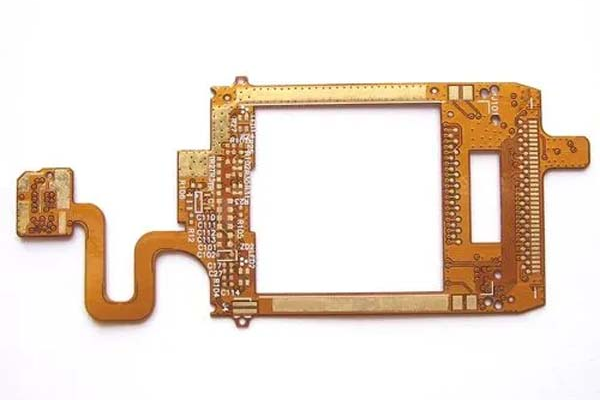
Adopting flexible PCB (FPC) antenna, it can withstand extreme temperatures from -40 ° C to+85 ° C and is suitable for industrial IoT and vehicle communication.
Conclusion
SysPCB has been focusing on high-frequency PCB manufacturing for 10 years, providing a one-stop RF antenna solution of “design simulation mass production”, equipped with vector network analyzer (VNA) and 3D electromagnetic simulation system, ensuring impedance matching accuracy of over 99%! [Get customized solution now]