Table of Contents
Introduction
In PCB design and manufacturing, the selection of active and passive components directly affects circuit performance and cost. This article analyzes the differences between the two from dimensions such as definition, functionality, and application scenarios, helping you optimize design and enhance product competitiveness!
1、 Essential difference: Energy driven and signal processing
1. Active components
-Definition: Requires external power drive and has signal amplification or energy conversion capabilities, such as transistors, integrated circuits (ICs), operational amplifiers, etc.
-Core features: Active control of current/voltage, supporting signal amplification, oscillation, modulation and other functions, commonly used in power management, communication modules and other scenarios.
2. Passive components
-Definition: Without the need for an external power source, signals are processed through physical characteristics such as resistance, capacitance, inductance, etc.
-Core feature: Passive signal regulation, achieving filtering, coupling, energy storage and other functions, mostly used for basic circuit construction and signal shaping.
2、 Comparison of 5 Core Differences
|Comparison item | Active component | Passive component|
|——————|—————————-|—————————-|
|Power dependency | requires external power supply | does not require power supply|
|Signal processing capability | Can amplify and transform signals | Only transmit or attenuate signals|
|Controllable | Active regulation (such as gain regulation) | Passive response (such as capacitive/inductive impedance)|
|Reliability | Low (dependent on power stability) | High (simple structure, passive drive)|
|Typical Applications | Amplifier MCU、 Power module | filtering circuit, impedance matching, energy storage|
3、 Selection Strategy in PCB Design
1. High precision signal processing scenarios
-Priority active components: such as operational amplifiers used for sensor signal amplification to ensure microvolt level accuracy.
-Paired with passive components: Suppressing noise and improving signal-to-noise ratio through RC filtering circuit.
2. High frequency and power circuit design
-Advantages of passive components: LC resonant circuit composed of inductance and capacitance, suitable for filtering RF modules and switching power supplies.
-Active component limitation: oscillations may occur due to parasitic parameters at high frequencies, and careful layout is required.

3. Balance cost and reliability
-Low cost solution: Basic circuits with a high proportion of passive components (such as LED drivers) can reduce BOM costs.
-High reliability requirements: Medical/automotive electronics prioritize the use of passive components (such as ceramic capacitors) to enhance stability.
4、 Common Misconceptions and Avoiding Pits Guide
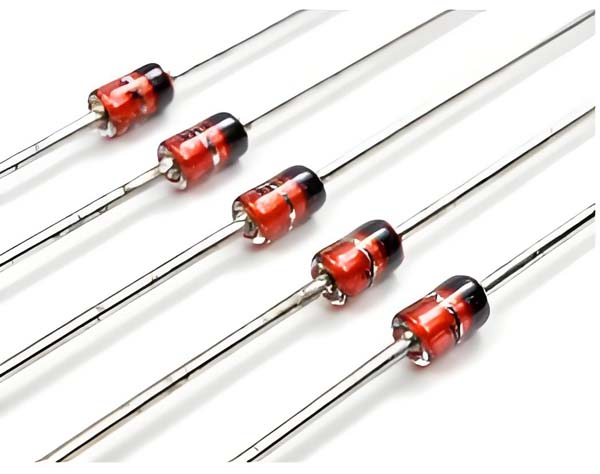
Misconception 1: Diodes are passive components
-Correct answer: Some diodes (such as LEDs and photodiodes) require external driving and are classified as active components.
Misconception 2: Integrated circuits are all active components
-Correct answer: Passive components (such as on-chip resistors/capacitors) may be integrated inside the IC, and functional judgment is required.
Design suggestions:
-Use DFM tools to verify component compatibility (such as matching pad size with SMT process).
-Low ESR capacitors and high-Q inductors are preferred for high-frequency circuits.
5、 3 key points for choosing a professional PCB supplier
1. Technical support capability: Do you provide suggestions for optimizing the layout of active/passive components.
2. Process certification: Whether it has passed the IPC-A-610 standard to ensure welding reliability.
3. Supply chain guarantee: Can we quickly procure automotive grade/military grade components to meet special needs.
Conclusion
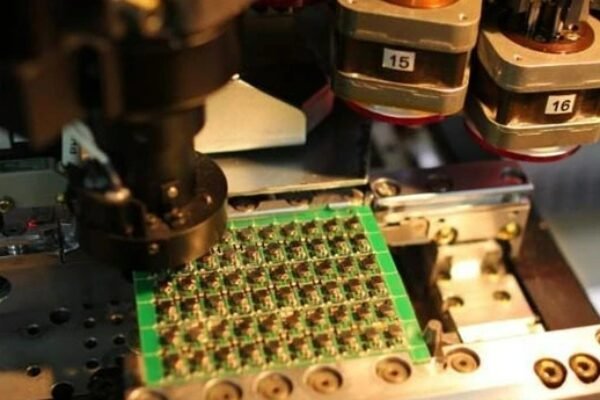
SysPCB has been deeply involved in PCB manufacturing for 15 years, providing full process services of “component selection design optimization mass production delivery”, equipped with high-speed surface mount machines and AOI detection systems, to help you achieve high-precision and high reliability circuit boards! [Get customized solution now].