Table of Contents
Introduction
In PCB design and manufacturing, details determine success or failure! A professional PCB inspection checklist can systematically avoid 80% of potential problems. This article elaborates on the 5 core steps of PCB inspection checklist to help you improve the yield and long-term reliability of circuit boards.
1、 Why do we need a PCB checklist?
As the “skeleton” of electronic products, the quality of PCB directly affects equipment performance. According to statistics, 60% of circuit board failures are caused by design or manufacturing oversights, and standardized checklists can significantly reduce rework costs and shorten delivery cycles.
2、 5 Core Steps of PCB Inspection Checklist
1. Design phase: Avoiding risks from the source
-Electrical rule check: Ensure no short circuit/open circuit, optimize power and ground wire width.
-Reasonable layout: Isolate high-frequency signals and avoid thermal sensitive components from being close to the heat source.
-Packaging verification: Verify the pin size and pad design of the component to match the SMT process requirements.

2. Pre manufacturing document review (Gerber files)
-File integrity: Confirm that the drilling file, solder mask layer, and silk screen layer are clear and error free.
-Process compatibility: Check whether the line width/spacing meets the factory’s capabilities, clarify the type of board and surface treatment (gold plating/tin spraying).
Industry data reference: Line width deviation>10% will lead to a 20% risk of impedance loss control.
3. PCB finished product inspection: key quality defense line
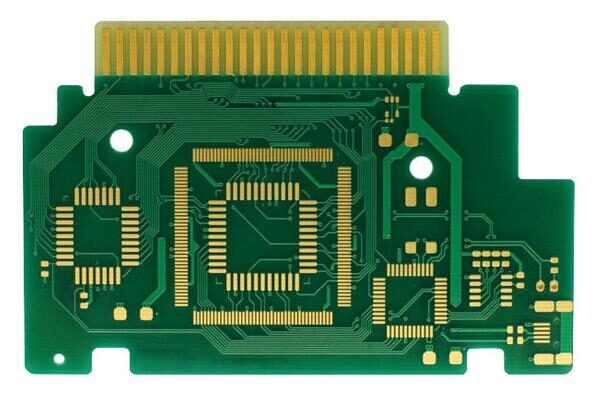
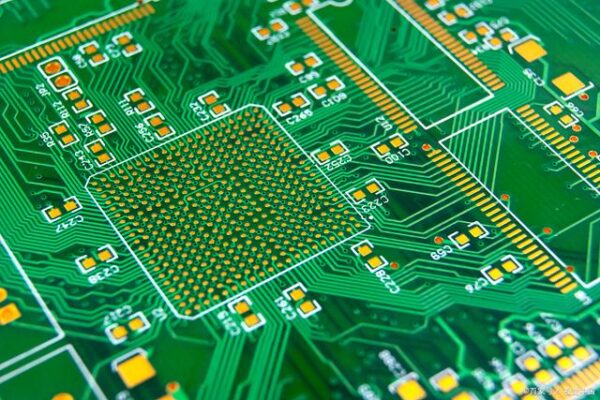
-Appearance inspection: Check for scratches, uneven solder mask, pad oxidation, and other issues.
-Electrical testing: Ensure 100% circuit continuity through flying pin testing/AOI.
-Dimensional verification: Accurately measure plate thickness, aperture, and external tolerances.
4. PCBA assembly stage inspection
-Mounting accuracy: Confirm the direction of polar components and prevent reverse welding.
-Welding quality: X-Ray inspection of BGA void rate to avoid virtual soldering/bridging.
-Functional testing: Simulate real working conditions to verify signal integrity and power stability.

5. Reliability verification (optional value-added service)
For high demand fields such as military and medical industries, it is recommended to add:
-Environmental stress testing (temperature, humidity, vibration)
-HALT Accelerated Life Test
3、 Common PCB Issues and Checklist Value
-Typical design errors: Unreasonable ground plane segmentation causing noise, and silk screen covering of solder pads leading to poor welding.
-Manufacturing high-frequency errors: Drilling offset, insufficient copper thickness causing overheating.
By standardizing the checklist process, more than 50% of repetitive issues can be reduced.
4、 3 key points for choosing a professional PCB supplier
1. Do you provide customized checklists (such as high-speed PCB/RF circuit specific checklists)
2. Does it support DFM (Design for Manufacturing) analysis services
3. Do you have the full process testing capability for IPC-A-600 certification
Conclusion
SysPCB Technology has been focusing on PCB manufacturing for ten years, providing one-stop services of “design production testing”, equipped with intelligent testing equipment and customized PCB inspection forms, to help you achieve a 99%+yield target! [Immediately consult PCB solution]