PCB CCL, as the core raw material of printed circuit boards (PCBs), carries the three major functions of conductivity, insulation, and support, and is a key basic material for electronic products to achieve high performance and reliability. With the rapid development of fields such as 5G communication, artificial intelligence, and automotive electronics, the technical requirements of CCL are constantly increasing, and its innovation and application are driving the electronics industry to new heights. This article will analyze the definition and classification of CCL, manufacturing processes, technological challenges and breakthroughs, application scenarios, and future trends.
—
Table of Contents
1、 Definition and core role of PCB CCL
CCL is made by impregnating resin with reinforcing materials such as glass fiber cloth and paper-based materials, then covering them with copper foil, and laminating them under high temperature and high pressure. Its performance directly affects the electrical characteristics, mechanical strength, and long-term stability of the PCB. According to statistics, CCL accounts for 20% -40% of the total cost of PCB and is one of the highest value-added links in the PCB industry chain.
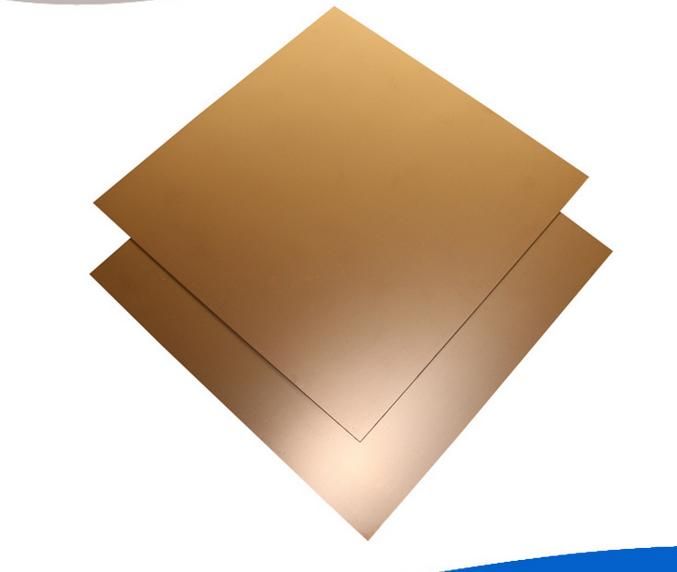
In multi-layer PCBs, CCL is combined with semi cured sheet (PP) through lamination process to form complex circuit structures. For example, an 8-layer PCB typically consists of 3 core boards alternately stacked with semi cured sheets, achieving high-density interconnection through precision alignment and lamination techniques. The dielectric constant (Dk) and dielectric loss (Df) of CCL directly determine the signal transmission efficiency, especially in 5G base stations and high-speed servers, where low loss materials (Df ≤ 0.005) are required to reduce signal attenuation.
—
2、 Classification and Technical Standards of PCB CCL
The classification dimensions of CCL are diverse, mainly covering the following directions:
1. Substrate type
-Rigid CCL: with FR-4 (epoxy resin+fiberglass cloth) as the mainstream, widely used in consumer electronics and communication equipment;
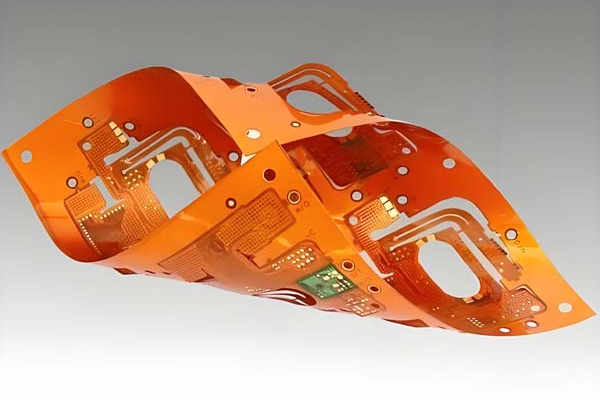
-Flexible CCL: made of polyimide (PI) substrate, used for wearable devices and foldable mobile phones;
-Special substrates: such as metal based (aluminum based, copper based) CCL, with a thermal conductivity of 2-4 W/m · K, suitable for new energy vehicle battery management modules.

2. Performance level
-Classified into V0, V1, and HB levels based on flame retardancy, environmentally friendly halogen-free CCL has become a trend;
-According to dielectric performance, it can be divided into ordinary type and high-speed type (such as M4-M8 grade), among which the dielectric loss of M8 grade CCL is only half of M7 grade, and the price is doubled.
3. Application scenarios
The automotive electronics field requires CCL to be high temperature resistant (-40 ℃~125 ℃), vibration resistant, and comply with AEC-Q100 standards; 5G high-frequency scenarios require low Dk/Df materials (such as Rogers RO4350B) to support signal transmission above 28GHz.
—
3、 CCL Manufacturing Process and Technological Breakthrough
The manufacturing process of CCL includes resin blending, dipping, lamination, cutting and other steps, with core processes including:
1. Laminated process
After the prepreg is laminated with copper foil, it is hot pressed and cured at 175 ℃ and 2-4 MPa pressure to ensure that there are no bubbles between the layers and the warpage is ≤ 0.5%. Dynamic compensation technology can control interlayer offset within ± 25 μ m, ensuring high-density interconnect accuracy.
2. Material innovation
-High frequency and high-speed materials: The M8 grade CCL developed by Shengyi Technology has achieved mass production, with a dielectric loss as low as 0.003, and is compatible with PCIe 5.0 standard 20 layer server PCBs;
-High heat-resistant material: CCL with a glass transition temperature (Tg) ≥ 170 ℃ (such as Shengyi SH260), which can withstand extreme temperature differences in rocket engine monitoring systems.
3. Environmental protection technology
The application of halogen-free resin and water-based solder mask ink reduces pollution, and the closed-loop etching system achieves a waste liquid recovery rate of over 90%, which complies with RoHS and REACH standards.
—
4、 Application scenarios and industry trends of CCL
1. 5G and Data Centers
5G Massive MIMO antennas require low loss CCL (Df ≤ 0.005), while the new generation of server PCBs has increased from 8 layers to 20 layers, driving an explosion in demand for ultra-low loss CCL.

2. Automotive Electronics
The intelligent driving system adopts metal based CCL, which improves the heat dissipation efficiency by 40%; Flexible CCL is used for curved surface connections of car displays, improving vibration resistance by 30%.
3. AI and the Internet of Things
HDI board adopts laser drilling (aperture 50 μ m) and pulse electroplating technology, combined with nano coating to enhance waterproofing, expanding to the fields of ocean exploration and space equipment.
Future Trends:
-Intelligent production: AI defect detection system increases yield to 99.95% and reduces labor costs;
-Material upgrade: Nano filler modified resin can reduce the Z-axis coefficient of thermal expansion (CTE) to below 30ppm/℃, improving the reliability of packaging substrates;
-Green Manufacturing: Accelerating research and development of bio based resins and recyclable copper foil technology to promote sustainable development of the CCL industry.
—
Conclusion
As the foundation of the electronics industry, CCL’s technological innovation continues to drive the evolution of PCBs towards high frequency, high speed, and high reliability. Faced with the global wave of 5G, AI, and carbon neutrality, PCB companies need to focus on material research and development, process optimization, and intelligent upgrading in order to gain an advantage in the high-end market. From FR-4 to M8, from rigidity to flexibility, CCL’s innovation path is not only a technological breakthrough, but also the core driving force for the electronics industry to move towards an intelligent future.