Table of Contents
Introduction to MIPI A-PHY
In today’s rapidly evolving automotive electronics landscape, the demand for reliable high-speed data transmission has never been greater. MIPI A-PHY is an asymmetric, long-reach serializer-deserializer (SerDes) physical layer interface specifically designed for automotive applications. As the first standardized automotive SerDes solution to enter mass production, A-PHY represents a significant advancement in in-vehicle connectivity, supporting the massive data requirements of advanced driver assistance systems (ADAS), autonomous driving systems, and sophisticated infotainment platforms.
For PCB manufacturers and designers, understanding MIPI A-PHY is crucial as it introduces specific routing considerations, material selection requirements, and signal integrity challenges that differentiate it from traditional automotive interfaces. This article explores the technical specifications of MIPI A-PHY, its implications for PCB design, and the growing ecosystem supporting this transformative standard.
1.Technical Specifications and Key Features
MIPI A-PHY was developed to address the automotive industry’s need for robust, high-speed data transmission over longer distances. Key technical attributes include:

Performance Characteristics
•High data rates: The latest A-PHY v2.0 supports data rates up to 32Gbps, while v1.1 delivers 16Gbps with a roadmap to 48Gbps and beyond
•Extended reach: Capable of stable transmission up to 15 meters
•Ultra-low packet error rate (PER): Exceptional reliability with PER as low as 1E-19, equivalent to fewer than one error throughout a vehicle’s entire lifespan
•Low latency: Fixed latency as low as 6 microseconds, critical for real-time safety applications
Enhanced Reliability Features
•Superior noise immunity: Incorporates advanced noise cancellation and retransmission mechanisms at the physical layer
•Adaptive equalization: Automatically detects and compensates for cable degradation and variations
•Electromagnetic compatibility: Robust performance in challenging automotive EMI environments
Table: MIPI A-PHY Version Comparison
| Specification | A-PHY v1.0 | A-PHY v1.1 | A-PHY v2.0 |
| Max Data Rate | 16 Gbps | 16 Gbps | 32 Gbps |
| Uplink Rate | 100 Mbps | 200 Mbps | 1.6 Gbps |
| Modulation | NRZ 8B/10B & PAM | PAM4 support added | PAM16 |
| Key Feature | Foundation specification | Star Quad cable support | Enhanced bandwidth |
2.MIPI A-PHY vs. Other MIPI PHY Protocols
While MIPI standards like D-PHY and C-PHY have served mobile and consumer applications effectively, A-PHY addresses the unique demands of automotive environments:
Table: Comparison of MIPI PHY Interfaces
| Characteristic | D-PHY | C-PHY | A-PHY |
| Max Data Rate | 9 Gbps (v3.0) | 13.7 Gbps (6 Gsps) | 32 Gbps |
| Typical Distance | <10 cm | <50 cm | Up to 15 m |
| Key Applications | Mobile displays, cameras | High-resolution displays | Automotive sensors, displays |
| Noise Immunity | Moderate | Good | Excellent (1E-19 PER) |
Unlike its predecessors, A-PHY implements PAM4 modulation in higher gears (Gear 4 and 5) and employs sophisticated retransmission protocols at the physical layer, making it uniquely suited for automotive applications where reliability is non-negotiable.
3.Implications for PCB Design and Manufacturing
The implementation of MIPI A-PHY in automotive systems presents both challenges and opportunities for PCB manufacturers:
Signal Integrity Considerations
•Impedance control: Tighter impedance tolerances are necessary to maintain signal quality at multi-gigabit rates
•Loss management: Careful selection of low-loss laminate materials becomes critical, especially for longer traces
•Crosstalk mitigation: Strict attention to spacing and shielding requirements between high-speed differential pairs
Layer Stackup and Material Selection
•Advanced substrates: High-frequency materials with stable dielectric constants may be required for critical interfaces
•Power integrity: Robust power delivery networks must support the simultaneous switching of high-speed interfaces
•Thermal management: Enhanced thermal dissipation strategies to handle increased power density
Manufacturing Tolerances
•Via structures: Optimized backdrilling or blind/buried vias may be necessary to minimize stub effects
•Surface finish: Carefully selected surface finishes to maintain signal integrity at high frequencies
•Trace geometry: Tight control over etch characteristics to maintain consistent impedance profiles
4.Market Adoption and Ecosystem Development
MIPI A-PHY is gaining significant traction across the automotive industry:
Growing Industry Support
•Major OEM adoption: Leading automotive manufacturers have selected A-PHY chipsets for integration into 2026 vehicle models
•Supplier ecosystem: Key players like Valens Semiconductor, Sony, OmniVision, and Mobileye are actively developing A-PHY compatible solutions
•Standardization: A-PHY v1.0 has been adopted as an IEEE standard (IEEE 2977-2021), reinforcing its industry credibility
Implementation Advantages
•Supply chain flexibility: The open standard breaks traditional proprietary solutions, offering OEMs more sourcing options
•Cost reduction: Elimination of bridge chips and support for lower-cost cabling (unshielded twisted pair) reduces overall system costs
•System simplification: Native support for MIPI CSI-2 and DSI-2 protocols streamulates sensor and display integration
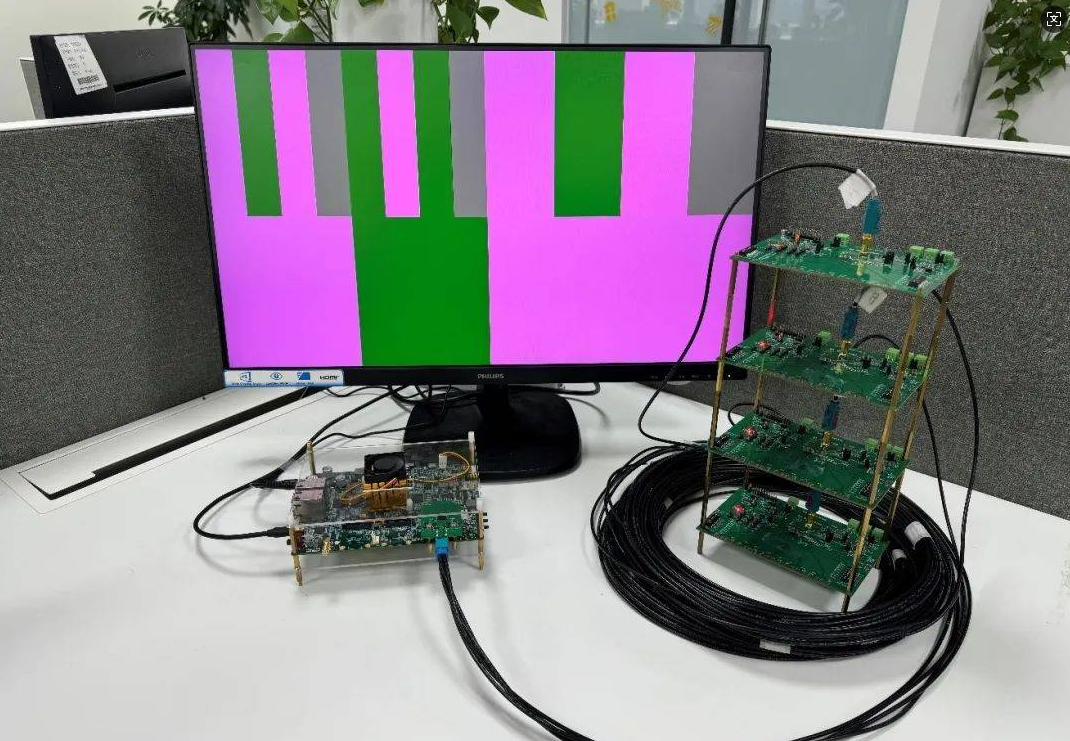
5.Future Outlook and Development Trends
The MIPI A-PHY ecosystem continues to evolve with several notable developments:
•Sensor integration: Major image sensor manufacturers are developing sensors with native A-PHY interfaces, eliminating the need for separate serializers
•Testing and validation: MIPI Alliance is developing comprehensive compliance programs to ensure interoperability across vendors
•Performance roadmap: Ongoing development targets data rates up to 48Gbps and beyond, ensuring scalability for future applications
•Expanded protocols: Support for additional protocols beyond CSI-2 and DSI-2, including VESA DisplayPort and Ethernet
Conclusion: Positioning for the A-PHY Revolution
For PCB manufacturers and design engineers, understanding and adapting to the requirements of MIPI A-PHY represents both a challenge and significant business opportunity. As the automotive industry continues its transformation toward electrification and autonomy, A-PHY is poised to become the foundational connectivity standard for in-vehicle high-speed links.
The technical capabilities of A-PHY—including its exceptional reliability, high bandwidth, and robustness in noisy environments—make it ideally suited for next-generation automotive applications. PCB companies that develop expertise in implementing A-PHY interfaces will be well-positioned to capture value in this evolving market.
By mastering the design and manufacturing intricacies of A-PHY-based systems, PCB manufacturers can deliver innovative solutions that meet the stringent requirements of automotive applications while supporting the industry’s transition toward standardized, interoperable connectivity frameworks.
Embrace the A-PHY revolution to drive innovation in automotive electronics and establish your company at the forefront of this transformative technology.