A relay is an automatic switching electrical device that uses electromagnetic force, electrical signals, or other physical quantities (such as temperature, light, time, etc.) to control the opening and closing of contacts. It is widely used in fields such as automation control, power protection, and communication. According to different standards such as working principle, structure, and purpose, relays can be classified into various types, as follows:
Table of Contents
1、 Classified by working principle and driving mode
This is the most core classification method, based on the triggering mechanism and action principle of relays:
1. Electromagnetic Relay
Principle: Using the electromagnetic force of an electromagnet to drive the contact action (attraction or release) is the most common and widely used type.
Structure: Composed of a coil (generating a magnetic field), an iron core, an armature (driven by magnetic force), and contacts (moving contacts+stationary contacts).
Features: Simple structure, low cost, wide contact capacity range (from microampere to several hundred amperes), but moderate response speed (millisecond level), with mechanical contact wear issues.
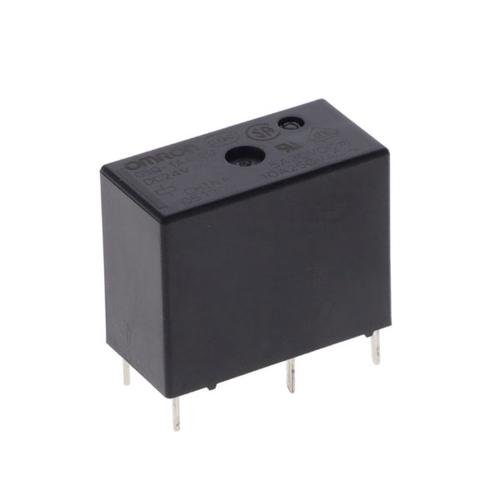
Applications: Home appliance control (such as washing machines, air conditioning), industrial automation (intermediate relays), automotive circuits, etc.
2. Solid State Relay (SSR)
Principle: Without mechanical contacts, circuit switching is achieved through the conduction/cutoff of semiconductor devices such as thyristors, transistors, and MOSFETs. It consists of an “input circuit” (control signal) and an “output circuit” (power switching), which are isolated by optocouplers or magnetism.
Features: No contact wear, long lifespan (up to 10 ¹ ² times or more), fast response speed (microsecond level), anti vibration impact, suitable for high-frequency switching; But there is a conduction voltage drop (power consumption), weak overload capacity, and high cost.
Application: High frequency switching scenarios (such as heating control, precision instruments), flammable and explosive environments (no sparks), computer interface control, etc.
3. Time Relay
Principle: After receiving the trigger signal, delay for a certain period of time before outputting the action (contact on/off). According to the delay mechanism, it can be divided into electromagnetic, electronic, air damping, etc.
-Electromagnetic type: relying on the residual magnetism of the iron core or the delay of the damper after the coil is powered off, with low accuracy (in seconds);

-Electronic: Based on RC circuit and quartz oscillator to achieve delay, high accuracy (millisecond to hour level), and wide adjustable range.
Application: Motor star delta start (delayed switching), timed control (such as street light switch, oven timing).
4. Temperature Relay
Principle: The action is triggered by temperature changes, and the core component is a bimetallic sheet (two metals with different expansion coefficients are bonded together and bend when the temperature changes) or a thermistor (temperature changes the resistance value).
Features: No need for external power supply, direct temperature sensing, commonly used for overheating protection.
Applications: motor overheating protection, transformer temperature monitoring, and home appliance anti dry burning (such as electric kettles).
5. Optical Relay
Principle: Using optical signals as a medium to control contacts (or semiconductor switches), the input side emits light through LED, and the output side receives the optical signal through photodiode/transistor and drives the switch.
Features: Strong optoelectronic isolation performance (no electrical connection between input and output), excellent resistance to electromagnetic interference (EMI), and small size.
Application: Precision instruments, communication equipment, medical equipment (high isolation demand scenarios).
6. Other principle relays
-Magnetic holding relay: The coil drives the contact action after being powered on, and maintains the state by a permanent magnet after being powered off (without continuous power supply), which is energy-saving and suitable for long-term holding scenarios (such as smart meters).
-Voice controlled relay: triggered by sound signals (such as microphone reception), used for voice controlled switches (such as hallway lights).
-Polarization relay: driven by a combination of permanent magnets and coils, with high sensitivity, only operates in specific current directions, and is used in communication equipment such as telephone exchanges.
2、 Classified by purpose
According to the functional requirements of the application scenario:
1. Control relay
Function: Used for circuit switching and amplification, transmitting control signals, and expanding control range.
Common types:
-Intermediate relay: increase the number or capacity of contacts, amplify control signals (such as “intermediate conversion” when the PLC output drives high-power loads);
-Contactor (Generalized Relay): A large capacity control relay with contacts capable of carrying hundreds of amperes of current, used for the on/off of high-power equipment such as motors and welding machines.
2. Protection relay
Function: Monitor circuit abnormalities (such as overcurrent, overvoltage, undervoltage, short circuit), automatically cut off the circuit to protect the equipment.
Common types:
-Overcurrent relay: activated when the current exceeds the threshold (such as motor overload protection);
-Overvoltage/undervoltage relay: Cut off the circuit when the voltage is abnormal (such as power supply stabilization protection);
-Thermal relay: sensing the temperature of the motor winding through bimetallic strips to achieve overload protection (used in conjunction with contactors).
3. Communication relay
Function: Used for signal switching and isolation in communication devices such as switches and base stations, requiring small size, high reliability, and low contact resistance.
Features: Small contact spacing (miniaturization), fast response speed, suitable for switching high-frequency signals (such as RF and audio).
4. Automotive relays
Function: Adapt to harsh automotive environments (vibration, high temperature, oil pollution), control automotive circuits (such as lights, wipers, starter motors).
Features: Vibration resistance, wide temperature range (-40 ℃~125 ℃), moisture resistance, large contact capacity (suitable for automotive 12V/24V power supply).
5. Home appliance relays
Function: Used for circuit control of household appliances such as washing machines, refrigerators, and air conditioners, emphasizing safety (anti electric shock), low power consumption, and long lifespan.
3、 Classified by contact form
According to the initial state and quantity of output contacts:
-Normally open (NO): The contact opens when not triggered and closes when triggered (most commonly used, such as the “on” signal in the control circuit);
-Normally closed (NC): The contact is closed when not triggered and disconnected after triggering (such as the “protection signal” of the emergency stop circuit);
-CO (Changeover): It includes a set of normally open and a set of normally closed contacts (one moving contact switches between two stationary contacts), which can achieve circuit “switching” (such as motor forward and reverse control).
4、 Classified by current type
-DC relay: The coil needs to be powered by DC (such as 12V DC, 24V DC), and the iron core has no eddy current loss. It is commonly used in low-voltage electronic circuits;
-Communication relay: The coil is powered by alternating current (such as 220V AC, 380V AC), and the iron core needs to be equipped with a short-circuit ring (to eliminate magnetic fluctuations during AC zero crossing and avoid contact vibration). It is commonly used in industrial high-voltage circuits.
5、 Classified by installation method
-Plug in type: installed through sockets for easy replacement (such as PCB plug-in relays);
-Welding type: directly welded onto the PCB board, suitable for miniaturized equipment;
-Rail type: Installed on standard DIN rails for centralized wiring in industrial control cabinets (such as intermediate relays and time relays);
-Panel type: Installed through panel openings, exposing the operating parts (such as relays with manual buttons).
Summarize
The classification dimensions of relays are diverse, and the core is to distinguish them based on their working principles (such as electromagnetic, solid-state, time) and purposes (such as control, protection, communication). When selecting the actual type, it is necessary to consider factors such as load size, response speed, environmental adaptability (temperature, vibration), and isolation requirements to choose the matching type.
Get your exclusive quote immediately: fill out the form or send an email directly.As a professional PCB manufacturer for hobbyist , we will provide you with a quote service within 24 hours. Enjoy free DFM optimization and a 10% discount on SMT patches for your first order!