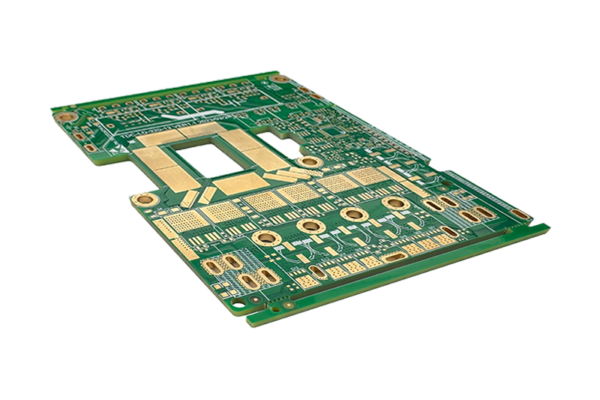
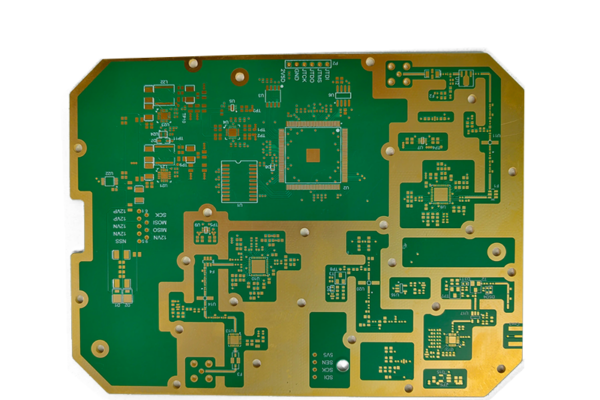
In the steel jungle of industrial automation, control systems are like brains, and the PCB that carries all electronic components is the “steel nerve” that spreads throughout the entire body of the equipment. There is a fundamental difference between industrial grade PCBs and consumer electronics boards – they face harsh environments such as high-temperature baking, chemical corrosion, and continuous vibration all year round, but must maintain millisecond level response accuracy for ten years or even longer.
The reliability requirements for industrial PCBs are extremely strict: a sudden shutdown of the production line for one minute may result in losses of hundreds of thousands of yuan, a circuit board failure in oilfield equipment may cause safety accidents, and a signal error in the power grid control board may cause regional power outages. As a result, industrial PCBs have set a far higher industry benchmark than consumer electronics in terms of material selection, process design, and quality control.
Table of Contents
1、 The ‘Steel and Iron Structure’ of Industrial PCB: Material and Structural Innovation
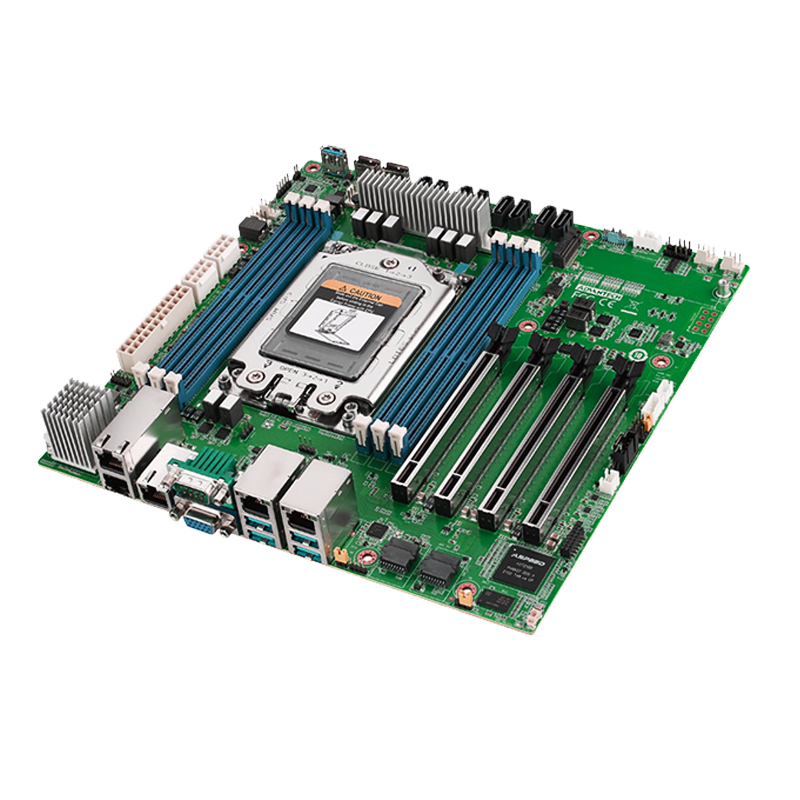
The core mission of industrial PCB is to ensure continuous operation of equipment in extreme environments, which determines its uniqueness from the material selection stage.
Special substrate construction for bottom layer toughness
-High Tg materials (glass transition temperature>170 ℃) have become the standard configuration for industrial control boards, which can maintain structural stability even in high temperature environments and avoid lamination separation
-In critical heat dissipation areas such as motor control and power modules, aluminum and copper substrates quickly dissipate heat from power devices with a thermal conductivity of 1.5W/m · K or higher
-Faced with corrosive environments such as oil fields and chemical industries, ceramic substrates have become the “bulletproof armor” for sensors and protective devices due to their acid and alkali resistance and insulation strength
Strengthening structural design to resist physical impacts
Continuous vibration in industrial environments poses a significant threat to solder joints and through-hole connections. To address this challenge:
-Thick copper design (with an outer layer of copper thickness of 2-20oz) can effectively buffer vibration stress through high current and high mechanical strength
-Adopting a symmetrical stacked structure (such as 2+4+2) significantly reduces the risk of thermal stress deformation
-The countersunk hole technology uses CNC cutting to process stepped hole structures, achieving mechanical anchoring between PCB and shell, and improving vibration resistance by 40%
2、 The Battle of PCB Technology in Industrial Scenarios
The special working conditions of industrial equipment pose multidimensional technical challenges to PCBs, giving rise to a series of targeted solutions.
Signal integrity defense battle
In industrial sites filled with frequency converters and high-power motors, electromagnetic interference is like an invisible sandstorm. High end industrial PCB passed:
-Precise impedance control: Using tools such as HyperLynx for simulation optimization, impedance tolerance is controlled within ± 7% to ensure signal purity
-EMC optimization stack: adopting a “signal ground signal” sandwich structure and a 20H power layer retraction design, reducing electromagnetic radiation by more than 15dB
-Mixed media stack: Rogers high-frequency material is used in the key signal layer, and FR-4 is used in the remaining layers to balance performance and cost
Breakthrough in miniaturization of high-density interconnection
The intelligence of industrial equipment has given rise to more compact control modules, driving innovation in PCB interconnect technology
-HDI arbitrary layer interconnection: 50 μ m level micropores are achieved through laser drilling, reducing PCB area by 40% for equivalent functionality
-Blind buried hole technology: Shortens signal path by 30%, significantly improves high-speed signal transmission quality (such as reducing via stub effect)
-Embedded components: embedding resistors and capacitors into the board to improve reliability while freeing up surface space, suitable for industrial sensors with limited space
3、 The ultimate testing ground for industrial grade PCBs
The ‘heart’ of industrial control systems
PLC, DCS and other control systems require 7×24 hours of continuous operation, and their backboards use:
-20+layer high multi-layer board: integrates thousands of signal nodes and supports complex logic control
-Electroplated hard gold connector (gold thickness 0.5-1.5 μ m) ensures contact reliability under a ten-year plug and unplug cycle
-Triple protection process: ENIG surface treatment+plasma cleaning+bottom filling adhesive to resist moisture corrosion in industrial environments

The ‘energy hub’ of power equipment
Facing the test of kilovolt voltage and hundred ampere current:
-Ultra thick copper PCB (400 μ m copper thickness): Fine lines are formed through differential etching technology, capable of carrying currents of over 100A
-Insulation layer reinforcement design: using thermal conductive prepreg with a dielectric strength of 40kV/mm to prevent creepage accidents
-Innovative heat dissipation structure: Copper protrusions are directly welded to TO-220 packaged heat sinks, reducing thermal resistance by 60%
Survival experts in harsh environments
In extreme scenarios such as mining machinery and oil drilling:
-Military grade three proof coating: moisture-proof, anti mold, anti salt spray, passed 96 hour salt spray test
-Wide temperature material system (-55 ℃~150 ℃): using polyimide substrate and special semi cured sheet
-Seismic structural design: Key connection points adopt rigid flex joint plates to absorb impact energy
4、 New forms of industrial PCB under the wave of intelligence
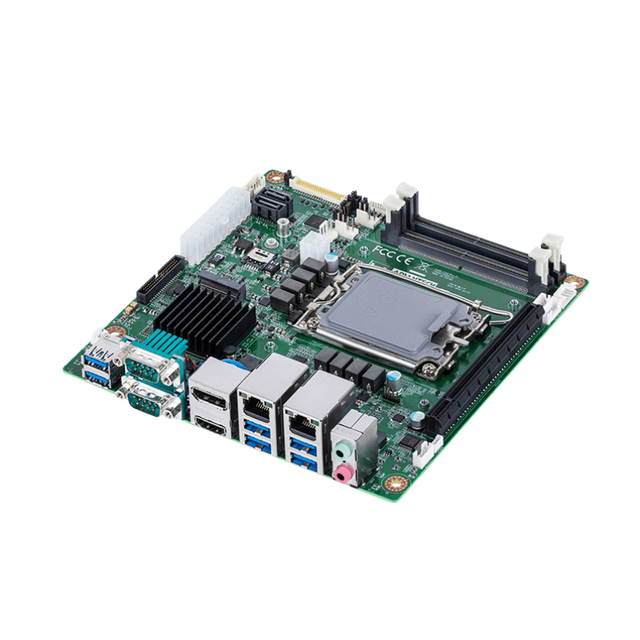
The ‘Intelligent Circuit’ of Self Perception
The new generation of industrial PCBs is evolving from passive components to active sensing:
-Integrated sensor network: real-time monitoring of board temperature, deformation, insulation resistance and other parameters
-Edge computing capability: embedded microprocessor predicts faults (such as electrolytic capacitor life decay)
-Self repair mechanism: When corrosion is detected in the circuit, activate the backup circuit and issue a maintenance alarm
The Manufacturing Revolution Driven by Digital Twins
-Full process data traceability: using laser QR codes to bind material process test data throughout the entire process
-Virtual Prototype Verification: Utilizing SI/PI simulation to detect signal integrity issues in advance, reducing the trial production cycle by 50%
-AI driven defect prediction: based on a million level defect database, early warning of potential process risks
The PCB Value Law in the Industry 4.0 Era
In the grand picture of intelligent manufacturing, an excellent industrial PCB is no longer just a carrier for connecting components, but a cutting-edge crystallization that integrates materials science, precision manufacturing, and information technology. It needs to be as precise as Swiss watches – with a line width tolerance controlled within ± 10%, and as sturdy as armor – able to withstand 2000 temperature cycles.
With the development of the industrial Internet in depth, the technical boundary of PCB continues to expand: rigid flexible composite plates applied to the joint control of industrial robots are breaking through the limit of 500000 bending life; The high-speed backplane supporting TSN (Time Sensitive Network) compresses deterministic latency to the nanosecond level; Embedded antenna board for industrial metaverse, achieving 77GHz millimeter wave transmission on FR-4 substrate.
The evolution history of industrial PCBs is essentially an epic of human mastery of physical laws – balancing the contradictions between electricity and magnetism, force and heat, and rigidity and flexibility in every inch, ultimately achieving precision and reliability in modern industry. When you hold this technical guidebook, what you witness is not only the iteration of circuit boards, but also the growth trajectory of the foundation of intelligent industry.
>German engineer Hans exclaimed after debugging a production line that had been shut down for three days: “What deserves more respect than control chips are the circuit boards that have worked in oil vapor for ten years without any damage – they are the silent guardians of industrial civilization