>In the precision chain of electronic manufacturing, ICT and FCT are like the “static physicians” and “dynamic commanders” of the circuit world, jointly building the ultimate defense line for PCBA reliability.
—
Table of Contents
1、 Core definition: Precise division of labor between static and dynamic
1. ICT Testing: “Circuit Inspection Device” for Electronic Components
-Testing principle: In the non powered state, the probe contacts the preset test point to detect the characteristics of the component level circuit
-Core task:
-Identify basic connection defects such as open circuits and short circuits
-Discovering process errors such as welding virtual soldering and component misalignment
-Quantify the deviation of resistance/capacitance values (± 5% accuracy)
-Execution conditions: Special test points need to be designed, relying on high-precision needle bed fixtures
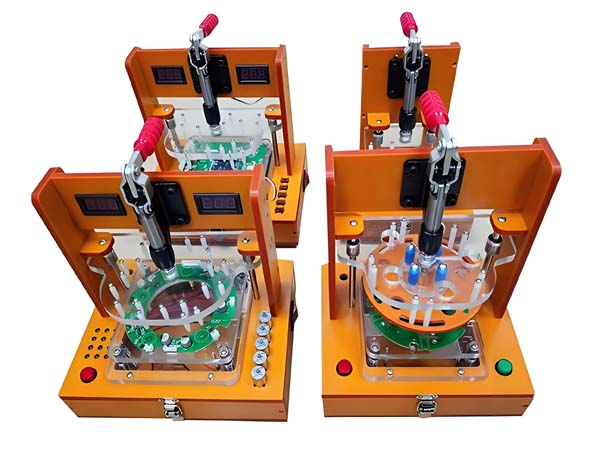
2. FCT testing: a “scene simulator” for the entire board’s functionality
-Test principle: Simulate a real working scenario while powered on, inject signals and detect output response
-Core task:
-Verify key parameters such as voltage/current/power
-Test communication interface (USB/CAN bus) protocol compatibility
-Expose software logic defects and hardware performance bottlenecks
Fundamental differences:
-ICT is micro circuit verification, focusing on whether each component is correct
-FCT is a macro functional verification that focuses on whether the entire board can function properly
—
2、 Comparison of Technical Characteristics: Capability Boundary and Cost Game
The “Precision Sniper” Feature of ICT Testing
| Advantages | Technical Performance | Limitations |
| Detection efficiency | Testing 300 components takes only 3-5 seconds | Test points need to be reserved to occupy wiring space |
| Fault location | Direct positioning of failed component pins | Needle bed fixture cost>100000 yuan |
| Maintenance support | Automatically generate defect reports to guide maintenance | Blind spots in high-density BGA component detection |
>Typical scenario: In batch testing of smartphone motherboards, ICT can complete capacitor polarity reversal screening for 1000 boards within 1 hour
The “System Operations” Characteristics of FCT Testing
| Advantages | Technical Performance | Challenges |
| Real environment simulation | Supports testing in temperature chambers ranging from -40 ℃ to 85 ℃ | Test program development cycle>2 weeks |
| Collaborative verification of software and hardware | Discovery of timing conflicts between software drivers and hardware | Customization cost of test bench ranging from 3000 to 10000 yuan |
| User scenario coverage | Simulating terminal behaviors such as button triggering and screen refreshing | Design of coverage dependency scheme for abnormal injection testing |
>Typical scenario: Industrial control PLC module verifies RS485 communication stability under EMC interference through FCT
—
3、 Collaborative Strategy: The Golden Combination in the Manufacturing Process
Staged testing architecture
1. First Line of Defense (ICT):
-Execute immediately after SMT to intercept 90% of soldering and component defects
-Reduce maintenance costs by 5 times (compared to discovering faults during final inspection)
2. Final Verification (FCT):
-Full board functionality verification after firmware burning
-Identify ICT blind spot defects (such as MCU clock configuration errors)
>Data verification: A car camera manufacturer used ICT+FCT dual testing, and the batch defect rate decreased from 1.2% to 0.15%
Economic Configuration Guide
| Enterprise type | Recommended solution | Benefit analysis |
| Large scale consumer electronics | ICT based+FCT sampling | Defect escape rate<200ppm, optimal comprehensive cost |
| Industrial control small batch multi variety | FCT full inspection+ICT key point testing | Save fixture investment by 60%, quickly respond to design changes |
| Automotive Electronics High Reliability | ICT 100%+FCT 100%+Aging Testing | Meets zero defect control standards (such as ISO 26262) |
—
4、 Technological Evolution: Breakthrough in Integration and Intelligence
The Self Evolution of ICT
-Flying needle test replaces needle bed: no testing point required, probe dynamically locates component pins (accuracy ± 0.02mm)
-3D X-ray Integration: Perspective BGA Solder Ball Holes and Hidden Bridges
Intelligent upgrade of FCT
-Digital twin testing environment: Virtual PLC pre verifies testing logic, shortening the real machine debugging cycle by 50%
-AI anomaly prediction: predicting capacitor life decay based on current ripple characteristics
Fusion trend:
The new generation of testing platforms, such as Teradyne FLEX, support ICT/FCT mode switching and share hardware resources to reduce costs by 30%
Conclusion: The Quality Philosophy of the Double Sword Combination
ICT and FCT are not substitutes in PCBA manufacturing, but complementary precise coordinate axes:
-Horizontal axis (ICT): Anchoring the physical correctness of microcircuits
-Vertical axis (FCT): Verify the functional reliability of macroscopic systems
>The German automotive electronics standard VDA 6.3 states:
>Manufacturing without ICT is blind, delivery without FCT is risky. ”
As a PCBA manufacturing service provider certified by IATF 16949, we provide full process services from ICT needle bed fixture design to FCT scenario based testing system development. Whether it is fast-paced mass production of consumer electronics or extreme environment verification of military products, a dual testing strategy is used to build a solid quality foundation – because every smooth flow of current is a silent commitment to customer trust.