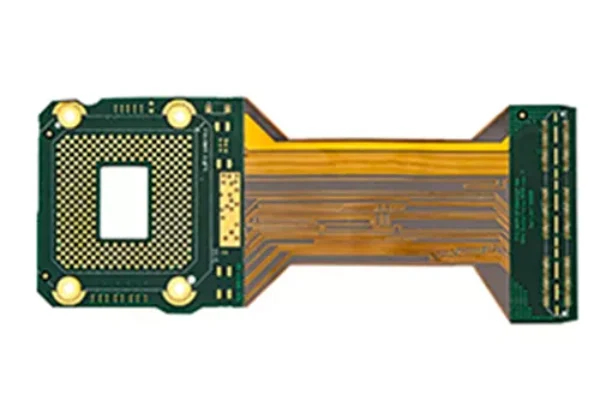
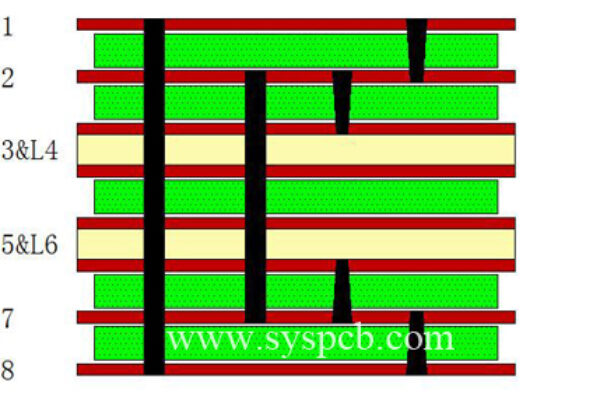
In PCB design, Clearance refers to the minimum distance between conductors (copper traces, pads, vias, component pins, etc.) belonging to different electrical networks. Its core purpose is to prevent short circuits, creepage, breakdown, or arcing caused by insulation failure, thereby ensuring circuit reliability and safety. The design of clearance must comprehensively consider multiple factors such as voltage level, environmental conditions, insulation materials, and application scenarios. The specific methods are as follows:
Table of Contents
I. Defining the Core Concept of Clearance
Two key concepts must be distinguished in design, both jointly determining clearance requirements:
* Electrical Clearance (Air Gap): The shortest straight-line distance in air between different conductors (distance through air), preventing air breakdown and arcing.
* Creepage Distance: The shortest path distance along the surface of insulating material between different conductors, preventing insulation failure (creepage breakdown) due to surface contamination (dust, moisture, ions).

Typically, Creepage Distance ≥ Electrical Clearance (as surface contamination is more likely to reduce insulation than air alone). Design must satisfy both requirements, using the larger value.
II. Key Factors Influencing Clearance
- Voltage Level (Core Factor)
Higher voltages increase the risk of insulation breakdown, requiring larger clearances. Distinguish between DC and AC; AC voltage is typically calculated based on peak or RMS values (e.g., AC 220V RMS has a peak of approx. 311V, requiring assessment based on peak).

–Low Voltage Circuits (≤36V): e.g., digital logic circuits (5V, 3.3V), clearance can be smaller (typically 0.1~0.2mm), primarily preventing shorts from manufacturing tolerances.
–Medium/High Voltage Circuits (>36V): Must strictly follow standards, e.g.:
•110V DC / 220V AC: Typically requires Electrical Clearance ≥ 2mm, Creepage Distance ≥ 2.5mm (normal environment).
•380V AC: Electrical Clearance ≥ 3mm, Creepage Distance ≥ 4mm.
•High Voltage Power (e.g., 1000V): May require 10mm or more; refer to specific standards.
–Reference Standards: IEC 60950-1, UL 60950, GB 4943, etc., provide tables of minimum distances for different voltages (e.g., IEC 60950-1 specifies ≥2.5mm creepage for 250V AC, Pollution Degree 2, Material Group IIIa).
- Pollution Degree
Contaminants (dust, moisture, chemical gases, etc.) in the PCB’s operating environment degrade insulation performance. Higher pollution degrees require larger creepage distances (electrical clearance is less affected). International standards define 4 Pollution Degrees:
–Degree 1: No pollution (e.g., inside sealed equipment, dry and clean).
–Degree 2: Slight pollution (e.g., office, home environments, occasional condensation).
–Degree 3: Moderate pollution (e.g., factory workshops, presence of dust/moisture).
–Degree 4: Severe pollution (e.g., outdoors, chemical environments, presence of conductive pollutants).
–Example: 220V AC in Degree 2 requires Creepage Distance ≥2.5mm; in Degree 3, it requires ≥4mm (calculate exact values using standard formulas).
- Insulation Material Group (CTI)
The Comparative Tracking Index (CTI) of the insulation material determines the creepage distance reduction factor. Higher CTI means better resistance to tracking, allowing smaller creepage distances:
–Material Group I: CTI ≥ 600V (e.g., ceramics, some engineering plastics).
–Material Group II: CTI 400~600V (e.g., FR-4 substrate).
–Material Group IIIa: CTI 175~400V.
–Material Group IIIb: CTI 100~175V.
–Example: FR-4 (Group II) has smaller creepage requirements than Group IIIa materials for the same voltage and pollution degree.
- Altitude
Thin air at high altitudes reduces air breakdown voltage (lower air insulation strength), requiring increased electrical clearance (creepage distance is unaffected). Standards typically stipulate: For altitudes above 2000m, increase electrical clearance by 3% (some standards use 5%) for every additional 1000m.
–Example: Sea level requirement for 220V AC is 2mm. At 5000m, increase by (5000-2000)/1000 × 3% = 9%, so 2mm × 1.09 ≈ 2.18mm.
- Circuit Type and Power
–High-Frequency/Pulse Circuits: High-frequency signals (>1MHz) or pulsed voltages (with spikes) can reduce effective insulation distance due to skin effect or corona discharge; increase spacing appropriately (typically 20%~50% more than DC/low-frequency).
–High-Power Circuits: Heat from high-current traces can cause air ionization nearby, or vibration/thermal expansion can cause conductor movement; increase spacing (especially between power component pins and other nets).

- Manufacturing and Assembly Processes
–PCB Fabrication Tolerances: Etching accuracy (typically ±0.05mm), drilling deviation (±0.1mm) can reduce actual spacing; include process margin in design (e.g., calculated value + 0.1~0.2mm).
–Component Height and Soldering: Pins or housings of tall components (e.g., capacitors, connectors) may cause insufficient clearance to nearby conductors (traces, other components); consider component height footprint (e.g., distance from SMT pad to adjacent component body).
–Mechanical Stress: PCB bending or vibration could cause conductor contact; increase spacing in stressed areas (e.g., edges, near connectors).
III. Clearance Design Steps
- Determine Applicable Standard: Select the relevant safety standard (e.g., IEC 60950, UL 60601, GB 14536) based on product type (consumer electronics, industrial equipment, medical devices) to define baseline requirements.
- Define Voltage Zones: Divide the PCB into zones by voltage level (e.g., Low Voltage <36V, Medium Voltage 36~500V, High Voltage >500V). Apply different spacing rules per zone (double spacing between HV and LV zones, physical isolation recommended).
- Calculate Minimum Spacing:
–Calculate Electrical Clearance (considering voltage, altitude) and Creepage Distance (considering voltage, pollution degree, material group) using formulas or standard tables.
–Use the larger of the two values as the design spacing (e.g., if Electrical Clearance=2mm, Creepage=2.5mm, use 2.5mm).
- Set Design Rules: In PCB design software (e.g., Altium, Cadence), set clearance rules based on net types (e.g., GND, VCC_5V, VCC_220V) to ensure automatic adherence to minimum distances between copper, pads, and vias of different nets.
- Reinforce Critical Areas:
–Increase spacing by 30%~50% beyond calculated values for high-voltage nodes like power entry, fuses, relays.
–Increase spacing around exposed solder joints/test points (to prevent finger or conductive object contact).
–Increase spacing by 20%~50% in humid environments (e.g., outdoor equipment), or use conformal coating for supplementary insulation (but coating does not replace basic spacing design).
- DRC Check and Optimization: After design, run Design Rule Check (DRC) to identify all clearance violations. Focus on HV/LV crossing areas and dense routing zones. If necessary, increase creepage distance by adding slots (insulating slots cut in the PCB).
IV. Reference Values for Common Scenarios (For Quick Design)
| Application Scenario | Voltage Range | Min. Clearance (Elec. Clearance / Creepage Dist.) |
| Digital Logic Circuits (5V/3.3V) | <36V DC | 0.1~0.2mm / 0.1~0.2mm |
| USB/HDMI Interfaces (Low Volt) | 5V DC | 0.2~0.3mm / 0.2~0.3mm |
| 12V/24V DC Power Supply | 12~24V DC | 0.3~0.5mm / 0.5~0.8mm |
| 220V AC Mains Input | 220V AC (Peak 311V) | 2.0~2.5mm / 2.5~3.0mm (Pollution Degree 2) |
| 380V AC Industrial Power | 380V AC (Peak 537V) | 3.0~4.0mm / 4.0~5.0mm |
| High Voltage Supply (1000V DC) | 1000V DC | 8~10mm / 10~12mm |
Summary
The core of clearance design is “risk matching”: Determine the minimum distance based on voltage level, environmental harshness, insulation capability, etc., using standard calculations + engineering experience, while incorporating margins for manufacturing processes and application scenarios. Design must prioritize compliance with industry standards (especially mandatory ones for medical, automotive electronics) and undergo strict DRC validation to avoid safety hazards like short circuits or fire caused by insufficient spacing.
Get your exclusive quote immediately: fill out the form or send an email directly.As a professional PCB manufacturer for hobbyist , we will provide you with a quote service within 24 hours. Enjoy free DFM optimization and a 10% discount on SMT patches for your first order!