Table of Contents
1. Introduction to UL 94 in PCB Manufacturing
The UL 94 standard, developed by Underwriters Laboratories, is a globally recognized benchmark for evaluating the flammability of plastic materials used in electronic components, including printed circuit boards (PCBs) . For PCB manufacturers, selecting materials with appropriate UL 94 ratings is critical to ensuring end-product safety, regulatory compliance, and reliability in applications ranging from consumer electronics to automotive systems . This guide explores the UL 94 classifications, testing methodologies, and practical implications for PCB design and material selection.
2. Understanding UL 94 Flame Ratings: From HB to V-0
UL 94 ranks materials based on their ability to self-extinguish after ignition, with ratings progressing from least to most stringent: HB, V-2, V-1, and V-0 . The vertical burn test (V-class) is particularly relevant for PCBs, as it simulates worst-case fire scenarios in vertically oriented components .
Key UL 94 Classifications for PCBs
•94HB (Horizontal Burn):
–The lowest UL 94 rating, suitable for low-risk applications .
–For 3–13 mm thick samples, the burn rate must not exceed 40 mm/min; for thinner samples (<3 mm), the limit is 70 mm/min .

•94V-2:
–Specimens must self-extinguish within 60 seconds after two 10-second flame applications .
–Allows burning drips that may ignite cotton placed below the sample .
•94V-1:
–Flame must self-extinguish within 60 seconds, with no drips igniting cotton .
–Total flaming combustion time for five samples (10 ignitions) must not exceed 250 seconds .
•94V-0 (Highest Safety Tier):
–Specimens must self-extinguish within 30 seconds after flame removal .
–No dripping allowed, and total combustion time for five samples must be ≤50 seconds .
–Critical for high-reliability applications like automotive electronics or medical devices .
Table: UL 94 Vertical Burn Test Requirements (V-0 vs. V-1)
| Parameter | 94V-0 | 94V-1 |
| After-Flame Time per Sample | ≤10 seconds after each ignition | ≤30 seconds after each ignition |
| Total Combustion Time | ≤50 seconds for 5 samples | ≤250 seconds for 5 samples |
| Afterglow Time | ≤30 seconds after second ignition | ≤60 seconds after second ignition |
| Burning Drips | Not permitted | Not permitted |
3. UL 94 Testing Methods for PCB Materials
3.1 Sample Preparation and Conditioning
•Specimen Dimensions: Standard samples measure 125 mm × 13 mm, with thicknesses reflecting the PCB’s end-use thickness (e.g., 0.7–3.2 mm) .
•Environmental Conditioning:
–Group 1: 48 hours at 23°C and 50% relative humidity .
–Group 2: 168 hours at 70°C (simulates long-term aging) .
3.2 Vertical Burn Test Procedure
1.Setup: Suspend samples vertically over untreated cotton .
2.Ignition: Apply a 20 mm Bunsen burner flame twice for 10 seconds each .
3.Evaluation:
–Record after-flame and afterglow times.
–Check if drips ignite the cotton .
3.3 Additional Tests for PCBs
•94-5VA/5VB: Uses a 500W flame to assess resistance to penetration for high-heat applications .
•Thermal Release Rate Testing: Measures heat emission during combustion (e.g., via cone calorimetry) .
4. Why UL 94 Compliance Matters for PCB Design
4.1 Safety and Regulatory Requirements
•PCBs in power supplies, automotive systems, or aerospace must meet UL 9 4 V-0 to mitigate fire risks .
•Non-compliant materials can lead to product recalls or failure to pass safety certifications (e.g., IEC 60695) .
4.2 Material Selection Guidelines
•FR-4 Epoxy: Most common PCB substrate; achievable V-0 with halogenated additives .
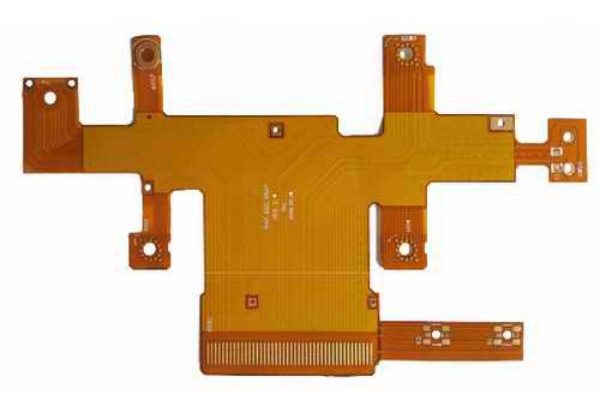
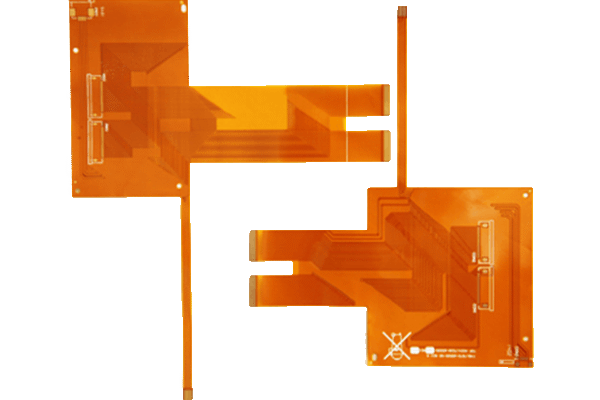
•Polyimide Flex Circuits: Inherently high heat resistance; often rated V-0 without additives .
•Ceramic Substrates: Non-flammable but cost-prohibitive for consumer applications .
4.3 Thickness Considerations
•Thinner materials (<1 mm) may achieve V-0 more easily than thicker ones due to reduced mass .
•Always report UL 94 ratings with thickness (e.g., “UL 94 V-0 @ 1.5 mm”) .
5. Common PCB Defects and Solutions in UL 94 Compliance
| Defect | Root Cause | Solution |
| Failed V-0 Test | Insufficient flame retardants or incorrect resin formulation | Optimize halogen-free phosphorous-based additives |
| Burning Drips | Poor polymer cross-linking or excessive filler content | Reformulate resin system or adjust glass transition temperature (Tg) |
| Delamination During Testing | Moisture absorption or weak layer adhesion | Pre-bake laminates before assembly |
6. Future Trends: Halogen-Free and Sustainable Materials
•Halogen-Free FR-4: Replaces brominated flame retardants with phosphorous-nitrogen systems to reduce toxic fume emissions .
•Bio-Based Resins: Emerging polylactic acid (PLA) composites with UL 9 4 HB/V-2 ratings for low-risk applications .
7. Conclusion: Strategic Implementation of UL 94 in PCB Workflows
For PCB manufacturers, integrating UL 94 compliance into the design phase is essential for:
1. Risk Mitigation: Selecting V-0 materials for high-power circuits minimizes fire hazards.
2. Supply Chain Transparency: Verify material certifications via UL’s online database (UL Product iQ) .
3. Cost Optimization: Balance performance needs with material costs—e.g., use V-1 for internal layers and V-0 for exposed surfaces.
By aligning material choices with UL 94 standards, PCB companies can enhance product safety, accelerate time-to-market, and strengthen competitiveness in global markets.