In printed circuit board (PCB) design, signal integrity and electromagnetic compatibility (EMC) are key factors in ensuring the normal operation of the circuit. The 3W principle, as an important criterion in PCB design, plays a crucial role in optimizing signal transmission and reducing electromagnetic interference (EMI). This article will delve into the connotation, theoretical basis, practical application, advantages, and limitations of the 3W principle.
Table of Contents
1、 Definition of the 3W Principle
The 3W principle refers to the requirement in PCB design that the spacing between adjacent signal lines should be at least three times the line width (W). For example, if the line width of a signal line is 10 mil (1 mil=0.0254 mm), then the distance between it and adjacent signal lines should not be less than 30 mil. This principle is mainly applied to high-speed signal lines, sensitive signal lines, and circuit areas that require high signal integrity. It aims to reduce crosstalk between signals and improve the quality and stability of signal transmission through reasonable line spacing design.

2、 Theoretical basis of the 3W principle
The core theoretical basis of the principle originates from electromagnetic field theory and electromagnetic coupling principle. When signal lines on a PCB transmit signals, an electromagnetic field is generated around them. If adjacent signal lines are too close, their electromagnetic fields will interact with each other, causing crosstalk between signals. Crosstalk refers to the electromagnetic coupling between signals on one signal line and signals on adjacent signal lines, which may cause signal distortion, errors, and other problems, seriously affecting the normal operation of the circuit.
According to electromagnetic field theory, as the spacing between signal lines increases, the electromagnetic coupling strength between signals will rapidly weaken. Research has shown that when the spacing between signal lines reaches three times the line width, the electromagnetic coupling strength can be reduced to about 70% of its original value, effectively suppressing the generation of crosstalk and ensuring signal integrity. Therefore, the principle provides a barrier against crosstalk in spatial layout for signal transmission by scientifically setting the line spacing.
3、 The practical application of the 3W principle
(1) Wiring planning stage
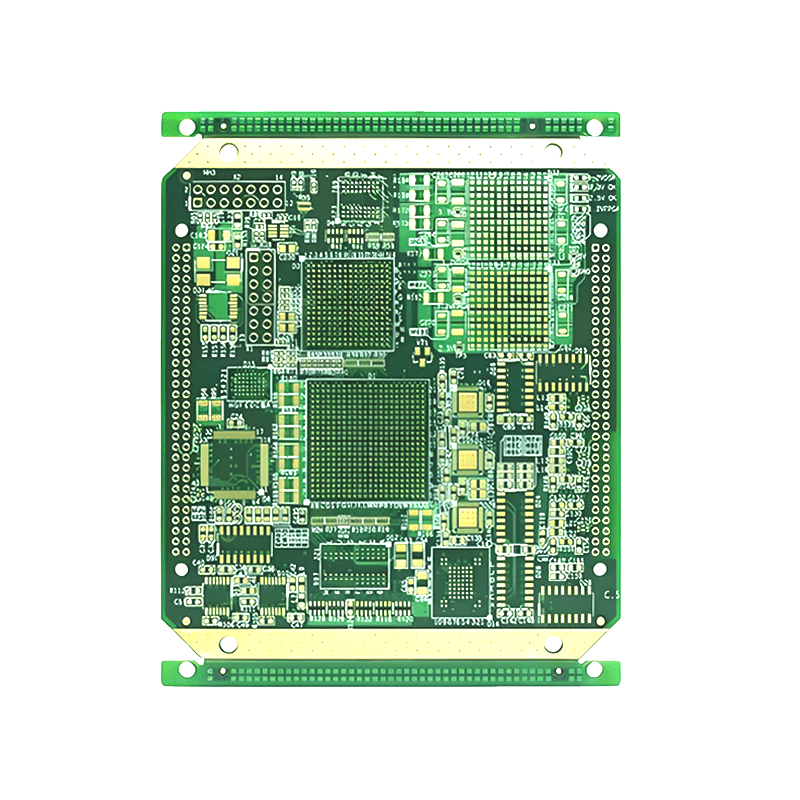
In the wiring planning stage of PCB design, engineers need to classify different types of signal lines based on circuit functions and signal characteristics, and plan the wiring layout according to the principle. For example, for high-frequency clock signal lines, high-speed data transmission lines, and other signal lines that require extremely high signal integrity, it is necessary to strictly follow the 3W principle for wiring to ensure sufficient distance from other signal lines. At the same time, it is necessary to consider the spacing between the power line, ground line, and signal line to avoid interference from power noise on the signal.
(2) Multi layer board design
In multi-layer PCB design, the 3W principle also applies. In addition to following the 3W principle to arrange signal lines within the same layer, it is also necessary to pay attention to the vertical spacing of signal lines between different layers. Generally speaking, signal lines between adjacent signal layers should be routed orthogonally as much as possible to avoid parallel routing and reduce interlayer crosstalk. If parallel routing cannot be avoided, it is necessary to increase the interlayer distance appropriately according to the 3W principle to further reduce the impact of crosstalk.
(3) Special scenario handling
In some special scenarios, such as limited PCB space that cannot fully meet the 3W principle, engineers need to take other compensation measures. For example, ground wire isolation can be added between adjacent signal lines to reduce signal crosstalk by utilizing the shielding effect of ground wires; Alternatively, key signal lines can be wrapped around ground wires to form a relatively independent electromagnetic shielding area, thereby improving the anti-interference ability of the signal.
4、 Advantages and limitations of the 3W principle
(1) Advantages
1. Effective suppression of crosstalk: The 3W principle can significantly reduce electromagnetic coupling between signals, reduce the occurrence of crosstalk, ensure signal integrity, and improve the reliability and stability of circuits.
2. Easy to use: This principle has clear rules, is easy to understand and apply, and can be quickly mastered and applied in PCB design by both novice engineers and experienced designers.
3. Strong universality: Suitable for various types of PCB design, whether in the fields of consumer electronics, communication equipment, or industrial control, the design quality can be improved by following the 3W principle.
(2) Limitations
1. Large space occupation: In some products with extremely strict requirements for PCB size, strictly following the 3W principle may lead to tight wiring space and even inability to complete wiring. At this point, a balance needs to be struck between signal integrity and spatial layout to find the best solution.
2. Other factors not considered: The 3W principle mainly focuses on the impact of signal line spacing on crosstalk, while in actual PCB design, signal integrity is also affected by a combination of factors such as signal frequency, transmission rate, wiring topology, and power integrity. Therefore, when applying the 3W principle, it is necessary to combine other design criteria and methods for comprehensive optimization design.
5、 Conclusion
The 3W principle, as an important principle in PCB design to ensure signal integrity and suppress electromagnetic interference, has significant theoretical significance and practical value. By applying the 3W principle reasonably, signal crosstalk can be effectively reduced and circuit performance can be improved. However, in the actual design process, engineers need to flexibly apply the 3W principle based on specific design requirements and constraints, and combine other design methods and technologies for comprehensive optimization design, in order to achieve the best balance of PCB design in terms of signal integrity, electromagnetic compatibility, and spatial layout, ensuring the stable and reliable operation of the circuit system. With the continuous development of electronic technology, PCB design is facing higher requirements and challenges, and the 3W principle will continue to play an important role in continuous innovation and improvement.
The above article analyzes the 3W principle from multiple dimensions. If you need to adjust the depth and length of the article, or if you want to add other relevant points, please feel free to let me know at any time.
Get your exclusive quote immediately: fill out the form or send an email directly.As a professional PCB manufacturer for hobbyist , we will provide you with a quote service within 24 hours. Enjoy free DFM optimization and a 10% discount on SMT patches for your first order!