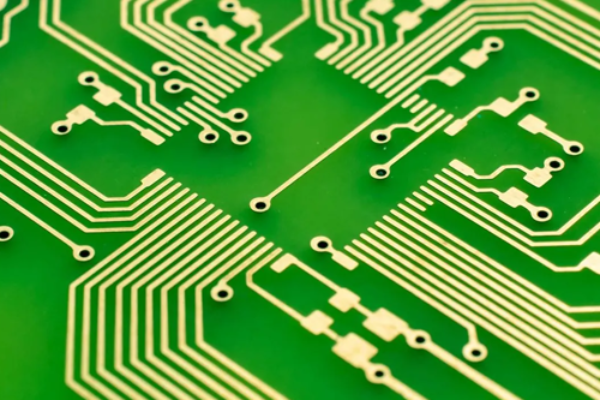
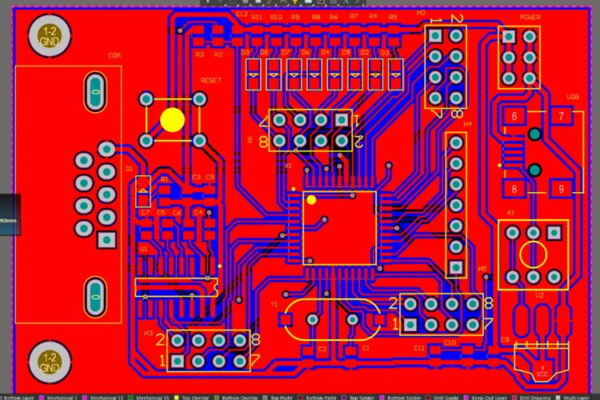
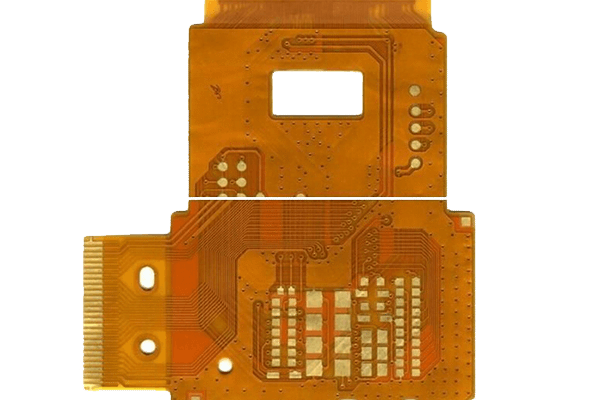
PCBA (Printed Circuit Board Assembly) is the finished product of PCB after soldering components, and its storage conditions and shelf life directly affect performance reliability. The following provides a detailed explanation from three aspects: storage requirements, factors affecting shelf life, and maintenance recommendations:
Table of Contents
Ⅰ.Storage conditions for PCBA
PCBA contains various components (such as ICs, capacitors, resistors, connectors, etc.), and different components have different levels of sensitivity to the environment. Therefore, it is necessary to control the storage environment uniformly
1. Temperature and humidity control
-Temperature: It is recommended to maintain 15-25 ℃ (room temperature) and avoid extreme high temperatures (>40 ℃) or low temperatures (<5 ℃). High temperature can accelerate the aging of components (such as drying up of electrolyte in electrolytic capacitors and parameter drift in semiconductor devices); Low temperatures may cause certain polymer materials, such as plastic shells, to become brittle.

-Humidity: It is recommended to have a relative humidity of 30% -60%. Excessive humidity (>70%) can easily lead to oxidation of solder joints, corrosion of component pins, and even cause PCB substrate moisture absorption (which may result in “board explosion” during soldering); Low humidity (<20%) can easily generate static electricity and damage static sensitive components such as MOSFETs IC)。
2. Electrostatic protection
-PCBA should be stored in anti-static packaging (such as anti-static shielding bags, anti-static vacuum bags) or anti-static turnover boxes to avoid direct contact with materials that are prone to static electricity, such as chemical fibers and plastics.
-The storage area needs to be grounded (anti-static floor, workbench grounding), and operators need to wear anti-static wristbands/gloves to prevent static electricity from penetrating sensitive components.
3. Anti oxidation and corrosion
-For unprotected solder joints and pins (such as gold-plated plug-in pins), it is recommended to vacuum package or fill them with nitrogen gas for protection to avoid oxidation and corrosion caused by oxygen and sulfides in the air (such as exhaust gases in factory environments).
-Stay away from corrosive gases (such as acid and alkali mist, volatile organic solvents), dust, and oil stains to prevent corrosion of component pins and PCB pads.
4. Other environmental requirements
-Avoid direct sunlight (to prevent aging of plastic shells and fading of marking ink), severe vibration or impact (to prevent virtual soldering and detachment of components).
-Stay away from strong magnetic fields (such as transformers and motors) to prevent interference with the performance of magnetic components (such as inductors and magnetic beads).
Ⅱ.Shelf life and influencing factors of PCBA
There is no unified standard for the “shelf life” of PCBA, which mainly depends on the type of component, storage conditions, and usage scenarios, usually ranging from 6 months to 2 years (under good storage conditions). The core influencing factors are as follows:
1. The lifespan of the components themselves

-Electrolytic capacitor: It is one of the most short-lived components in PCBA. After being stored at room temperature for 1-2 years, the electrolyte may slowly dry up, resulting in a decrease in capacity and an increase in ESR (equivalent series resistance), which affects filtering or power stability. The shelf life will be significantly shortened in high temperature environments (such as 3-6 months at temperatures above 40 ℃).
-Battery/Supercapacitors: If the PCBA contains button batteries, lithium batteries, etc., it will slowly self discharge during storage, and may be damaged due to over discharge or even leak and corrode the PCB after 6-12 months.
-Semiconductor devices: ICs, diodes, etc. can be stored for 2-5 years in a dry and room temperature environment, but if the pins are not gold-plated (such as tin lead pins), long-term exposure to air will oxidize, increasing the risk of virtual soldering during soldering.
-Passive components (resistors, inductors, ceramic capacitors): have high stability and can be stored for 3-5 years in dry environments, but pin oxidation may still affect reliability.
2. Reliability of solder joints
Even if the components have not failed, after long-term storage, the solder joints (especially the interface between solder and PCB pads) may form an oxide layer due to oxidation, resulting in increased contact resistance and even “cold soldering” (virtual soldering), which affects conductivity.
3. Storage conditions
-If not vacuum packed and the humidity exceeds the standard, there may be solder joint corrosion and PCB substrate moisture absorption within 6 months; If the electrostatic protection fails, it may cause hidden damage to the IC (such as internal gate oxide layer breakdown, no abnormalities in the short term, sudden failure during use).
Ⅲ.Suggestions for handling expired PCBA
If the PCBA exceeds the expected storage time, the following checks and treatments should be carried out to avoid direct use causing malfunctions:
1. Appearance inspection: Observe for oxidation (blackening, whitening) of solder joints, leakage of components, PCB deformation, corrosion of pins, etc.
2. Functional testing: Verify key indicators (such as voltage output, signal transmission, logic function) through power on testing, with a focus on testing the performance of electrolytic capacitors and power modules.
3. Targeted repair:
-Electrolytic capacitor: If the capacity decreases by more than 20%, it is recommended to replace it with a new capacitor.
-Oxidation solder joint: Re solder with flux to remove the oxide layer.
-Battery components: Replace the battery directly with a new one and check for any leakage or corrosion (clean the corroded area and re tin it).
Summarize
The core of PCBA preservation is “temperature and humidity control, oxidation prevention, and anti-static”, which can be extended to a shelf life of 1-2 years under good conditions; After exceeding the deadline, reliability must be verified through appearance and functional testing to avoid failure caused by component aging or solder joint issues. For PCBA stored in batches, it is recommended to record the time of entry and prioritize the use of earlier produced batches (first in, first out) to reduce long-term storage risks.
Get your exclusive quote immediately: fill out the form or send an email directly.As a professional PCB manufacturer for hobbyist , we will provide you with a quote service within 24 hours. Enjoy free DFM optimization and a 10% discount on SMT patches for your first order!