Table of Contents
Introduction: Sensing the World in Three Dimensions
Magnetic fields are invisible forces shaping our technological world. While simple magnetic sensors (like reed switches or single-axis Hall sensors) have been around for decades, the ability to accurately measure the full vector of a magnetic field in three dimensions (3D) unlocks a new realm of possibilities. 3D magnetic sensors are sophisticated integrated circuits capable of simultaneously detecting magnetic field strength along the X, Y, and Z axes. This article provides a comprehensive overview of this transformative technology.
Core Technology: How Do 3D Magnetic Sensors Work?
3D magnetic sensors typically integrate three individual sensing elements, each oriented orthogonally (at 90 degrees) to the others. The core sensing technologies used are:
1.Hall Effect: When a current-carrying conductor is placed perpendicular to a magnetic field, a voltage (Hall voltage) develops across the conductor transverse to both the current and the field. Modern CMOS-integrated Hall elements are highly sensitive and form the basis of many 3D sensors. They are robust and cost-effective.

2.Anisotropic MagnetoResistance (AMR): The electrical resistance of certain ferromagnetic materials changes depending on the angle between an internal magnetization and the direction of electric current. AMR sensors offer higher sensitivity than basic Hall effect sensors.
3.Tunneling MagnetoResistance (TMR): This advanced technology utilizes the quantum tunneling effect through a thin insulating barrier separating two ferromagnetic layers. The resistance changes dramatically based on the relative orientation of the magnetization in the two layers. TMR sensors boast the highest sensitivity and signal-to-noise ratio (SNR) currently available, enabling ultra-precise measurements with very low power consumption.
4.Giant MagnetoResistance (GMR): Similar to TMR but relies on electron scattering in multilayer structures. GMR offers sensitivity higher than AMR but generally lower than TMR.
The 3D Advantage: By combining three orthogonal sensing elements based on one of these technologies (often TMR or Hall for modern devices) onto a single chip, along with sophisticated signal conditioning and analog-to-digital converters (ADCs), the sensor outputs precise digital measurements (e.g., in Gauss or microTesla) for the magnetic field vector along each axis.
Key Advantages of Modern 3D Magnetic Sensors
•Complete Spatial Awareness: Provides full vector field measurement (Bx, By, Bz), crucial for understanding complex magnetic environments or object orientation.
•High Precision & Sensitivity: Especially true for TMR-based sensors, enabling detection of very small field changes.
•Low Power Consumption: Vital for battery-powered devices (IoT, wearables); TMR sensors excel here.
•Small Form Factor: Monolithic IC integration allows for tiny packages (e.g., 2mm x 2mm or smaller).
•Digital Output: Simplified interfacing with microcontrollers (I2C, SPI common).
•Robustness: Solid-state design offers high reliability and shock/vibration resistance.
•Contactless Sensing: Enables non-intrusive measurement and position detection.
Primary Applications: Where 3D Magnetic Sensors Shine
1.Electronic Compasses (eCompass): The dominant application. Used in smartphones, tablets, drones, robotics, and navigation systems to determine heading relative to the Earth’s magnetic field.
2.Industrial Position & Motion Sensing:
–Linear/Rotary Position: Tracking the movement of machine parts, valves, actuators, or joysticks using a moving magnet.
–Angular Position (Rotary Encoders): Measuring precise rotation angles (e.g., motor shafts, steering wheels, knobs).
–Proximity Detection: Sensing the presence or absence of ferrous objects.
–Current Sensing: Measuring current flow by detecting the magnetic field it generates (Rogowski coils, clamp meters).
3.Automotive:
–Gear shifters (lever position)
–Throttle position sensors
–Brake pedal position
–Steering angle sensing (redundant systems)
–Headlight leveling
–Electric vehicle battery management (current sensing)
4.Consumer Electronics:
–Smartphone/tablet flip covers (wake/sleep)
–Wearable device controls (gesture recognition)
–Virtual/Augmented Reality controllers (position tracking)
–Gaming controllers (joystick position)
5.Robotics & Drones: Navigation (eCompass), joint position sensing, obstacle detection.
6.Medical Devices: Surgical robotics, implantable device positioning, diagnostic equipment.
Critical Selection Criteria: Choosing the Right 3D Sensor
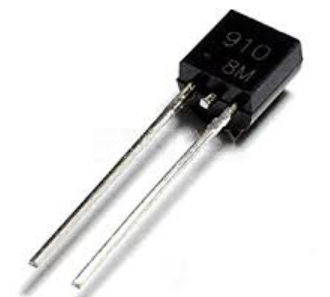
When selecting a 3D magnetic sensor for your application, consider:
1.Technology (Hall, AMR, GMR, TMR): Dictates sensitivity, power consumption, noise, and cost. TMR offers the best performance for demanding applications; Hall is cost-effective for less critical needs.
2.Sensitivity & Range: The minimum detectable field and the maximum field the sensor can measure without saturating. (e.g., ±2 Gauss to ±30 Gauss full-scale ranges are common).
3.Resolution & Noise Density: The smallest detectable field change and the inherent electrical noise level (lower is better). Critical for precision positioning.
4.Accuracy & Linearity: How closely the output matches the true field value across the range. Includes offset and sensitivity errors.
5.Bandwidth: The speed at which the sensor can respond to changing fields. Important for dynamic motion sensing.
6.Power Consumption: Crucial for battery-powered devices (look at active and sleep/standby currents).
7.Output Interface: Digital (I2C, SPI) or Analog. Digital simplifies design; analog may offer higher intrinsic speed.
8.Package Size & Type: Must fit the physical constraints of the application (e.g., wafer-level chip-scale packages (WLCSP) for ultra-compact designs).
9.Integrated Features: On-chip temperature compensation, signal processing (offset cancellation, filtering), and FIFO buffers add value.
10.Cost: Balances performance requirements with budget constraints.
Overcoming Challenges: Calibration & Hard/Soft Iron Interference
•Sensor Calibration: Individual sensors have inherent offset and sensitivity mismatches between axes. Factory calibration helps, but high-precision applications often require end-user calibration routines to compensate for PCB stress and temperature effects.
•Hard Iron Interference: Caused by nearby permanent magnets or magnetized ferrous materials. Creates a constant offset field. Can often be compensated for by calibration.
•Soft Iron Interference: Caused by materials that distort the Earth’s magnetic field locally (e.g., steel enclosures). This distortion is non-linear and harder to compensate for, often requiring complex algorithms or careful mechanical design to minimize.
The Future of 3D Magnetic Sensing
The trend is towards even higher integration, lower power, smaller size, and improved performance. Key developments include:
•Sensor Fusion: Combining 3D magnetometer data with accelerometer and gyroscope data (Inertial Measurement Units – IMUs) for more robust and accurate motion tracking and orientation estimation.
•Increased Intelligence: On-chip processing for advanced calibration, interference rejection, and pre-processed outputs.
•Ultra-Low Power TMR Sensors: Enabling new generations of perpetually battery-powered or energy-harvesting IoT devices.
•Higher Bandwidth: For capturing faster motion dynamics.
•Improved Robustness: Wider operating temperature ranges and better immunity to environmental stress.
Conclusion: Enabling Smarter Spatial Interaction
3D magnetic sensors are fundamental building blocks for understanding position, orientation, and motion in our increasingly interactive and automated world. From guiding your smartphone map to enabling precise industrial automation and safe automotive systems, their ability to measure the complete magnetic vector accurately and efficiently makes them indispensable. As technology continues to advance, particularly with TMR leading in performance, 3D magnetic sensors will unlock even more sophisticated applications, driving innovation across diverse industries.
Key Takeaways:
•3D magnetic sensors measure the full vector (X, Y, Z) of a magnetic field.
•Core technologies are Hall Effect, AMR, GMR, and TMR (TMR offers highest sensitivity/lowest power).
•Essential applications include eCompasses, industrial position sensing, automotive controls, consumer electronics, and robotics.
•Selection depends on sensitivity, range, noise, power, size, interface, and cost.
•Calibration and interference management (Hard/Soft Iron) are crucial for accuracy.
•Future trends: Sensor fusion, smarter on-chip processing, lower power, higher performance.
Get your exclusive quote immediately: fill out the form or send an email directly.As a professional PCB manufacturer for hobbyist , we will provide you with a quote service within 24 hours. Enjoy free DFM optimization and a 10% discount on SMT patches for your first order!