PCBA (Printed Circuit Board Assembly) first piece inspection refers to the process of conducting a comprehensive inspection of the first assembled circuit board before mass production. It is a key quality control link in the PCBA production process, which is of great significance for ensuring product quality, reducing production costs, and improving production efficiency. The following is a detailed explanation:
Table of Contents
1、 Identify process issues in advance to avoid batch defects
-Verify process feasibility: First article inspection can verify whether the welding process (such as reflow soldering temperature curve, solder paste printing thickness), component mounting (position accuracy, polarity correctness), etc. meet the design requirements.
▶ For example, if a component in the first piece has virtual welding due to unreasonable pad design, the steel mesh opening or welding parameters can be adjusted in a timely manner to avoid similar problems in subsequent thousands of boards.
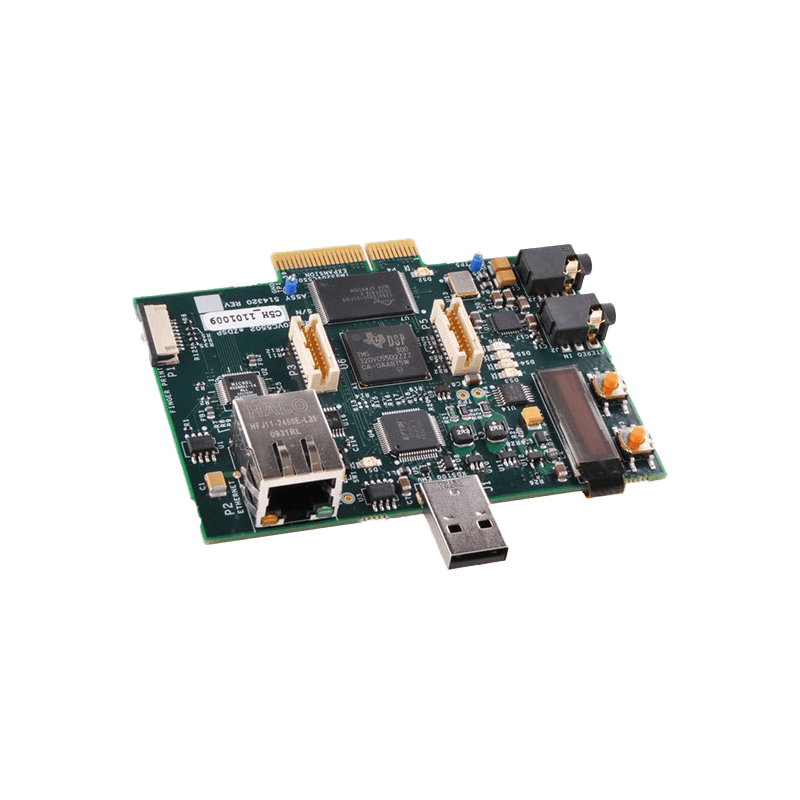
-Identify fixture defects: check fixture positioning accuracy, test fixture contact reliability, etc., to prevent batch circuit boards from failing functional testing due to fixture issues.
2、 Reduce costs and minimize resource waste
-Avoiding raw material waste: Early detection of component misalignment (such as using 0402 packaging instead of 0603), polarity reversal, and other issues can avoid material loss caused by batch replacement of components (the cost of a single precision component may be as high as tens of yuan).
-Reduce rework costs: If problems are found after mass production, they need to be reworked piece by piece, and the first article inspection can control the rework rate to the lowest. According to statistics, the cost of repairing defects discovered in the early stages is only 1/10 to 1/100 of the cost of repairing defects after mass production.
-Shorten downtime: If the first article inspection finds component displacement caused by equipment (such as worn suction nozzles on surface mount machines), it can be stopped for maintenance in a timely manner to avoid equipment running with problems causing production line shutdown.
3、 Ensure product quality and enhance customer trust
-Compliant with industry standards and customer requirements: First article inspection ensures that PCBA boards meet industry standards such as IPC-A-610 (Electronic Component Acceptance Standard), as well as customized quality requirements from customers (such as special standards for solder joint strength in military products).
-Preventing functional failures: The first piece needs to undergo electrical performance testing (such as on-off testing, impedance testing) and functional verification (simulating actual working scenarios) to detect functional abnormalities caused by component failure, line short circuits, etc. in advance, and avoid unqualified products from flowing into the client.
-Establish a quality traceability benchmark: First article inspection records (such as component batches, process parameters) can serve as a quality traceability basis for subsequent batch production, facilitating quick identification of the root cause in case of problems.
4、 Optimize production processes and improve efficiency
-Advance integration of production team: The first piece production process can expose deviations in the understanding of process documents by operators (such as component identification errors), which can be corrected in a timely manner through training to enhance team proficiency.
-Shorten the production preparation cycle: If the first piece passes the inspection at once, the optimal process parameters can be quickly locked in, reducing the debugging time during mass production. On the contrary, if the first piece is adjusted multiple times, the process plan needs to be re evaluated, which may lead to delays in delivery.
-To provide a benchmark for automated testing: the qualified status of the first article can be used to calibrate the detection threshold of AOI (Automatic Optical Inspection) equipment, ensuring consistency of detection standards during mass production.
5、 The core content and methods of first article inspection
| Dimension of Inspection | Specific Content | Common Tools/Methods |
| Appearance inspection | Component mounting position, polarity, pad integrity, solder joint quality (such as bridging, low soldering), board surface contamination, etc. | Visual inspection, AOI equipment, magnifying glass |
| Dimensional and structural inspection | Component height (whether it interferes with the housing), installation hole position accuracy, connector insertion and removal force, etc. | Calipers, fixture comparison, 3D scanner |
| Electrical performance testing | Line continuity, insulation resistance, signal integrity (such as impedance matching), power module output voltage, etc. | Multimeter, oscilloscope, flying pin test fixture |
| Functional testing | Simulate actual work scenarios to verify whether the PCBA board implements the designed functions (such as communication protocols and data processing capabilities). | Functional testing fixture, upper computer software |
Summarize
The first piece inspection of PCBA board is a direct embodiment of the quality concept of “prevention first”. Through the “dissection” inspection of the first board, more than 80% of potential quality risks can be intercepted in advance. For fields that require high reliability, such as medical equipment and aerospace, first article inspection can even be a mandatory step. Neglecting first article inspection may lead to serious consequences such as batch returns and customer complaints, while standardized implementation can lay a stable foundation for subsequent production and is an indispensable quality control measure for modern electronic manufacturing enterprises.
Get your exclusive quote immediately: fill out the form or send an email directly.As a professional PCB manufacturer for hobbyist , we will provide you with a quote service within 24 hours. Enjoy free DFM optimization and a 10% discount on SMT patches for your first order!