>Micron level precision, zero contact processing, and permanent traceability – laser marking technology is replacing traditional screen printing with disruptive advantages and becoming the quality cornerstone of high-end PCB manufacturing
The current electronic products are accelerating their evolution towards “smaller and lighter” direction, with the size of smartphone motherboards and wearable device core boards continuously shrinking, leaving less than 1cm ² of marked area. Traditional screen printing technology is no longer able to meet the needs of micrometer level QR code marking, while PCB laser marking machines are reshaping the marking standards of the PCB industry with their precision of 10 μ m ultraviolet beam.
Table of Contents
1、 Technological Rise: Industrial Upgrade from Screen Printing to Laser
PCB laser marking: an inevitable choice for Industry 4.0
With the advancement of Industry 4.0, traceability and precise control have become the core demands of PCB manufacturing. Laser marking technology forms permanent marks by directly ablating the surface of materials, supporting carriers such as QR codes and data matrix codes, achieving full traceability from raw materials to end products. Compared to traditional screen printing, its ink free and chemical free characteristics perfectly meet environmental regulations such as RoHS.
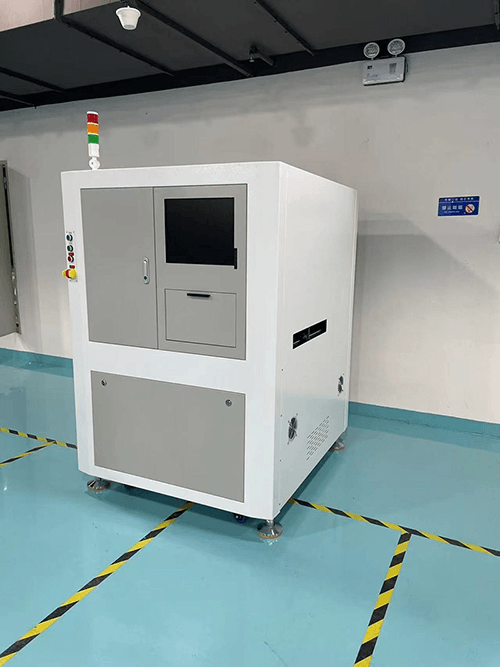
The driving force behind electronic miniaturization
When the PCB board area is reduced to the size of a nail cover, traditional printing techniques cannot clearly mark a QR code containing 20 digits of data within a 0.5mm ² area. The UV laser marking machine can achieve micro engraving with a line width of less than 0.1mm, making it the only feasible solution for HDI boards and chip carriers.
2、 The Three Deadly Pain Points of Traditional Marking Technology
1. Precision defects, yield killers
When the characters are less than 0.5mm, silk screen printing causes edge diffusion, and the QR code is prone to adhesion, resulting in scanning failure. A certain SMT manufacturer failed batch traceability due to blurry silk screen printing, resulting in an annual rework loss of over 3 million yuan.
2. Insufficient adhesion and worrying lifespan
The ink mark has a detachment rate of up to 15% after high-temperature reflow soldering or acid-base cleaning, while the wear resistance of laser marking is increased by more than 5 times, and it is still clear and readable after cold and hot shock at -40 ℃~125 ℃.
3. Environmental Protection and Cost Dilemma
Screen printing requires the use of ink containing heavy metals and organic solvents, with processing costs accounting for 35% of the total marking cost. Laser marking does not require consumables, and a single device can work continuously for 100000 hours without replacing the lens.
3、 Principles of PCB laser marking technology and PCB compatible models
Core principle: Photon energy precise etching
The laser emits a high-energy beam (CO ₂/fiber/UV), which is deflected and focused on the surface of the PCB through a galvanometer system. The material surface vaporizes or changes color through photothermal effect (metal/dark substrate) or photochemical cracking (light ink), forming permanent grooves or contrast marks.
Comparison of mainstream laser marking models in the PCB industry
| Laser Type | Wavelength | Applicable Scenarios | Accuracy Limits |
| CO ₂ laser | 10.6 μ m | FR-4 board characters/simple graphics | 0.2mm |
| Fiber laser | 1.06 μ m | Copper foil/aluminum substrate deep carving | 0.05mm |
| UV laser | 355nm | HDI board micro QR code/flexible board | 0.01mm |
>Case: A certain automotive electronics manufacturer used ultraviolet laser to mark QR codes in a 2 × 2mm area, accommodating 32-bit traceability information. The success rate of scanning the code increased from 76% in silk screen printing to 99.9%.
4、 Five disruptive advantages of laser marking in the PCB industry
1. Precision leap, breaking through physical limits
-Clear strokes within 0.5mm characters, supporting 0201 component side marking
-UV laser spot < 10 μ m, suitable for marking 0.15mm solder pad gap on IC carrier board
2. Full process traceability empowerment
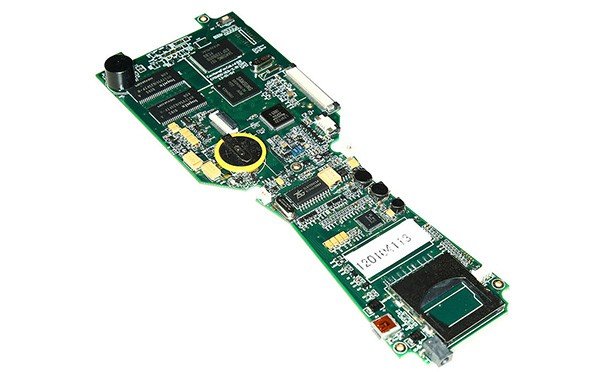
-Laser marking QR code integrated production batch/process parameters/quality inspection report, real-time interaction with MES system
-A medical PCB factory has shortened the time for locating quality accidents from 3 days to 10 minutes through a traceability system
3. Compatibility Revolution
-The same equipment is used to process green oil/white oil/copper surface/ceramic substrate, and UV laser is applicable to FR4 to high-frequency PTFE materials
-Dynamic focusing technology automatically adapts to thickness differences of 0.1-5mm and eliminates virtual focus on surface markings
4. Comprehensive cost reduction of 40%
-Save on ink procurement, screen printing, and waste disposal costs
-24-hour continuous production, with an annual marking volume of over 2 million pieces per device
5. Zero damage guarantee reliability
-Non contact processing avoids the risk of microcracks caused by mechanical stress
-UV cold processing ensures that the dielectric constant of the high-frequency board is not affected by heat
5、 Future Trends: Intelligence, Integration, and Greening
1. AI driven process optimization
-The built-in algorithm of the device automatically identifies the composition of the board and dynamically adjusts the power/frequency, such as automatically reducing energy and preventing carbonization in the solder mask layer
-Deep learning optimizes marking paths, increasing efficiency by over 30%
2. Deep integration of production lines
-The online marking machine integrates an automatic loading machine and a flipping mechanism to achieve unmanned double-sided marking
-Directly connected to the ERP system through OPC UA protocol, the order automatically triggers the generation of marking content
3. Breakthrough in new material adaptation
-Picosecond UV laser overcomes the problem of LCP liquid crystal polymer marking yellowing and meets the requirements of 5G millimeter wave PCB
-Application of 3D surface marking technology in flexible circuit board irregular structure
4. Upgrading Green Manufacturing
-Reduce energy consumption by 60% compared to silk screen printing and obtain ISO14064 carbon footprint certification
-By 2025, the European Union will completely ban solvent based inks, with laser technology becoming the only compliant solution
>Aaaa laser marking solution
>As a high-tech enterprise with 18 years of experience in PCB manufacturing, SysPCB offer:
>- Equipment selection support: Recommended UV/fiber/CO ₂ models based on laminated structure/ink type/marking content
>- Free sample verification: Submit Gerber files and obtain a marking effect test report within 48 hours
>Smart factory integration: equipped with high-precision CCD and MES interface, achieving a full closed-loop of “design production traceability”
>
>Immediate action: Contact us to receive the “White Paper on Laser Marking Technology” and exclusive equipment quotation, and enjoy a 15% integration subsidy for the first order!