Table of Contents
1、 Industrial Transfer Wave: Southeast Asia Becomes a New Hub for PCB Manufacturing
Driven by global geopolitical restructuring and supply chain diversification strategies, Southeast Asia is rapidly emerging as the new core of the PCB industry. According to Prismark data, the PCB production value in Southeast Asia will reach 6.08 billion US dollars in 2024, accounting for 8.27% of the global market share; It is expected that by 2029, the output value will exceed 10.898 billion US dollars, with an average annual compound growth rate of 12.4%, leading the world in growth rate. This growth is mainly led by Thailand, Vietnam, and Malaysia, forming a “golden triangle” industrial belt:
1. Thailand: Leading in both production capacity and policy dividends
-Capacity layout: PCB output value of 3.26 billion US dollars in 2024, ranking first in Southeast Asia. More than 40 leading Taiwanese companies, including Zhending, Xinxing, Huatong, as well as mainland Chinese companies such as Shanghai Electric Power Co., Ltd. and Shennan Circuit, have invested intensively, with a cumulative amount exceeding 5 billion US dollars.

-Policy engine: The Board of Investment (BOI) of Thailand provides income tax exemptions, land ownership benefits, and RCEP tariff reductions (a 6% reduction in export tariffs to ASEAN).
-Mass production process: Huatong Thailand factory (low orbit satellite hard board) has been put into operation by the end of 2024; Xinxing (in car/AI server board) and Zhending (advanced server board) will increase their production in H2 by 2025.
2. Vietnam: Consumer Electronics PCB Manufacturing Base
-Focusing on mid to low end production capacity, Foxconn, Mingxing Electronics, and others are expanding their SMT production lines to meet the needs of local e-commerce platforms such as Shopee and Lazada. In 2023, the export of electronic products will increase by 18%, and the demand for PCB matching will surge.
3. Malaysia: High end carrier technology highland
-Penang State gathers Japanese and Korean PCB manufacturers (Ibiden, AT&S), benefiting from the advantages of the semiconductor packaging and testing industry cluster, focusing on high value-added products such as packaging substrates.
>Table: Comparison of PCB Industry Positioning among Three Southeast Asian Countries
| Country | Core Advantage | Leading Product | Representative Enterprise |
| Thailand | Policy dividends, automotive electronics cluster | Car board, server board | Zhending, Shanghai Electric Power, Shennan Circuit |
| Vietnam | Labor Costs, Consumer Electronics Exports | Consumer PCBs, HDI | Foxconn, Mingxing Electronics |
| Malaysia | Semiconductor Industry Chain Supporting | Packaging Substrate, High Multilayer Board | Ibiden, AT&S |
2、 In depth analysis of driving factors: why do companies choose Southeast Asia?
1. Cost advantage: Double cost reduction in manpower and taxation
-Labor cost: The monthly salary of general workers in Southeast Asia is only 150-250 US dollars, equivalent to 60% of that in the Pearl River Delta region of China.
-Tax incentives: Malaysia refunds 75% value-added tax to export enterprises; Thailand offers 8-13 years of income tax reduction.
2. Avoiding trade risks: responding to customers’ “China+N” strategy
-Dell, Hewlett Packard, Apple and other major American manufacturers require the supply chain to be “de Chinese”, explicitly requiring that 60% of the production capacity be transferred out of Chinese Mainland by 2025 and 100% by 2027. The Thai factory has become a core option for customers to diversify their procurement risks.
3. Accelerating the improvement of supply chain support
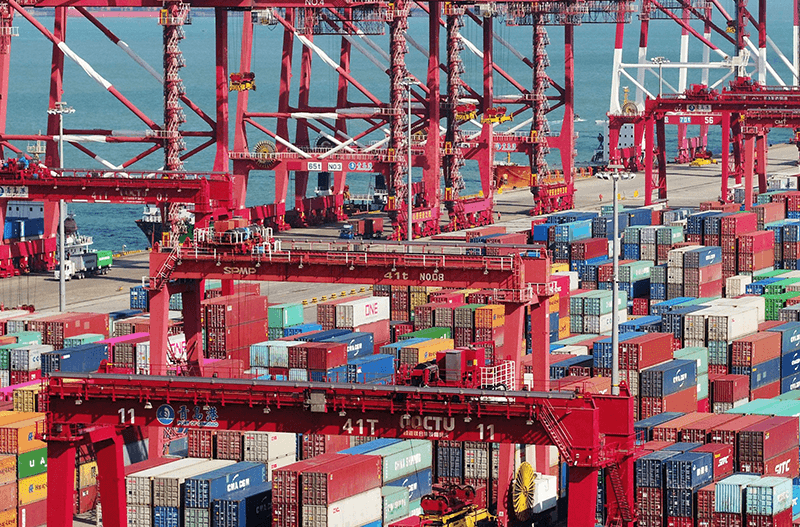
-Localization of raw materials: The copper foil substrate distribution center in Singapore and the fiberglass cloth production capacity in the Philippines have increased by 340% in 5 years, and the proportion of localized supply of basic materials has reached 65%.
-Logistics upgrading: after the opening of the China Laos Railway, the cross-border logistics time is reduced to 20 hours, and the cost is reduced by 40%; Automated terminals in the Eastern Economic Corridor of Thailand improve cargo turnover efficiency.
4. Downstream demand explosion: Automotive electronics and AI servers lead growth
-Automotive Electronics: The Thai government provides a 100000 baht subsidy for new energy vehicles to attract companies such as Jingwang Electronics to build automotive grade PCB factories.
-AI and Data Centers: Southeast Asian data center revenue increased by 8.5% annually, with Amazon AWS and Google accelerating their layout, driving demand for high-speed boards.
3、 Realistic Challenge: Pains and Breakthroughs in the Climbing Period of New Production Capacity
Despite the broad prospects, newly launched factories in 2025 are generally facing short-term profit pressure:
1. Low capacity utilization rate
-Dingying Electronics Thailand factory has a production capacity utilization rate of only 50% in Q1 2025, while Shanghai Electric Power Thailand factory suffered a loss of 51 million yuan during the same period, mainly due to high equipment depreciation and labor training costs.

2. The talent gap restricts the implementation of technology
-Thailand needs to add 50000 technical workers and 20000 engineers in the next two years, and Huawei Electronics admits that “the shortage of engineers is the biggest bottleneck”.
3. Insufficient supply chain response speed
-Key chemicals and high-end substrates rely on imports from China and Japan, with a procurement cycle that is 3 days longer than China, and the addition of a 15% tariff has pushed up costs.
>Response strategy:
>Localization of Talents: Mahanakong University of Technology has launched a “6-month Skill Crash Program” to specifically train SMT and AOI inspection technicians.
>- Product high-end: Shanghai Electric Thailand factory focuses on AI servers with 18 or more layers of high multi-layer boards (gross profit margin over 30%) to avoid low-end competition.
>- Green manufacturing cost reduction: Zhending Thailand factory uses 85% green electricity to reduce long-term energy costs.
4、 Future Trends: From Manufacturing Bases to Regional Innovation Centers
The Southeast Asian PCB industry is undergoing a qualitative transformation and upgrading:
1. High end technology
-Thailand plans to increase the proportion of high-end PCBs from 35% to 55% by 2027, breaking through the technologies of Class Load Panel (SLP) and embedded components.
2. Vertical integration of industrial chain
-The Eastern Economic Corridor (EEC) is building a 3-hour supply chain circle of “Bangkok R&D – North Willow Production – Rayong Logistics”, and companies such as Shenghong Technology are establishing regional distribution centers to achieve 72 hour delivery in Southeast Asia.
ESG becomes a competitive barrier
-The EU 2025 carbon tariffs are forcing environmental upgrades, and Thai factories passing green electricity certification can reduce export costs.
Conclusion: Embracing change and laying out long-term value
The rise of the PCB industry in Southeast Asia is not a short-term replacement, but an inevitable choice under the global supply chain restructuring. Enterprises need to seize three-stage opportunities:
1. Short term (2025-2026): Utilize policy dividends to rapidly mass produce and focus on high-end products;
2. Mid term (2027-2028): Build localized supply chains to reduce import dependence;
3. Long term (2029+): Promote technological collaborative innovation and build regional R&D centers.
>The ultimate goal of industrial transfer is not only the relocation of production capacity, but also the global reconstruction of technology, talent, and standards.