Table of Contents
How to identify the polarity of electronic components during PCBA processing so as not to cause PCBA defect?
After a PCBA circuit board is soldered, when checking whether the circuit board can work normally, it is usually not supply power to the circuit board directly, but to follow every step to ensure that there is no problem in each step and then get the power on.
PCBA components installation is mainly to check the components with polarity, such as light-emitting diodes, electrolytic capacitors, rectifier diodes, etc., and whether the pins of the triode correspond to each other. For the transistor, the pin sequence of different manufacturers with the same function is also different, it is best to test it with a multimeter.
Do the open circuit and short circuit test first to ensure that there will be no short circuit after power on. If the test point is set up, you can get twice the result with half the effort. The use of 0 ohm resistors is sometimes conducive to high-speed circuit testing.
The power-on test can only be started after the above hardware test before power-on is completed.
polarity components need special attention during the entire PCB assembly process, because directional component errors will cause mass accidents and failure of the entire PCBA board, so it is extremely important for engineering and production personnel to understand SMT polarity components.
Ⅰ. The definition of polarity
Polarity means that the positive and negative poles or the first pin of the component and the positive and negative poles or the first pin of the PCB (printed circuit board) are in the same direction. If the component does not match the direction of the PCB, it is called invert defect.
Ⅱ. Polarity recognition method
1. Chip resistor has no polarity
2. Capacitor
2.1 Ceramic capacitors have no polarity
2.2 Tantalum capacitors have polarity
PCB and component positive pole mark:
Ribbon marking;
“+” sign marking;
Bevel marking.
2.3 Aluminum electrolytic capacitors have polarity
mark: ribbon represents negative pole;
PCB label: ribbon or “+” sign represents positive pole.
3. Inductor
3.1 Two solder-end packages such as chip coil and chip inductors have no polarity requirements.
3.2 Multi-pin inductors have polarity requirements.
Component mark: Dot/”1″ represents the polarity point;
PCB board mark: Dot/circle/”*” represents the polarity point.
4. Light Emitting Diode
4.1 SMT Surface Mount LEDs Surface mount LEDs have polarity.
Part negative mark: green is negative;
PCB negative mark:
1) vertical bar represents;
2) ribbon represents;
3) silk-screened sharp corners;
4) silk-screened “匚” box represents.
5. Diode
5.1 SMT surface mounted two-terminal diodes have polarity.
Component negative marking: 1) ribbon, 2) groove, 3) color marking (glass body);
PCB negative pole marking: 1) vertical bar marking, 2) ribbon marking, 3) silk screen sharp corner marking, 4) “匚” frame marking.
6. Integrated Circuit
6.1 SOIC type package has polarity.
Polarity indication: 1) ribbon, 2) symbols, 3) pits, grooves, 4) hypotenuse.
6.2 SOP or QFP type package has polarity.
Polarity indication: 1) pit/groove indication, 2) there is one point is different (size/shape) from the other two/three points.
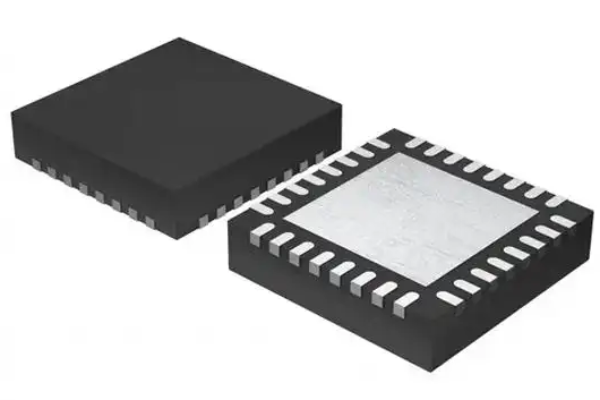
6.3 QFN type package has polarity.
Polarity marking: 1) there is one point is different (size/shape) from the other two points, 2) Hypotenuse marking, 3) Symbol marking (transverse bar/”+” sign/dot).
7. Ball Grid Array Part Polarity: pit/groove mark/dot/circle mark;
PCB board polarity: circle/dot/letter “1 or A”/bevel mark.
The component polarity point corresponds to the PCB polarity point.