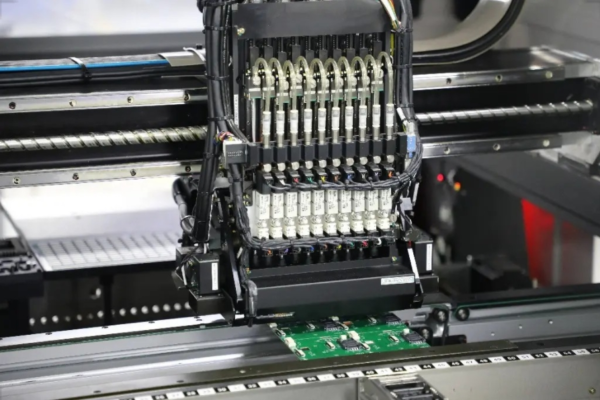
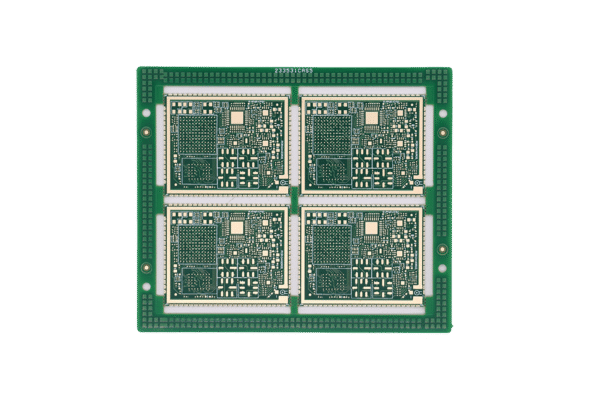
The open circuit defect of PCB board (i.e. the interruption of a certain conductive path in the circuit, preventing current from flowing) is a key issue that affects product reliability and may lead to functional failure or even safety risks. The reasons for its occurrence involve the entire process of design, manufacturing, assembly, and usage environment, and require targeted analysis and development of improvement measures.
Ⅰ.Analysis of Common Causes of Open Circuit Defects
1. Defects in the design phase
-Insufficient wire width: Thin wires (especially high current paths) are prone to fracture due to mechanical stress, corrosion, or thermal fatigue.
-Unreasonable corner design: Right angled corners (rather than rounded corners or 45 ° angles) can lead to uneven current distribution, stress concentration, and may fracture after long-term use.

-Weak connection between solder pads and wires: The transition between solder pads and wires is not designed with “teardrop” design, or the connection section is too thin, which can easily break during welding/vibration.
-Unreasonable wiring spacing: The distance between the wire and the borehole or edge is too close, which may cause mechanical damage during manufacturing (such as drilling and milling).
2. Manufacturing process defects
-Etching abnormality:
The concentration of etching solution is too high, the time is too long, or the spraying is uneven, resulting in local wires being excessively etched and disconnected;
Insufficient exposure and incomplete development of photosensitive ink result in some areas being unprotected and mistakenly etched.
-Drilling process issues:
Drill bit wear, improper speed/feed rate, resulting in burrs during drilling and scratching of nearby wires;
Positioning deviation during drilling of multi-layer boards, piercing through inner layer wires.
-Laminated defects:
Insufficient or uneven laminating temperature/pressure leads to the generation of bubbles between layers, and the inner wire breaks at the bubble due to lack of support;
The poor interlayer bonding force leads to delamination during subsequent processing (such as secondary etching), resulting in open circuits in the inner layer wires.
-Improper surface treatment:
Poor copper deposition/electroplating (such as missed plating, thin coating), resulting in local conductive layer fracture;
The solder mask layer covers abnormally, and the exposed wires are prone to oxidation/corrosion.
3. Damage during assembly stage
-Out of control welding process:
The reflow soldering/wave soldering temperature is too high or the time is too long, which can cause the PCB copper foil (especially thin copper substrates) to peel off due to heat, or the wires near the solder pads to melt.
-Mechanical stress damage:
Excessive force during manual insertion or misalignment of automated equipment can cause scratches/pulling and breakage of solder pads and wires;
The lateral force during connector insertion and removal is transmitted to the PCB, causing solder joints or wire open circuits.
4. Environmental impact of use

-Thermal cycle fatigue: Alternating high and low temperatures lead to differences in thermal expansion coefficients between PCB substrates and copper foils, causing repeated stretching and contraction of wires, and long-term fatigue induced fracture (especially at the edges of flexible PCBs or large-sized hard boards).
-Vibration and impact: In vibration environments such as automobiles and industrial equipment, if the PCB is not firmly fixed or the solder joints/wires have poor vibration resistance, it may break due to mechanical fatigue.
-Corrosion and oxidation: Unprotected copper wires are oxidized and corroded in humid, high salt spray, or industrial environments (corrosive gases such as sulfur and chlorine), gradually forming open circuits.
Ⅱ.Improvement measures for open circuit defects
1. Design optimization
-Wire and corner design:
Critical path (such as power supply, high current lines) line width ≥ 0.2mm (calculated based on current); Rounded corners (R ≥ 0.1mm) or 45 ° angles are used to reduce stress concentration.
-Enhance connection strength:
Add a Teardrop design at the connection between the solder pad and the wire to increase the transition area; Avoid direct connection of wires to the edge of the solder pad and reserve a buffer section of at least 0.1mm.
-Reasonable layout and spacing:
The distance between the wire and the edge of the drilling hole or plate should be ≥ 0.2mm; sensitive wires (such as thin wires) should avoid mechanical processing areas (such as milling areas).
-Redundant design:
For circuits with high reliability requirements (such as safety circuits), a dual line parallel design (redundant path) is adopted to reduce the risk of single point open circuit.
2. Manufacturing process improvement
-Etching process control:
Real time monitoring of etching solution concentration (such as Cu ² ⁺ concentration), temperature (usually 45-55 ℃), and spray pressure, and regular calibration of equipment;
Use AOI (Automatic Optical Inspection) to check the integrity of the etched wire and promptly remove any over/under etched plates.

-Optimization of drilling process:
Select a suitable drill bit (such as a hard alloy drill bit) based on the thickness of the board, control the speed (10000-30000rpm) and feed rate;
Add deburring processes (such as brush cleaning and chemical etching) after drilling to avoid wire scratching.
-Improvement of lamination quality:
Optimize the lamination curve (heating rate, insulation time, pressure) to ensure no bubbles or delamination;
Use X-ray to detect the inner layer wires of multi-layer boards and verify the integrity of the laminated wires.
-Surface treatment strengthening:
Ensure uniformity during copper deposition/electroplating (coating thickness ≥ 18 μ m), and use AOI testing after electroplating;
The solder mask layer is fully covered, and the exposed solder pads/test points can be treated with immersion gold/nickel plating to enhance corrosion resistance.
3. Assembly process control
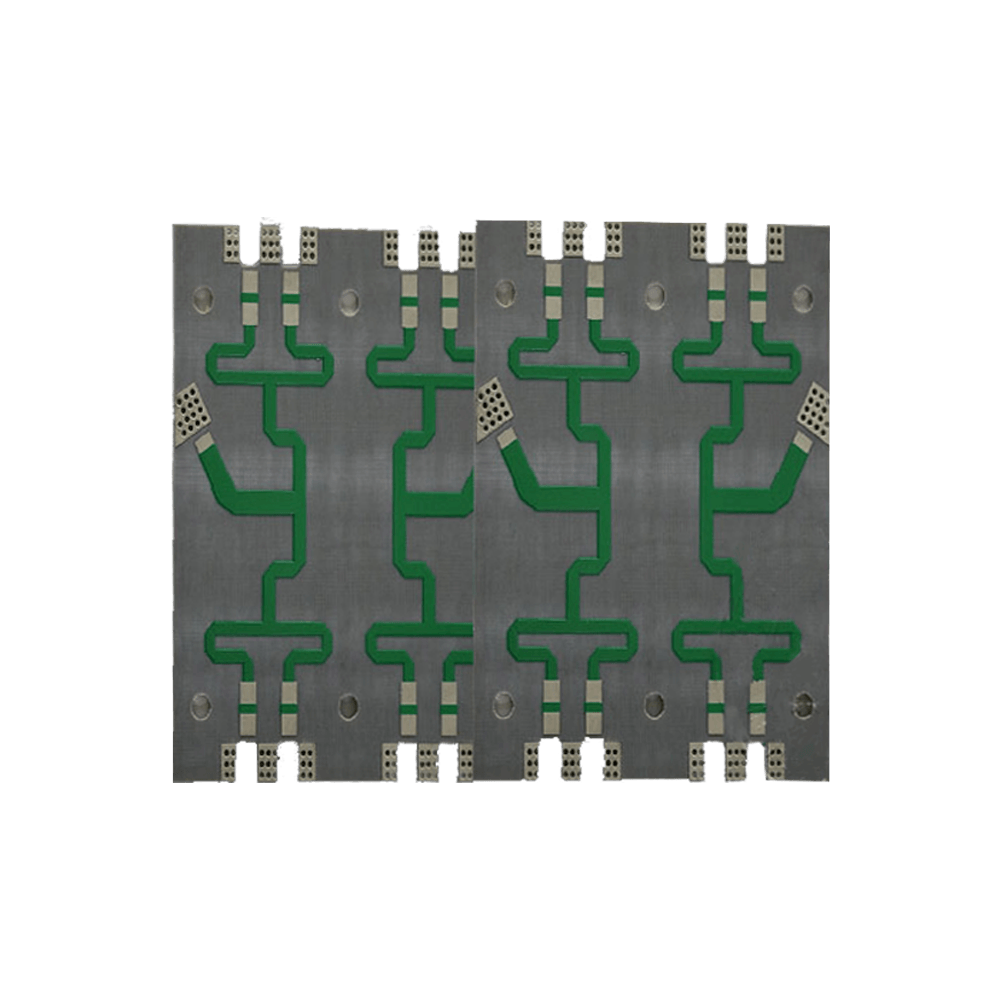
-Optimization of welding parameters:
According to the PCB material (such as FR-4, high Tg board) and component type, set a reasonable soldering temperature curve (such as reflow peak temperature ≤ 260 ℃, duration ≤ 10s);
Real time monitoring of PCB solder joint temperature using thermocouples to avoid local overheating.
-Reduce mechanical stress:
Regular calibration and alignment accuracy of automated plugin equipment; Avoid pressing the plug pins forcefully during manual operation;
Priority should be given to connector selection with positioning columns to reduce lateral force during insertion and removal.
-Post assembly inspection:
Using AOI to detect the integrity of the solder pads/wires after welding; Perform ICT (online testing) or flying pin testing on critical circuits to verify conductivity.
4. Use environmental protection measures
-Environmental adaptability design:
For humid/corrosive environments, the PCB surface is coated with a normal coating (such as silicone rubber, acrylic resin) to cover exposed wires and solder joints;
Select high Tg sheets (Tg ≥ 150 ℃) for high-temperature environments to reduce thermal expansion differences.
-Anti vibration/impact strengthening:
The PCB is rigidly fixed by brackets (such as adding screw fixing points), and the bottom of key components (such as connectors and large capacitors) is reinforced with epoxy glue;
When connecting flexible PCBs with hard boards, reinforcement boards are used to enhance their bending resistance.
-Regular maintenance:
For long-term use equipment, regularly clean the PCB surface (remove dust and oil stains), check the integrity of the normal coating, and promptly repair damaged areas.
5. Whole process quality monitoring
-Add detection nodes: introduce AOI, X-ray, and flying needle testing during the manufacturing phase (after etching, lamination, and finished product); Add ICT and FCT (functional testing) after assembly.
-Failure analysis mechanism: For open circuit defects that occur, the root cause (such as corrosion, fatigue, mechanical damage) is determined through slice analysis and SEM observation of the fracture surface, and the process is optimized accordingly.
Through the analysis of the causes and improvement measures throughout the entire process, the incidence of PCB open circuit defects can be significantly reduced, and the reliability and service life of the product can be improved.
Get your exclusive quote immediately: fill out the form or send an email directly.As a professional PCB manufacturer for hobbyist , we will provide you with a quote service within 24 hours. Enjoy free DFM optimization and a 10% discount on SMT patches for your first order!