Table of Contents
What is a Rigid Flex PCB?
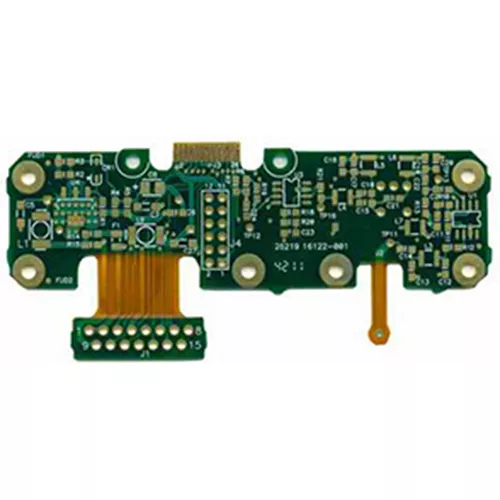
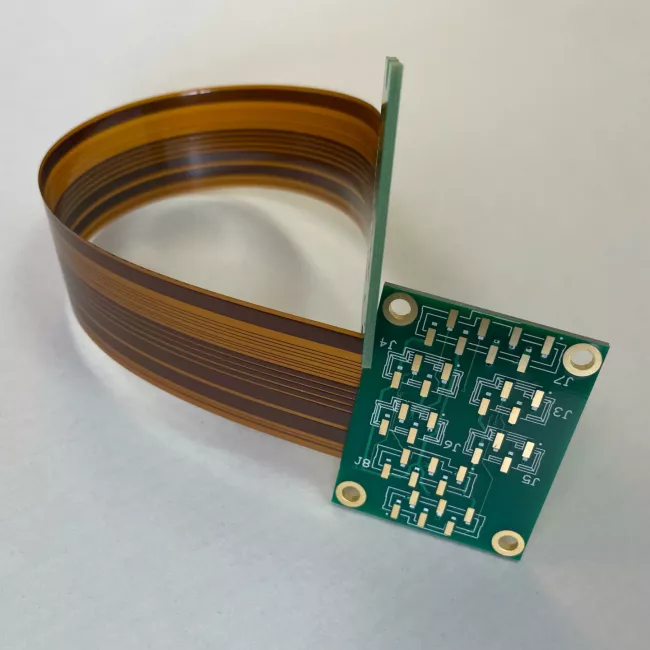
Rigid Flex PCB are boards using a combination of flexible and rigid board technologies in an application. Most rigid flex boards consist of multiple layers of flexible circuit substrates attached to one or more rigid boards externally and/or internally, depending upon the design of the application. The flexible substrates are designed to be in a constant state of flex and are usually formed into the flexed curve during manufacturing or installation.
Rigid flex designs are more challenging than the design of a typical rigid board environment, as these boards are designed in a 3D space, which also offers greater spatial efficiency. By being able to design in three dimensions rigid flex designers can twist, fold and roll the flexible board substrates to achieve their desired shape for the final application’s package.
Rigid Flex Capabilities and Advantages
we can provide our customers with rigid flex combination boards with a great variety of technologies, from complex multilayer rigid flex for commercial applications to high reliability mil-spec printed circuit boards.
Rigid Flex PCB Fabrication Applications
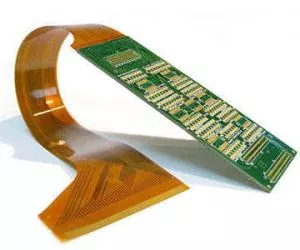
Rigid flexible PCBs offer a wide array of applications, ranging from military weaponry and aerospace systems to cell phones and digital cameras. Increasingly, rigid flex board fabrication has been used in medical devices such as pacemakers for their space and weight reduction capabilities. The same advantages for rigid flex PCB usage can be applied to military weaponry and weapon control systems.
In consumer products, rigid flex doesn’t just maximize space and weight but greatly improves reliability, eliminating many needs for solder joints and delicate, fragile wiring that are prone to connection issues. These are just some examples, but rigid flex PCBs can be used to benefit nearly all advanced electrical applications including testing equipment, tools and automobiles. Not sure what technology needs to be used for your project? Call our experts and we can help you figure out whether you need rigid flex, flex PCB, RF PCB or HDI PCB technology.
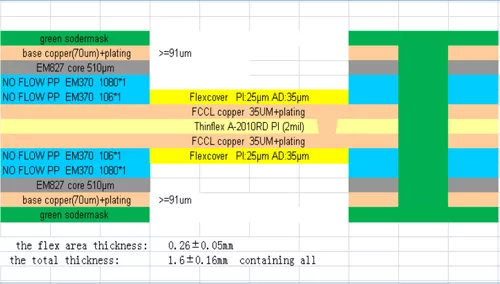
4 Layer Rigid-flex PCB stack Up
The birth and development of FPC and rigid PCB gave birth to the new product of Rigid-flexible PCB. The Rigid-flex PCB is combination of flexible circuit board and rigid circuit board, which are produced according to the relevant process requirements, after pressing and other processes to form a circuit board with FPC characteristics and rigid PCB characteristics.
Rigid-flex circuit board is a special PCB composed of flexible and rigid substrates selectively laminated together, with tight structure and electrical connection formed by metallized holes. It has the characteristics of high density, thin wire, small aperture, small size, light weight and high reliability, and its performance is still very stable under vibration, shock and wet environment.
Flexible, three-dimensional installation, effective use of installation space, Rigid-flex PCB is widely used in mobile phones, digital cameras, digital video cameras and other portable digital products. Rigid-flex boards will be used more in areas where packaging is reduced, especially in consumer areas.
Rigid Flex PCB Technology and Production Process
Whether producing a rigid flex prototype or production quantities requiring large scale rigid flex PCB fabrication and PCB assembly, the technology is well proven and reliable. The flex PCB portion is particularly good in overcoming space and weight issues with spatial degrees of freedom.
Careful consideration of flex-rigid solutions and a proper assessment of the available options at the early stages in the rigid flex PCB design phase will return significant benefits. It is critical the rigid flex PCB fabricator is involved early in the design process to ensure the design and fab portions are both in coordination and to account for final product variations.
The rigid flex manufacturing phase is also more complex and time consuming than rigid board fabrication. All the flexible components of the rigid flex assembly have completely different handling, etching and soldering processes than rigid FR4 boards.
Benefits of Rigid Flex PCBs
- Space requirements can be minimized by applying 3D
- By removing the need for connectors and cables between the individual rigid parts the board size and overall system weight can be reduced.
- By maximizing space, there is often a lower count in parts.
- Less solder joints assure higher connection reliability.
- Handling during assembly is easier in comparison with flexible boards.
- Simplified PCB assembly processes.
- Integrated ZIF contacts provide simple modular interfaces to the system environment.
- Test conditions are simplified. A complete test prior to installation becomes possible.
- Logistical and assembly costs are significantly reduced with flex-rigid boards.
- It is possible to increase the complexity of mechanical designs, which also improves the degree of freedom.
Rigid Flex Design and Fabrication Issues
During the rigid flex PCB design process, certain considerations must be taken into account for final product size variations. In the manufacture of rigid flex boards, the flexible polyimide core will shrink once the bonded copper foil is etched away. This variation must be accounted for in the design process.
The final rigid flex assembly process requires the flex portions to be bent into shape, stressing the flex lamination with the potential to cause stress fractures.
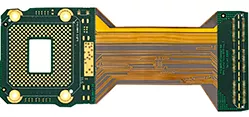
| Material | FR4+PI |
| Layer count | Rigid 6layer, Flex 4layer |
| Board thickness | 0.4+0.8mm |
| Copper thickness | 1oz |
| Surface treatment | ENIG |
| Min Line/space | 2.5/2.5mil |
| Min hole size | 0.15mm |
| Special Process | Rigid-flexible PCB |
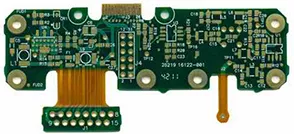
| Material | FR4+PI |
| Layer count | Rigid 4layer, Flex 2layer |
| Board thickness | 1.6mm+0.2mm |
| Copper thickness | 1oz |
| Surface treatment | ENIG |
| Min Line/space | 5/5mil |
| Min hole size | 0.2mm |
| Special Process | Rigid-flexible PCB |
Why Choose SysPCB as Your Rigid Flex Manufacturer?
Rigid flexible printed circuit board is a highly relevant solution for modern electronic products. Although their physical and economic properties make them more expensive and complex to design than other types of PCBs, they have significant advantages in terms of high performance and applications. If PCB manufacturers have a deeper understanding of its characteristics, applications, and proper use, they can successfully meet the growing demand for developing more complex electronic systems using PCB rigid flexible combination. The advantages of SysPCB include:
Reliable Products
As rigid-flex PCB manufacturers, we do not rely on trial-and-error approaches when fabricating components designed to withstand their specified operating conditions. We adhere strictly to both internal and external standards and protocols throughout the mass production process, ensuring that all parts undergo comprehensive reliability testing. With over 10 years of industry experience, we produce rigid-flex printed circuit boards that consistently meet performance specifications and deliver long-term durability.
Ensure optimal performance
The materials used to manufacture rigid-flex PCB can affect important properties. SysPCB is a professional supplier of rigid-flex PCB with a deep understanding of the influencing factors of these materials, which can help you carefully select suitable materials to avoid potential issues and ensure optimal performance.
No MOQ
SysPCB does not have a minimum order quantity (MOQ) requirement, so you can confidently partner with us. As a rigid flex printed circuit board manufacturer, we are committed to building long-term relationships based on mutual trust and benefit.